South Korea’s June 3 election to replace Yoon Suk Yeol hinges on 15M crypto investors, 30% of voters, shaping the race.
Given this, presidential candidates are increasing the frequency of their digital asset policy proposals to appeal to youthful, tech-savvy voters. The increasing demand for regulated investment products and financial inclusion exacerbates the allure.
South Korean Presidential Candidates Target Crypto Investors
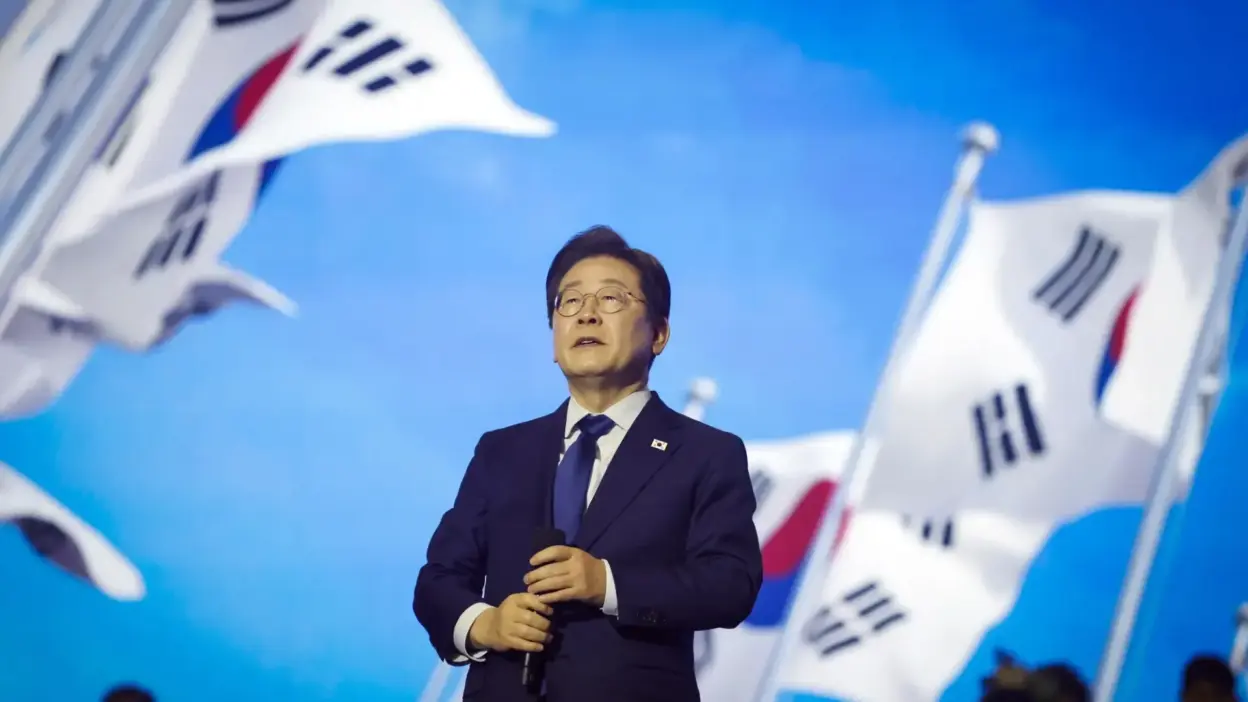
The Democratic Party’s Lee Jae-myung and the People Power Party’s Kim Moon-soo are the two frontrunners in the pro-crypto platform race, according to local media.
Both have reportedly committed to legalizing spot crypto ETFs (exchange-traded funds), a measure presently prohibited by Korean law. These financial instruments allow investors to acquire exposure to Bitcoin and other digital assets through conventional stock markets.
“All three major South Korean presidential candidates support Bitcoin ETFs and institutional investment. Currently, Bitcoin ETFs and institutional investments are banned in Korea. 100% volume comes from retail,” noted Ki Young Ju, CEO of CryptoQuant, in a recent post on X.
Lee Jae-myung’s campaign is further distinguished by his proposal to establish a stablecoin market guaranteed by the won, as reported by The Korean Herald. The candidate aims to mitigate capital outflows and decrease dependence on foreign stablecoins such as USDT and USDC.
“We need to establish a won-backed stablecoin market to prevent national wealth from leaking overseas,” read an excerpt in the report, which cited Lee during a policy discussion with economic content creators.
At present, the issuance of stablecoins within South Korea is prohibited. Nevertheless, Lee’s proposal would establish a regulatory framework following the forthcoming Digital Asset Basic Act.
The proposed legislation will address the legal status, issuance, and circulation of digital assets, which is anticipated to be lodged this week. In addition, stablecoin issuers will be required to register with the Financial Services Commission (FSC) and maintain a minimum of 50 billion won in reserves.
The report indicates domestic crypto exchanges experienced outflows of 56.8 trillion won ($40.8 billion) between January and March. Stablecoins that were based on the US dollar comprised nearly half of these.
Nevertheless, detractors caution against the potential macroeconomic risks, pointing to the private sector’s privilege of money creation.
“Stablecoins are essentially another form of banking, creating money out of nothing,” Shin Bo-sung, senior researcher at the Korea Capital Market Institute, reportedly stated.
Proposals for Stablecoin and a Bold Crypto ETF
Additionally, institutional adoption is the subject of discussion. According to reports, Lee’s team is considering allowing major investors, including the National Pension Fund, to invest in digital assets once price stability standards are achieved.
These initiatives are consistent with the government’s overarching objectives to eliminate the current prohibition on corporate crypto investment and incorporate digital assets into capital markets. The Korea Fintech Industry Association’s president, Lee Keun-ju, endorses the ETF initiative.
“A Bitcoin spot ETF is not simply a product. It can be the gateway to broadening the connection between the digital asset ecosystem and the capital market,” he noted.
Nevertheless, skepticism persists, as Konstantin Tkachuk, co-founder of Titannet DAO, observes that it will continue until the promises are fulfilled.
“Sounds cool, but no celebration until proposals are on paper and their real benefits are clear,” Tkachuk shared in a post.
In the interim, certain voters are hesitant to make superficial promises. For instance, one user observed that a candidate proposed crypto-related policies but provided entirely off-topic and incorrect responses when questioned about the distinction between USDT and USDC.
“Do they see the crypto scene in Korea as just a quick cash grab to exploit and abandon?” the user remarked.
In the interim, regulatory oversight is becoming increasingly stringent. The Financial Supervisory Service (FSS) recently reported that 52.5% of suspicious crypto transactions flagged between July and December 2023 involved investors in their 20s and 30s, the demographic the financial services industry is courting.
Criminal penalties for unfair trading practices may also result from implementing new regulations under the Act on the Protection of Virtual Asset Users.
Meanwhile, South Korea is finalizing the second phase of its crypto regulatory framework for release in H2 2025, as presidential candidates begin to embrace the technology. The government also compelled Google to block 17 unregistered foreign crypto exchanges, indicating an assertive posture on investor protection.
Cryptocurrency has undoubtedly emerged as a critical issue in the presidential election of South Korea, as it presents both opportunity and risk.