
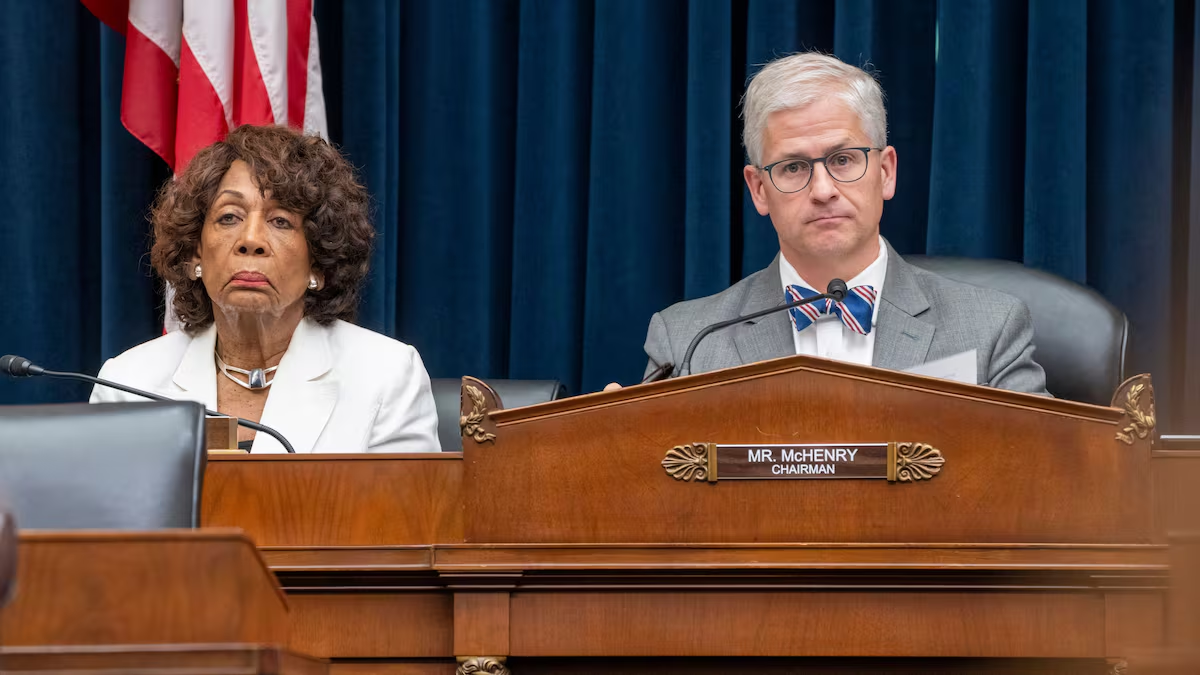
FIT21 boosts CFTC’s authority to regulate digital commodities, clarifying SEC’s role over securities, aiming for clear crypto rules and consumer protection.
The Commodity Futures Trading Commission (CFTC) is critical in regulating digital assets like Bitcoin and Ethereum. Despite rapid legislative progress, the agency faces a stark challenge: key leadership vacancies that cast doubt on its ability to execute its expanded responsibilities effectively.
Shift Toward CFTC Oversight
The Financial Innovation and Technology for the 21st Century Act (FIT21) marks a pivotal shift in U.S. digital asset regulation. It delineates roles for the two primary market regulators: the Securities and Exchange Commission (SEC) oversees assets classified as securities, while the CFTC supervises digital assets operating on decentralized blockchains. This clear division aims to reduce regulatory uncertainty, fostering an environment that supports innovation and market stability.
Stakeholders in the digital asset industry have largely welcomed FIT21, arguing that clear regulatory boundaries are essential for responsible innovation and attracting investment to the U.S. digital economy. However, the CFTC’s operational challenges could undermine these ambitions.
Leadership Vacancies Hinder Implementation
The CFTC is grappling with an unprecedented leadership crisis. Former Chair Rostin Behnam departed earlier this year, leaving the agency without a permanent leader. Commissioners Summer Mersinger and Kristin N. Johnson have also resigned, with Mersinger transitioning to a role at the Blockchain Association. Christy Goldsmith Romero, the remaining commissioner, has voiced concerns about the agency’s capacity to handle its expanded mandate.
At a recent policy event, Romero stated, “What happens if the CFTC is reduced to one commissioner and gains new authority over crypto? It’s going to be extremely challenging, isn’t it? You lose the balance of perspectives.”
Her comments highlight a critical issue: without a full five-member commission, the CFTC may struggle to manage the increased workload of overseeing the digital asset market or to achieve consensus on key decisions.
Industry Influence and Regulatory Capture Concerns
The leadership gap raises questions about the revolving door between regulators and the industries they oversee. Mersinger’s move to the Blockchain Association, a group advocating for CFTC oversight of digital assets, has sparked debate about potential conflicts of interest. Critics warn that close ties between regulators and industry could erode public trust and weaken regulatory integrity.
Supporters of FIT21 argue that the CFTC, which has historically been more open to digital assets than the SEC, is well-suited to regulate commodities like Bitcoin. However, even they acknowledge that the agency requires robust leadership and adequate resources to prevent regulatory capture and ensure fair market practices.
Operational Challenges Ahead
Beyond leadership, the CFTC faces significant operational hurdles. It must develop new regulations, establish compliance and enforcement frameworks, and provide clear guidance to market participants.
This demands well-defined policies and substantial investments in staffing and expertise. With a 2024 budget of $400 million—far less than the SEC’s $2.4 billion—and a staff of approximately 700 compared to the SEC’s 5,300, the CFTC’s capacity is already stretched.
The leadership vacuum and resource constraints could delay the implementation of FIT21’s framework, leaving the digital asset market in regulatory limbo. As Congress considers expanding the CFTC’s authority, addressing these vacancies and operational challenges will be critical to ensuring effective oversight and fostering confidence in the evolving digital asset landscape.