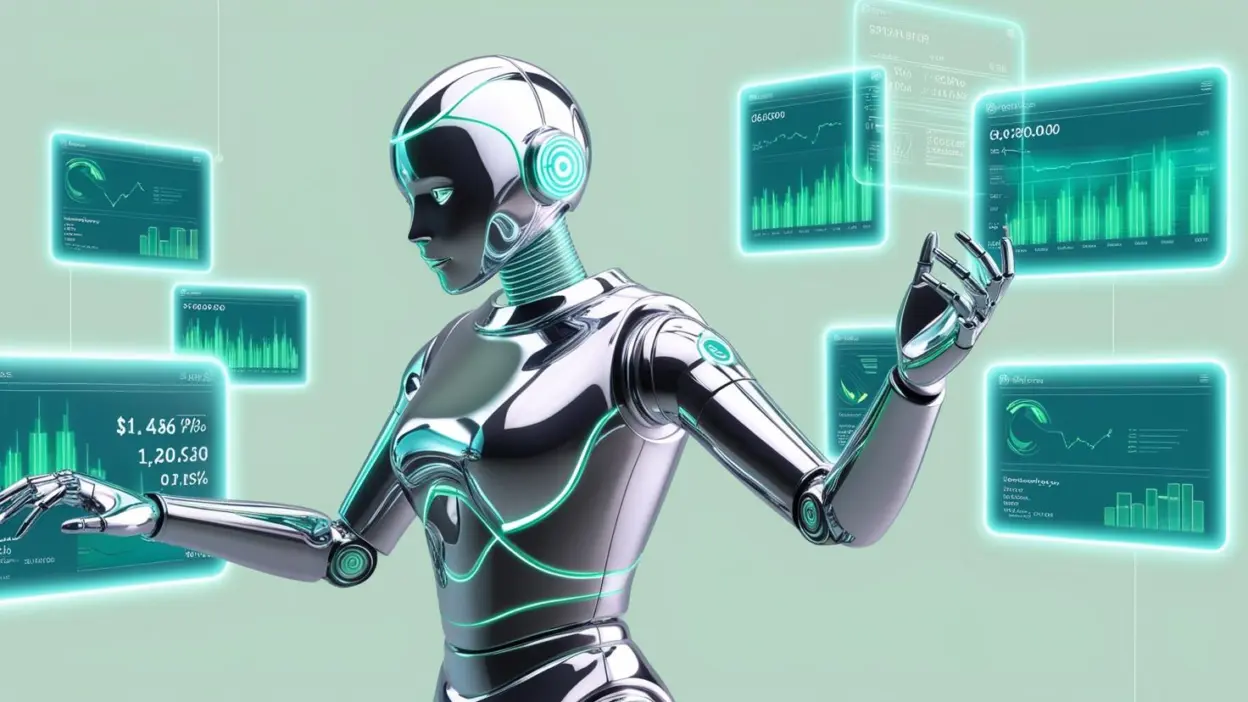
Autonomous AI wallets are automating finance, reducing errors, and raising big questions about human relevance in operating crypto wallets
Introduction
Just a few years ago, managing your digital assets meant memorizing seed phrases, tracking volatile tokens manually, and staying glued to price alerts.
Today, that’s ancient history. The Rise of Autonomous AI Wallets is redefining how we interact with our money, bringing together the power of decentralized finance (DeFi), artificial intelligence, and agentic computing into one seamless experience.
These next-gen wallets don’t just passively hold your assets—they actively make decisions on your behalf. They learn from your behavior, adjust to market conditions in real time, and optimize your portfolio like a seasoned financial advisor with an algorithmic brain. And the kicker? No human intervention needed.
This evolution didn’t happen overnight. It’s the product of breakthroughs in machine learning, multi-agent systems, and composable DeFi protocols that now allow for AI agents to autonomously execute strategies across multiple chains.
With OpenAI’s AutoGPT, Fetch.ai’s agent ecosystems, and wallet-native AI assistants becoming more robust by the day, the rise of autonomous AI wallets is no longer speculative—it’s operational.

But this new reality raises a provocative question: If your AI wallet can trade, save, borrow, insure, and adapt without you—what exactly is your role as the human? Are we empowering users, or replacing them?
As we explore this transformation, we’ll look at the technology behind these wallets, real-world applications, risks, and ultimately, whether humans are still a necessary cog in the future of finance—or just a backup plan.
What Are Autonomous AI Wallets? A Quick Technical Primer
At the core of The Rise of Autonomous AI Wallets is a powerful idea: a self-governing digital wallet that doesn’t just store your crypto—it thinks, acts, and evolves on your behalf.
Autonomous AI wallets are intelligent financial agents designed to manage your digital assets without constant human supervision.
Powered by large language models (LLMs), multi-agent AI architectures, and smart contracts, these wallets analyze market signals, interpret intent, and execute on-chain transactions in real time—all while adapting to your unique financial behavior.
Key Features at a Glance:
Automated staking, trading, and yield farming: Your wallet can auto-stake assets to optimal validators, reallocate tokens based on market volatility, and seek out the highest DeFi yields without being told.
- Real-time threat detection and phishing defense: Integrated AI guards identify suspicious dApps, reject shady approvals, and quarantine risky signatures before they reach your wallet.
- Cross-chain arbitrage and liquidity routing: Instead of leaving your funds idle, autonomous wallets constantly scan chains for arbitrage opportunities and execute profitable routes in milliseconds.
- Custom portfolio rules with minimal input: Users can set broad risk profiles (e.g., “low risk, stable yield”), and the wallet interprets these preferences into precise, dynamic strategies.
- This level of autonomy is made possible by a new stack of tools and frameworks fueling the rise of autonomous AI wallets:
- GPT-4o and GPT-5 Agents: Act as cognitive engines that interpret commands, perform reasoning, and adapt across multiple domains.
- SafeCore and OpenWallet Foundation: Provide modular wallet frameworks with secure execution environments and agent-friendly APIs.
- EigenLayer: Enables secure, decentralized execution of off-chain tasks via restaked ETH and middleware services.
- AgentOps: Manages agent lifecycle, decision-tree tuning, and interaction across networks.
- Gelato Network: Handles automation and smart contract task scheduling across L1s and L2s.
In essence, these wallets are autonomous agents operating on your behalf within a permissionless financial world.
But if the wallet is now the brain behind your digital finances, does that leave you as just the thumbs approving transactions—or something even less?
The Evolution of Wallet Tech: From Custody to Cognitive
The story of crypto wallets mirrors the evolution of user trust, control, and capability in Web3. As we witness The Rise of Autonomous AI Wallets, it’s worth tracing the tech trajectory that got us here—from paper to intelligence.
2011–2016: Paper Wallets & Basic Software Wallets
In the early days of Bitcoin, wallets were rudimentary. Private keys were printed on paper or stored in simple software with little to no UI. Trust was entirely on the user. If you lost your key, you lost your funds—end of story.
2017–2020: Hardware Wallets & Hot Wallets
Security became paramount during the ICO boom and DeFi summer. Devices like Ledger and Trezor introduced cold storage, while browser-based hot wallets like MetaMask rose in popularity. The new mantra was “trust nobody”—not even the dApps you connected to.
2020–2023: Smart Wallets with Plugins
As DeFi exploded, wallets became smarter. MetaMask added plugin support. Argent introduced social recovery. Gnosis Safe enabled multisigs for teams. These smart wallets offered flexibility but still required user awareness and manual input.

2024–2025: Autonomous AI Wallets
Now, we’ve entered the cognitive era. The rise of autonomous AI wallets marks a radical departure from manual asset management.
These wallets don’t just safeguard assets—they make decisions. They interpret market data, align with user goals, and act independently, often outperforming human reflexes and strategies.
What changed everything? Large Language Models (LLMs) and real-time data streams. With access to streaming oracles, macroeconomic indicators, blockchain analytics, and user behavior models, today’s wallets have more context than any single user ever could.
LLMs like GPT-4o and Claude can now parse complex financial states, generate hedging strategies, and run simulations before committing funds.
And it’s not just about functionality—it’s about form. The Wallet-as-a-Platform (WaaP) model is emerging fast. In this framework, your wallet is no longer a standalone app but a programmable platform where plugins, agents, and logic layers interact modularly.
You don’t just hold tokens—you deploy automated agents, plug into yield protocols, and run autonomous strategies from the same interface.
Why They’re Exploding in 2025: 5 Driving Forces
The rapid adoption is driven by a mix of technical maturity, user demand, and evolving compliance landscapes. Let’s break down the five key drivers fueling this explosion.
The Infrastructure Finally Works
For years, the idea of autonomous wallets was held back by clunky AI frameworks and unstable on-chain integrations. That’s changed. Tools like AutoGPT, CrewAI, LangGraph, and decentralized physical infrastructure networks (DePINs) now enable scalable and secure AI-agent execution.
AI wallets today can perceive user intent, plan across chains, and take action autonomously—all without compromising security. With the back-end finally catching up to the vision, the rise of autonomous AI wallets is no longer theoretical—it’s operational.
Users Are Tired of DeFi Complexity
Messari’s 2024 report revealed a staggering stat: 70% of DeFi users abandoned platforms due to poor user experience. Between figuring out bridging, setting slippage, managing wallets across chains, and tracking yield strategies, the average user burned out quickly.
Autonomous wallets change that. With AI agents managing the complexity under the hood, users get frictionless access to staking, trading, and farming—without the manual grind. This hands-free interaction is a major reason why adoption is skyrocketing in 2025.
Real-Time Risk Response
In traditional DeFi, you’d often only know something was wrong after it hurt your wallet—whether through a rug pull, a MEV sandwich attack, or a suspicious token approval. But now, AI-driven wallets act as real-time security guards.
They continuously scan mempools, on-chain behavior, and threat intelligence feeds. When danger looms—say, a malicious contract interaction or an anomalous gas spike—the wallet doesn’t wait. It acts.
It can revoke approvals, re-route transactions, or isolate funds instantly. This level of live, autonomous protection is a game-changer, especially for high-value users and institutions.
Multi-Chain Chaos Needs a Smart Filter
With assets spread across Ethereum, Solana, Base, Arbitrum, and more, navigating Web3 in 2025 is like flying through a storm without instruments. Wrong chains, incorrect token formats, failed bridges, or gas issues are still common.
Autonomous wallets handle these challenges with ease. Using LLMs and real-time protocol data, they calculate optimal swap paths, prepay gas fees across chains, and even bundle transactions. You don’t have to think about which bridge or DEX aggregator to use—the wallet already knows.
In a fragmented world, the rise of autonomous AI wallets offers cohesion, simplicity, and speed.
AI-Driven Compliance Is the New Norm
As regulators begin enforcing stricter oversight, compliance has gone from optional to essential. Instead of burdening the user, AI wallets now embed smart compliance layers within their logic.
They can detect if a transaction involves a sanctioned address, flag risks before funds move, or prompt for KYC when interacting with centralized exchanges or tokenized securities. This proactive approach turns wallets into regulatory allies—not liabilities.
And perhaps most critically, this makes autonomous AI wallets institution-ready, opening the door for broader adoption beyond crypto-native users.
How AI Wallets Make Decisions: Autonomous, but Not Anarchic
Despite operating without constant human input, today’s AI wallets function within well-defined boundaries—ones built on multi-agent systems, real-time data feeds, and user-configurable logic.
As The Rise of Autonomous AI Wallets accelerates, their decision-making process reveals a sophisticated architecture of order, not unpredictability.
At the heart of this system is multi-agent governance. These wallets aren’t powered by a single AI but by a network of cooperative agents—each responsible for a specific function.
One might monitor market volatility, another might scan for yield opportunities, while a third evaluates risk relative to the user’s preferences.
Together, they make decisions through weighted consensus, much like a miniature DAO inside your wallet.
This intelligent orchestration relies heavily on on-chain memory—a persistent data layer that allows agents to reference past actions, update user profiles, and learn from evolving behavior.
Combine this with user-configurable ethics, and you get a wallet that can not only act independently but align with your financial personality. Want to avoid meme coins or only support green crypto protocols? Your wallet remembers—and adapts.
Let’s walk through a real scenario:
An AI wallet detects an incoming market shock using volatility indicators fed through Chainlink Functions and proprietary oracles. The small-cap assets in your portfolio are flagged as high-risk based on current trading patterns.
Instantly, the wallet executes a protective move: auto-converting 60% of those assets into stablecoins. It then deploys the idle balance into blue-chip DeFi protocols with low-risk yield pools, ensuring capital efficiency while preserving security—all in line with your predefined risk appetite.
What enables this real-time adaptability isn’t just the intelligence of the model—it’s the ecosystem. These wallets are deeply integrated with:
- Chainlink Functions for reliable off-chain data execution
- Privacy-preserving tools like ZKML (Zero-Knowledge Machine Learning) to ensure sensitive user preferences are respected
- DePIN compute networks and decentralized agents that allow the logic to scale without reliance on centralized servers
In this system, the AI doesn’t operate in a vacuum—it acts within constraints, draws from verifiable data, and stays tethered to your intent.
So while the rise of autonomous AI wallets may sound like handing over the reins, the reality is more nuanced. You’re not giving up control—you’re delegating execution to a machine that remembers your values, reacts faster than you, and never sleeps.
Top Projects Pioneering the Shift (2025 Edition)
A wave of real-world projects is driving this transformation with production-ready tools and scalable architectures.
These aren’t just clever apps—they’re full-fledged platforms redefining how we interact with digital assets.
Kuros.ai Wallet

Kuros.ai is often cited as the most “complete” autonomous wallet on the market. What sets it apart is its blend of large language models with a persistent AI memory graph.
This allows it to not only understand your instructions in natural language but also remember your habits, patterns, and preferences across time.
From rebalancing portfolios to avoiding risky protocols, Kuros acts like a financial butler with a long-term memory—and it gets smarter with every transaction.
SphereX Wallet

For those looking under the hood, SphereX offers a modular infrastructure designed specifically for agent-to-agent interactions. Rather than users executing trades, autonomous agents negotiate directly with other agents across protocols and chains.
This enables trustless, real-time execution of complex strategies without requiring manual intervention. Think of it as the social layer of wallet-based AI, where agents trade, hedge, and cooperate on your behalf.
SafeGPT

Institutional adoption of autonomous wallets hinges on auditability and security, which is exactly where SafeGPT comes in. It combines traditional multisig functionality with AI-driven transaction execution and compliance monitoring.
Every decision is logged with a real-time audit trail, allowing finance teams and DAOs to see not just what happened—but why it happened. It’s autonomy with accountability baked in.
Aetherium

Not to be confused with Ethereum, Aetherium is carving out a niche in governance. This wallet-agent hybrid focuses on DAO participation and AI-assisted staking, allowing users to delegate voting power to AI agents trained on their ideological preferences.
You don’t have to log in to vote on every proposal—the wallet does it in your voice, based on past votes and on-chain sentiment. Governance becomes natural language–driven, intuitive, and always active.
Alchemy AgentX

For developers and tinkerers, Alchemy’s AgentX SDK is the gateway to building fully customizable autonomous wallets. It comes with a plug-and-play agent marketplace, allowing you to install modules for anything from real-time arbitrage detection to compliance automation. If Kuros is the Tesla of wallets, AgentX is the open-source operating system behind it.
The Big Questions: Are Humans Still Needed?
As The Rise of Autonomous AI Wallets reshapes personal finance, it also surfaces a deeper, more human dilemma: What’s left for us to do when the machine manages it all? These wallets can earn, hedge, vote, stake, and even learn. But just because they can act autonomously—should they?
Control vs. Delegation
The promise of AI wallets is effortless finance. But at what point does convenience become complacency? Users must now ask themselves whether they’re comfortable handing over full control to an algorithm that trades in milliseconds, optimizes without emotion, and never second-guesses itself.
Delegating tasks is one thing. Delegating decision-making, especially in volatile markets, is another. As wallets become more powerful, human oversight becomes less frequent—sometimes dangerously so.
Security in the Age of Smarter Threats
Autonomous doesn’t mean invulnerable. In fact, the smarter your wallet becomes, the more attractive it is to adversaries. Hackers aren’t just targeting seed phrases anymore—they’re going after model weights, agent logic, and execution layers.
If an AI wallet can authorize its own trades, it can also be manipulated into doing so. The very intelligence that enables it to thrive in DeFi is also a new attack surface. Vigilance—and robust sandboxing—is critical.
Ethical Guardrails: Who Programs the Values?
Every AI wallet follows a logic model. But who defines that logic? If your wallet avoids certain tokens, prioritizes green finance, or shuns high-risk leverage, those rules were coded by someone—or trained on someone’s values.
This brings ethics into Web3 in a very real way. Do users get to program their own moral boundaries? Or will they unknowingly inherit the ideology of the developers behind the scenes?
Instinct Still Has Value
There’s one thing even the most advanced AI can’t replicate: gut feeling. Markets are shaped not only by code and charts but by sentiment, fear, hype, and irrational behavior.
Human instinct, while flawed, often perceives nuance that data overlooks. A wallet can optimize a portfolio, but can it truly sense when a trend feels off?
“In a world where your wallet can write a whitepaper and trade options, you’re either steering—or spectating.”
Ultimately, The Rise of Autonomous AI Wallets challenges us to rethink the very definition of financial agency. AI may be driving, but humans still set the destination—or at least, we should.
Conclusion
The Rise of Autonomous AI Wallets is already llive on mainnets, powering real portfolios, and quietly reshaping the fabric of financial self-sovereignty in Web3. What began as a quest for better UX and automation has evolved into a seismic shift in control, logic, and trust.
These wallets aren’t just tools. They’re becoming cognitive companions—executing trades, defending assets, and even voting in governance on our behalf. Autonomy in finance is no longer optional for power users; it’s becoming the default layer of interaction for everyone.
“If your wallet is your CFO, your job is becoming the board.”
That future demands new roles for all stakeholders:
- For users, now’s the time to test-drive AI wallet co-pilots. Start small, experiment on testnets, and learn how to configure your financial logic.
- For developers, the opportunity is massive. Build secure, transparent agent protocols that are interpretable, modular, and auditable by design.
- For regulators, the clock is ticking. AI wallets won’t wait. Craft adaptive frameworks that protect users while embracing the innovation at hand.
As we enter this new era of self-driving finance, one truth stands out: in a world run by agents, staying passive is no longer an option.