Autonomous AI DAOs are transforming Web3 communities by combining AI’s speed and precision with blockchain’s trustless governance, enabling efficient, 24/7 decentralized operations.
There are always new developments in the world of blockchain. Now there is a new area where computers, not people, make choices. Autonomous AI DAOs, which are a mix of AI and decentralized government, are changing how Web3 Communities work, grow, and stay alive.
People talk about, vote on, and carry out ideas in normal DAOs. But these AI-powered groups use smart contracts and algorithms that learn on their own to make decisions, act, and generate ideas without any help from people. Picture a town where people never sleep or get tired and where facts, not feelings, are used to make government choices in real time.
AI DAOs that work on their own are paving the way for machines to one day be able to accurately and efficiently manage complex ecosystems. They can do things like let the treasury run itself and get involved in neighborhoods based on how they feel. But this change makes me wonder if I can trust computers with the most important parts of my decentralized groups.
Understanding the Core Concepts
Autonomous AI DAOs are changing Web3 Communities, and you need to know about their two main parts: AI and decentralized groups.
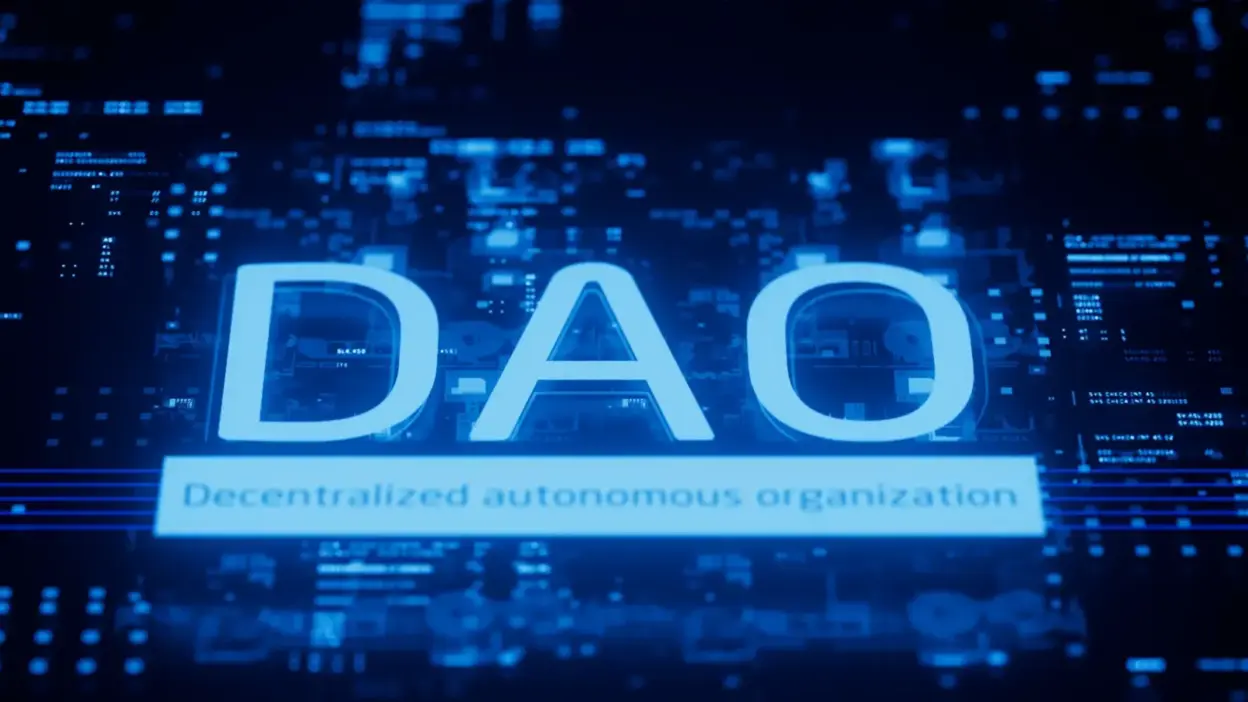
There is no need for a central authority in a Decentralized Autonomous Organization (DAO). Instead, the organization is run by code, or smart contracts, which make rules and decisions on their own. Governance tokens are used by members to decide and make suggestions. DAOs are now free and open places for everyone to work together.
“Autonomous” means that an AI DAO has AI systems that can look at data, make suggestions for actions, and make decisions on their own. AI does the work that people used to do. This means that things are always changing, answers are faster, and there is less bias. They can make groups that work well 24 hours a day, seven days a week when they are used together.
The Evolution from Human-Governed to Machine-Governed DAOs
People used to be in charge of all DAOs. Members made choices, talked about them, and then voted on them. The steps were clear, but the process moved slowly, and few people took part. And as these towns got bigger and more difficult, it became clear that they needed a faster and more flexible government.
AI tools were used by DAOs to help with tasks like data analysis, writing proposals, and handling the budget in order to solve these issues. This made things go faster while still letting people be in charge.
Fully autonomous AI DAOs are the next step in this trend. These are groups of computers that not only help with governance but also take the lead, making choices and acting on their own. People will now be in charge of AI to make sure it does the right thing and helps the community instead of making decisions.
How Autonomous AI DAOs Work in Web3 Communities
Autonomous AI DAOs are based on the idea that AI can work well with control based on the blockchain. People don’t have to do much to make these processes work. To keep Web3 Communities going easily, they use machine learning models, predictive analytics, and smart contracts that run themselves.
Governance Automation
In a traditional DAO, acts are chosen by the community, proposing, debating, and voting on them. It might take days. This is not the case with AI-driven governance automation, which looks at things like community sentiment, participation trends, and action on the blockchain to figure out what kind of governance is needed.
The computers can then use this information to make suggestions based on the use of resources, long-term goals, and models that predict what will happen. As soon as the terms of a smart contract are met, the deal is finalized. This method greatly shortens the time needed to make choices and keeps markets from getting stuck in ones that are moving quickly.
Autonomous Treasury Management
Many DAOs find it hard and important to work on the budget. TREASURE systems that are driven by AI keep an eye on the prices of tokens, liquidity pools, and income streams in real time. When the market goes down, the AI can move money to safer assets on its own.
When the chance comes, it can put money into high-yield strategies or investments, and it can guess how much cash it will need based on how it has behaved in the past. The good thing is that money is managed based on facts, not opinions, which is hard for the old-style government to do.
Community Engagement & Moderation
Web3 is good. It’s important for communities that people treat each other with care. Moderation tools that use AI get rid of spam, spot bad behavior, and promote good talks. Engines that analyze sentiment check to see how happy members are so that the DAO can make decisions that keep people involved. Some really high-tech systems even make things more personal for members by offering things they might like based on what they’ve done and liked in the past.
Self-Aware AI DAOs work by mixing machine learning with the open, decentralized, and trustless features of blockchain. This creates groups that can change, grow, and run all the time without wearing out the people who help.
Benefits of Autonomous AI DAOs for Web3 Communities
Self-Aware AI DAOs are not only a big step forward in technology, but they’re also a smart choice for Web3 Communities that want to work faster, grow widely, and make better decisions. DAOs that are run by AI make decentralized communities more flexible by getting rid of many of the issues that come with oversight by people.
Continuous, 24/7 Operations
These AI DAOs are always running, so quick choices can be made at any time. This is not the same as DAOs that are run by people, which slow down at night or when working with people in different time zones. Now, groups around the world don’t have to wait for meeting or vote times to match up. This always-on control is very important in markets that change a lot, like DeFi or NFT trading.
Faster and More Scalable Decision-Making
Decisions are made faster and on a larger scale because AI models can process huge information in seconds. This lets DAOs find risks and opportunities before people do. Also, ideas can be approved right away without long debates, and the system can be made to work with thousands or even millions of members without slowing it down.
Data-Driven, Bias-Free Governance
One of the main problems with DAOs that are run by people is that decisions are often made based on feelings or politics. This is different with AI because it uses objective measurements and predictive analytics to help make decisions. This makes sure that decision about the budget is based on facts and not on community drama, which can affect how people vote.
Cost Efficiency
Government facilitators, community managers, moderators, and people who do the reporting and data by hand don’t need to be paid as much when key tasks are automated. This lets money be moved to programs for growth, development, or rewards.
Autonomous AI DAOs are a faster, smarter, and more efficient way to run things. This is what will make the next version of Web3 Communities work well.
Potential Risks and Challenges of Autonomous AI DAOs for Web3 Communities
Autonomous AI DAOs are quick, flexible, and useful, but they also bring new risks that Web3 Communities need to handle. A lot of people are worried about the ethics, security, openness, and long-term viability of the government as it goes from being run by people to machines.
Algorithmic Bias and Governance Fairness
The AI learns from past data, and if that data is biased, then the DAO’s decisions will also be skewed. Because of this, choices about how to run things might favor some groups or points of view without meaning to. That is, unfair algorithms might not listen to the opinions of minorities in Web3 Communities, which goes against what DAOs were meant to protect: everyone being included.
Security Vulnerabilities in AI Models and Smart Contracts
It’s not possible to change blockchain smart contracts, but AI systems can be hacked in a number of ways. These include adversarial attacks, which change how AI makes decisions; data poisoning, in which bad people add false information to outputs to change the results; and exploits in AI-integrated smart contracts that could destroy DAO funds.
Lack of Human Empathy in Decision-Making
Government work often involves disagreements, conflicts, and moral quandaries that need to be dealt with in a way that shows understanding and respect for other cultures. An Autonomous AI DAO might follow the rules very closely, without considering how they might impact people’s relationships or feelings. In the long run, this could make people dislike the group and make them less likely to take part.
Autonomous AI DAOs could be very useful, but they also come with some risks that show why we need control models that are well-balanced and combine machine precision with human monitoring.
The Future of Web3 Communities with Autonomous AI DAOs
Autonomous AI DAOs will change how Web3 Communities are made, run, and kept going as blockchain technology, AI, and decentralized administration keep getting better. There are changes in more than just technology. Ideas, money, and society are also changing.
From Assistance to Full Autonomy
We live in the era of DAOs that use AI to help with government, but people still have the final say. AI might go from being a guide to making the main choices in the next few years. Fully self-sufficient DAOs would then take care of government, managing the treasury, and member involvement, all without the need for human voting.
Evolving Human Roles
People will still be able to use Web3 Communities even though more and more people are interested in machine control. The new parts of our jobs will include both moral oversight (making sure AI decisions are in line with community values) and artistic direction through new ideas, stories, and design for the brand. People will also help AI-driven companies deal with the complicated laws that affect them by acting as government liaisons.
Interoperable, AI-Run Networks
DAOs might not work by themselves in the future. Instead, AI agents could work with communities to form relationships. Smart contracts would then allow different DAOs to share resources and work on projects together in real time.
Adaptive, Self-Sustaining Communities
AI that can run itself and help communities adapt and last It was possible for DAOs to learn new things all the time, which meant they could predict and respond to changes faster than individuals. This way, groups could grow and change without having to follow a set of rules for leadership.
Balanced Future
It’s interesting to think about a world where Web3 is fully automated, but the best model might be one in which humans and AI work together, with AI being efficient and humans still having the empathy, imagination, and adaptability to make a difference.
In the next ten years, autonomous AI DAOs could be what hold Web3 Communities together. That is not only going to change how decentralized communities work, but also how people think about trust, teamwork, and new ideas these days.
Conclusion
Autonomous AI DAOs are a big step forward for Web3 Communities. There have been problems with decentralized government for a long time, but these machine-run groups say they can fix many of them. They do this by blending the speed, accuracy, and scalability of AI with the disproof of trust in blockchain.
The pros are clear: they can work 24 hours a day, seven days a week, and make decisions without any bias. Problems like algorithmic bias, weak security, lack of empathy, and legal confusion, on the other hand, show that no system is perfect. There is no question that AI will change how Web3 is run in the future. The question is how we will lead that change.
A hybrid plan could be the best way to go in the long run. AI does most of the work of governance in this model, while people provide moral direction, creativity, and cultural sensitivity. In this way, autonomous AI DAOs won’t replace people in Web3. Instead, they will help us make communities that are better, fairer, and stronger.
Decentralization isn’t the only thing that will be important for Web3 in the future. How can humans and computers work together? That is already going to happen.