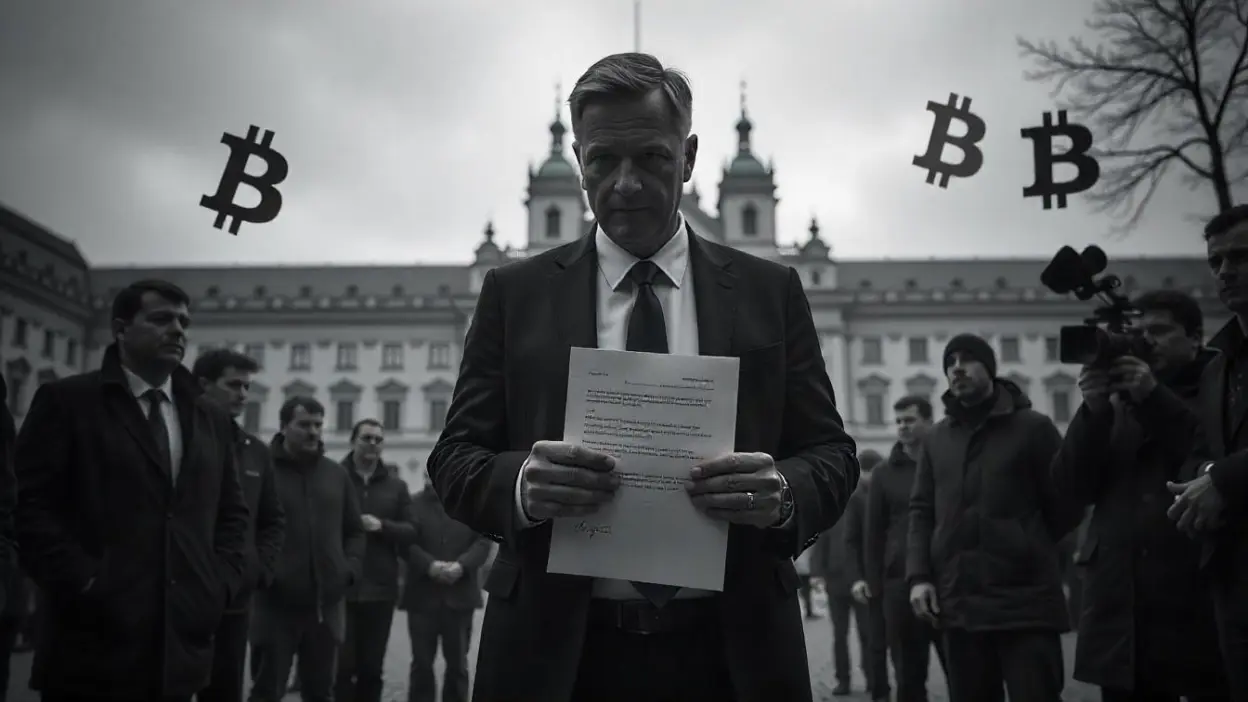
The Czech Bitcoin Scandal reveals how a massive crypto donation triggered ministerial resignations, AML concerns, and global debates on state crypto policy
- 1 Introduction
- 2 Key Players
- 3 How a crypto donation differs from fiat
- 4 Political Consequences of The Czech Bitcoin Scandal
- 5 International Implications & Precedent Cases
- 6 What Good Governance of Government Crypto Should Look Like
- 7 Conclusion
-
8
FAQ
- 8.1 What was the Czech Bitcoin Scandal?
- 8.2 Who resigned in the Czech scandal?
- 8.3 Was the Czech Bitcoin scandal donor arrested?
- 8.4 How much was the Czech Bitcoin donation worth?
- 8.5 Can governments accept crypto donations?
- 8.6 What were the immediate political consequences of the Czech Bitcoin scandal?
- 8.7 How could the Czech Bitcoin scandal affect future rules?
- 8.8 Why does the Czech Bitcoin Scandal matter globally?
Introduction
The Czech Bitcoin scandal began with a short, sharp story: an ex-minister accepted a massive bitcoin donation—468 BTC—from a convicted cybercriminal, the ministry sold the coins for roughly 1 billion Czech koruna (about $45 million), and the fallout pushed the justice minister to resign as police and auditors opened probes.
That anecdote is the opening scene of the Czech Bitcoin scandal, and it’s a stress test for public institutions.
Governments have long relied on bank rails, audit trails, and anti-money-laundering checks built around fiat; bearer and pseudonymous crypto assets slip between those controls and can be volatile, opaque, and politically combustible.
The donation’s size (468 BTC) and the ministry’s decision to accept and then sell the coins raised urgent questions about due diligence, money-laundering risk, and who—if anyone—should steward seized or gifted crypto.
In short: the Czech Bitcoin scandal exposes a governance gap—how do accountable public institutions treat high-value, pseudonymous bearer assets without established legal and operational playbooks? The answers from audits, police investigations, and parliamentary scrutiny will set precedents long after the headlines fade.
Quick Timeline
- Early 2025 – Former convict Tomáš Jiříkovský, a darknet drug trafficker, reclaimed bitcoin holdings from courts and then donated 468 BTC (worth ≈ CZK 1 billion / ~$45 million) to the Czech Ministry of Justice.
- May 2025 – The ministry accepted and sold the 468 BTC, converting them into state funds.
- May 30, 2025 – Justice Minister Pavel Blažek resigned amid mounting criticism over accepting and disposing of the bitcoin.
- June 3, 2025 – The opposition filed a no-confidence motion against the government, citing potential money laundering and political misconduct tied to the bitcoin affair.
- June 10, 2025 – President Petr Pavel appointed Eva Decroix as the new Justice Minister, who pledged an independent investigation and audit of the bitcoin case.
- June 18, 2025 – The ruling coalition survived the no-confidence vote, retaining government despite the fallout from the scandal.
- August 15, 2025 – Police arrested the donor, Tomáš Jiříkovský, and seized remaining crypto assets, intensifying criminal investigations into the scandal.
Key Players
Pavel Blažek (Resigned Justice Minister)
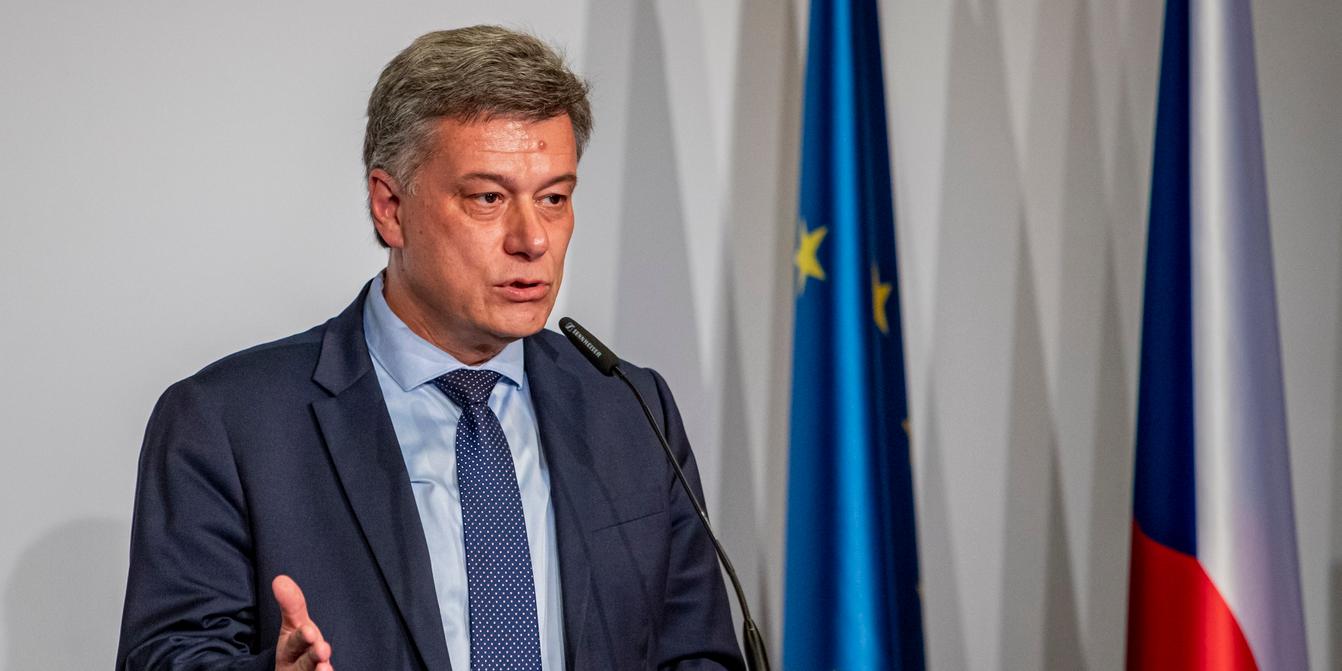
A veteran politician from the Civic Democratic Party, Blažek served as Justice Minister from December 2021 until his resignation on May 30, 2025, under mounting criticism for accepting a 468 BTC donation (worth approx. CZK 1 billion or $45 million) from a convicted cyber-criminal. He insisted he acted lawfully, but acknowledged a political and ethical misjudgment.
Prime Minister Petr Fiala
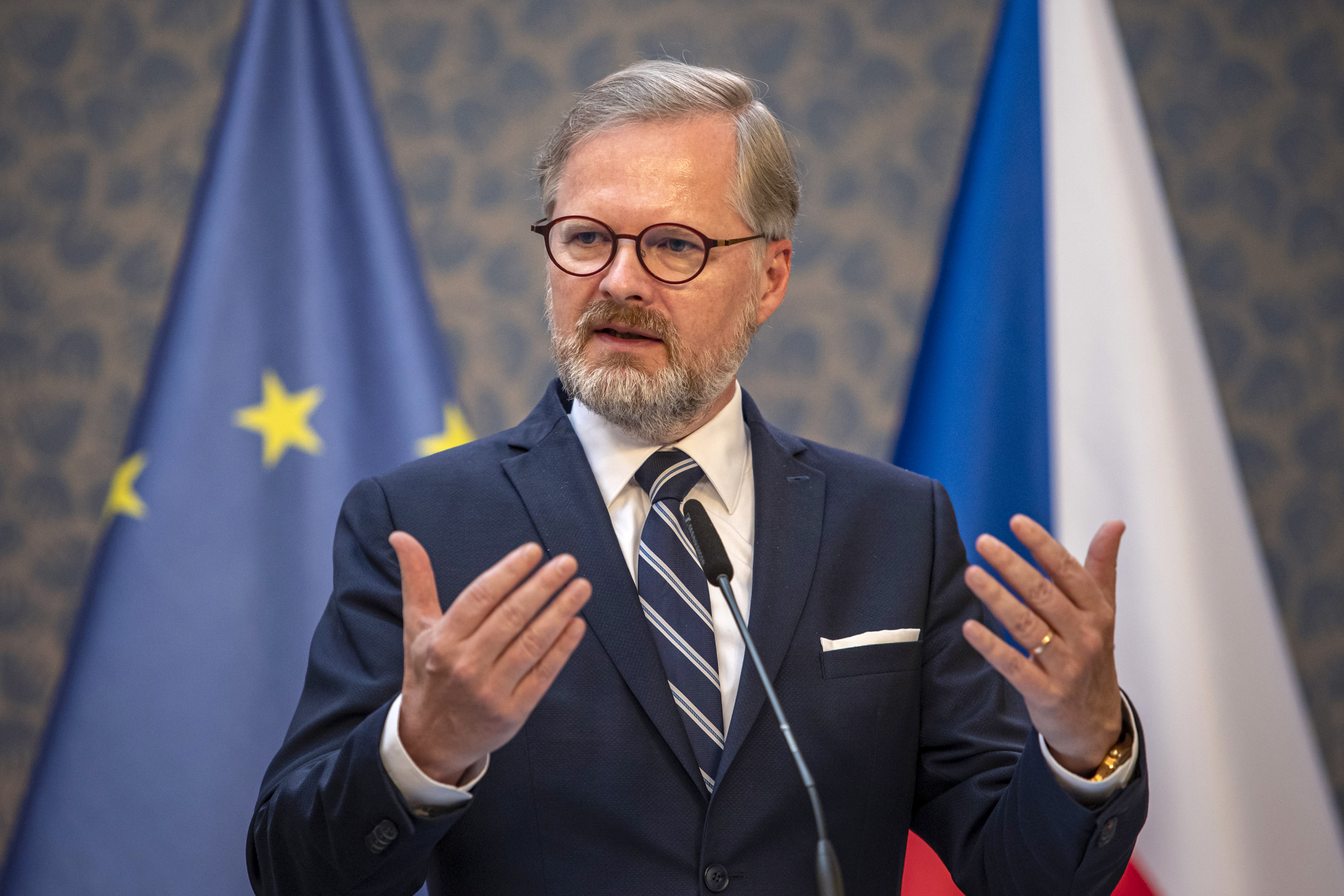
As head of the centre-right coalition, Fiala confronted the fallout from the scandal just months before the October 3–4, 2025 parliamentary elections. He framed Blažek’s resignation as an attempt to shield the coalition and ordered an independent audit to restore public trust.
Tomáš Jiříkovský (Donor / Convicted Cybercriminal)

A former darknet-market operator—known for running the “Sheep Marketplace”—Jiříkovský was convicted in 2017 for drug trafficking, fraud, and illegal weapons possession, and released in 2021. In March 2025, he donated 468 BTC to the Justice Ministry.
His motives remain murky, and the donation triggered major ethical and legal alarms. In August 2025, he was arrested by NCOZ in a raid, accused of money laundering and connected criminal acts.
NCOZ (National Centre Against Organised Crime)
The Czech unit designated to investigate serious crime, NCOZ spearheaded the probe into possible money laundering and criminal asset handling. They carried out a high-profile raid in August 2025 to detain Jiříkovský and seize bitcoin assets implicated in the scandal.
How a crypto donation differs from fiat
Crypto donation differs from fiat, and the Czech case spotlighted the significance of such differences:
Bitcoin vs. Fiat: What Makes Crypto Different?
Bearer asset and private keys
Bitcoin is a bearer asset—whoever holds the private keys controls the funds, no central authority or bank needed. In contrast, fiat (e.g., Czech koruna or U.S. dollar) relies on institutional control and identifiable accounts.
Traceability vs. pseudonymity
Every Bitcoin transaction is recorded on-chain and publicly visible. But parties are identified only by wallet addresses—not real names—so tracing ownership requires linking addresses to individuals, often via off-chain data. Fiat transactions typically go through regulated payment systems with built-in Know Your Customer (KYC) and AML visibility.
Fungibility and anonymity concerns
Bitcoin is fungible in theory, but ‘tainted’ coins may be blacklisted or harder to use. Mixers and tumblers further obscure provenance. Fiat doesn’t have equivalent anonymizing tools built into the system.
Practical Challenges for Governments
- Verifying source: Fiat donations undergo due diligence through banking intermediaries. With crypto, there’s no built-in vetting—government bodies must use chain analytics to trace flow back to the original source.
- Linking addresses to convicted actors: If the donor is a known criminal (as in the Czech case), it’s legally and politically risky to accept the asset without involving law enforcement first.
- Chain analytics limits: Tools exist, but many illicit actors obfuscate origin via peer-to-peer transactions, mixers, or layered transfers, making legal chain of custody murky or contestable—especially in court.
Why the Czech Case Raised Red Flags
When the Ministry of Justice accepted and sold 468 BTC from ex-cybercriminal Tomáš Jiříkovský without first involving law enforcement, critics said it bypassed standard AML/CTF protocols and effectively legitimized potentially illicit funds.
Experts argued that police or the organized crime unit should have secured and investigated the asset before any government sale or dispersal.
Both AP and Reuters flagged that the decision to accept and convert the donation raised serious money-laundering concerns, especially given the pseudonymous nature of crypto and the absence of a clear audit trail.
Political Consequences of The Czech Bitcoin Scandal
The immediate fallout from the Czech Bitcoin scandal was swift. On May 30, 2025, Justice Minister Pavel Blažek resigned after facing mounting criticism for accepting and later selling a 468 BTC donation, worth roughly 1 billion Czech koruna (~$45–47 million), from a convicted cybercriminal.
While Blažek insisted he had broken no law, he admitted that his decision created a political and ethical crisis. His departure was meant to protect the governing coalition from escalating damage.
The opposition, led by Andrej Babiš and the populist ANO party, capitalized on the scandal. On June 3, they forced a parliamentary no-confidence motion, accusing the government of effectively laundering illicit wealth by legitimizing the bitcoin gift.
Although the debate was heated, Prime Minister Petr Fiala’s coalition ultimately survived the vote on June 18 thanks to its parliamentary majority.
In the meantime, President Petr Pavel moved quickly to stabilize the Justice Ministry. On June 10, he appointed Eva Decroix as Blažek’s successor. Decroix promised an independent audit and committed to restoring public trust in the ministry’s integrity.
Her appointment was considered an attempt to contain the political damage ahead of the October 3–4 parliamentary elections, where early polls suggested ANO was gaining momentum at the coalition’s expense.
The longer-term consequences may be even more significant. Politico notes that the scandal has intensified calls for tighter regulation of crypto donations and clearer anti-money-laundering frameworks for governments handling digital assets.
For the ruling Civic Democratic Party and its coalition partners, the reputational hit could linger, weakening their credibility. For ANO and the opposition, the scandal has offered a political opening, potentially reshaping the balance of power as voters head to the polls.
International Implications & Precedent Cases
Governments and institutions across the globe have experimented with accepting crypto donations under stricter oversight frameworks than seen in the Czech case.
For example, Ukraine garnered nearly $100 million in blockchain contributions during the Russian invasion, channeling these funds through recognized exchanges and governance structures requiring transparency and legal compliance.
The COVID-Crypto Relief Fund in India collected over $429 million in various cryptocurrencies, publicly disclosing wallet addresses, volumes, and disbursements—most notably a $15 million allocation to UNICEF—to ensure traceability and institutional accountability.
By contrast, charitable and political entities in the U.S.—candidates and nonprofits—have adopted tighter protocols; the U.S. Federal Election Commission requires crypto donations to be valued at fair market rates, accompanied by full donor information, and treated akin to in-kind contributions.
Major NGOs like UNICEF and Greenpeace accept crypto via vetted platforms that provide donor transparency, compliance, and tax receipts.
But cross-border crypto donations pose layered legal and operational challenges. Jurisdictional fragmentation complicates asset seizure—who has legal authority when wallets span borders?
Moreover, coordinating with exchanges under global AML frameworks (e.g., FATF standards and the OECD’s Crypto-Asset Reporting Framework) becomes essential for unmasking pseudonymous senders and ensuring traceable chain-of-custody.
What Good Governance of Government Crypto Should Look Like
The Czech Bitcoin Scandal showed what happens when governments handle crypto without clear rules. To prevent repeats, experts suggest several governance steps.
- Transparent policy – Governments should publish guidelines that state if and how crypto donations or asset transfers will be accepted. Without transparency, the risk of ad-hoc decisions—and political blowback—rises.
- Centralized custody via regulated custodians – Rather than ministries holding private keys, funds should be secured through regulated custodians or national banks with crypto-asset capabilities. This reduces operational risk and ensures assets are properly accounted for.
- Legal frameworks for crypto gifts – Legislatures should clarify whether state bodies may accept crypto donations at all, under what conditions, and how such assets must be valued and converted.
- Mandatory audits and public reporting – Regular independent audits and public disclosures should track the source, amount, and use of crypto assets. This mirrors the financial scrutiny applied to fiat donations and prevents shadow transactions.
- Consultation with financial intelligence units (FIUs) or police before liquidation – Law enforcement should vet the provenance of crypto to screen for money-laundering or terrorist financing risks. Selling coins without such checks can legitimize illicit wealth.
Of course, these measures involve tradeoffs. Regulated custody and audits impose costs, and political actors may resist restrictions on “easy money.” But clear, standardized governance is the only way to protect institutional credibility in an era where crypto increasingly intersects with public finance.
Conclusion
The Czech Bitcoin Scandal is a reminder that crypto donations are not simply digital philanthropy—they are legal and ethical flashpoints.
Unlike fiat gifts, bitcoin arrives without embedded safeguards, carrying questions of provenance, legitimacy, and public accountability.
When governments lack frameworks, these assets can explode into political grenades, as seen with a ministerial resignation, police raids, and pre-election turbulence.
The lesson is clear: before touching a crypto donation, public institutions need clear legal rules, vetted custody, and law-enforcement oversight. Anything less risks turning a well-intentioned gift into a governance crisis.
FAQ
What was the Czech Bitcoin Scandal?
It refers to the May 2025 revelation that the Czech Justice Ministry accepted a 468 BTC donation (sold for ~CZK 1 billion / $45 million) from a convicted cybercriminal, triggering a minister’s resignation, parliamentary turmoil, and police investigations.
Who resigned in the Czech scandal?
Justice Minister Pavel Blažek resigned on May 30, 2025, after facing criticism for accepting and selling the bitcoin donation.
Was the Czech Bitcoin scandal donor arrested?
Yes. In August 2025, Czech police detained donor Tomáš Jiříkovský, the former darknet operator who gave the bitcoin, as part of money-laundering probes.
How much was the Czech Bitcoin donation worth?
The 468 BTC donation was valued at roughly CZK 1 billion (around $45–47 million at the time of sale).
Can governments accept crypto donations?
Yes, but only under strict conditions such as KYC checks, forensic blockchain analysis, interagency consultation (with FIUs or police), and public transparency.
What were the immediate political consequences of the Czech Bitcoin scandal?
The scandal led to Blažek’s resignation, a no-confidence vote that the government survived, and the appointment of Eva Decroix as the new Justice Minister.
How could the Czech Bitcoin scandal affect future rules?
Analysts expect the case to accelerate adoption of stricter crypto donation regulations, enhanced AML/CTF standards, and formal custody protocols for state-held digital assets.
Why does the Czech Bitcoin Scandal matter globally?
It sets a precedent for how states handle pseudonymous bearer assets. Governments worldwide are watching as this case highlights governance gaps and reputational risks tied to crypto.