
AI-powered DeFi combines blockchain’s decentralized nature with AI’s analytical capabilities, improving the efficiency and security of financial operations.
AI algorithms can process large amounts of data in real time, allowing for automated trading strategies, predictive analytics, and robust risk management frameworks.
What is AI-Powered DeFi?
AI-powered DeFi is the integration of artificial intelligence technologies such as machine learning (ML), natural language processing (NLP), and data science into decentralized finance applications.
The integration aims to improve DeFi platforms’ efficiency, security, and user experience by enabling intelligent automation, predictive analytics, and real-time decision-making.
Traditional DeFi vs AI-Powered DeFi
Traditional DeFi platforms use blockchain networks and smart contracts to provide financial services such as lending, borrowing, and trading without intermediaries. Although innovative, these platforms frequently rely on static algorithms and require manual oversight.
AI-powered DeFi systems, on the other hand, use adaptive algorithms that can learn from large datasets, adjust to market conditions, and optimize financial operations on their own.
This dynamic approach enables more responsive and personalized financial services while reducing the need for regular human intervention.
Key Components of AI-Powered DeFi
- Smart Contracts: Self-executing with the terms directly written into code, enabling automated transactions and reducing the need for intermediaries.
- Decentralized Oracles: Services that link smart contracts with external data, allowing AI models to access real-world information to make informed decisions.
- AI Agents: Autonomous programs that can analyze data and make decisions in real time to perform tasks such as trading, risk assessment, and portfolio management.
Examples of AI and DeFi Integration
- Numerai: A hedge fund that uses AI and crowdsourced data science models to make investment decisions while incentivizing data scientists with its native token.
- Fetch.ai: A platform that combines blockchain and AI to create autonomous agents capable of carrying out complex tasks like optimizing supply chains and financial markets.
- Gensyn: A decentralized network that provides infrastructure for AI workloads, allowing users to contribute computing resources to train and deploy machine learning models.
By integrating AI into DeFi, these platforms aim to create more intelligent, efficient, and accessible financial systems, paving the way for the next wave of decentralized finance.
The Role of AI in Automated Trading
AI-powered DeFi is transforming automated trading by processing real-time market data, executing trades, and managing risks at unprecedented speeds and precision. This integration improves the efficiency and security of decentralized finance platforms, providing users with smarter and more responsive trading experiences.
How AI Algorithms Process Real-Time Market Data to Execute Trades
DeFi’s AI algorithms continuously analyze vast amounts of market data, such as price movements, trading volumes, and historical trends.
These algorithms use machine learning techniques to identify trading opportunities and execute buy or sell orders faster than any human trader, adapting to market fluctuations in real time.
Use Cases in DeFi
Liquidity Provisioning Optimization
AI improves liquidity provisioning by dynamically adjusting asset allocations within liquidity pools.
For example, deep reinforcement learning models have been used to improve liquidity provisioning in platforms such as Uniswap v3, allowing for more efficient and adaptive market-making strategies.
Predictive Analytics in Yield Farming
In yield farming, AI-powered systems forecast changes in liquidity pools and interest rates, assisting investors in optimizing their strategies for maximum returns.
By analyzing on-chain data and market trends, AI can identify the most profitable opportunities and adjust investments accordingly.
Front-Running Prevention and Mitigation of Sandwich Attack
AI helps DeFi platforms stay secure by detecting and mitigating front-running and sandwich attacks. AI algorithms can detect suspicious activity by monitoring transaction patterns and identifying anomalies, allowing for proactive precautions to protect users from such exploits.
Examples of AI Trading Bots Integrated into Decentralized Exchanges (DEXs)
Several AI-driven trading bots have been developed for use in decentralized exchanges:
BingX
BingX: BingX is well-known for its grid trading strategies, which allow users to profit from sideways markets by executing trades within predefined price ranges.
Trojan Bot

Trojan Bot: Designed for the Solana ecosystem, Trojan Bot provides real-time data analysis and automated trading capabilities, making the trading process easier for users.
Hummingbot
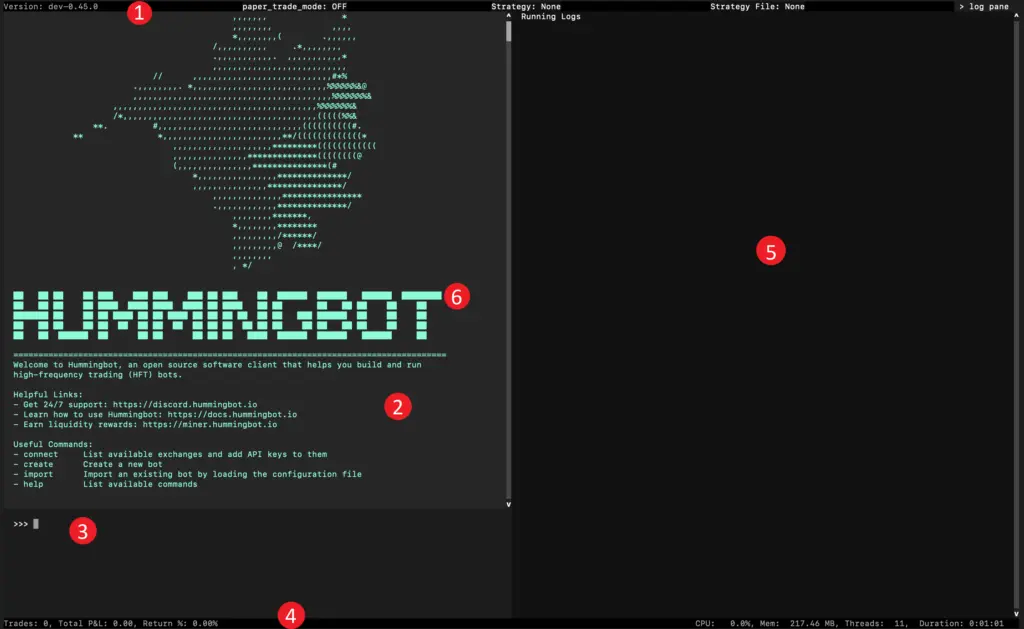
Hummingbot: An open-source Python framework that allows traders to create customizable bots for various exchanges, enabling strategies such as arbitrage and market-making.
Benefits: Speed, Scalability, Efficiency
Integrating AI into DeFi trading provides several benefits:
- Speed: AI algorithms can execute trades in milliseconds, taking advantage of fleeting market opportunities.
- Scalability: AI systems can manage multiple trading strategies on multiple platforms at the same time, covering a wide range of assets and markets.
- Efficiency: By automating decision-making processes, AI reduces human error and emotional bias, resulting in more consistent and optimal trading results.
AI integration in DeFi trading improves performance while also contributing to a more secure and user-friendly financial ecosystem.
Risk Management Through AI in DeFi
AI-powered DeFi is transforming risk management by introducing intelligent, real-time solutions to improve the security and efficiency of decentralized financial systems.
AI allows for more accurate risk assessments, automated portfolio adjustments, and proactive vulnerability detection through the use of machine learning and data analytics.
Real-time Risk Scoring and Asset Assessment
AI algorithms process high amounts of on-chain and off-chain data to provide real-time risk scoring and asset evaluation.
Platforms such as CryptoSpectator use machine learning and natural language processing to evaluate market conditions and user behavior, resulting in dynamic risk profiles that adapt to evolving financial landscapes.
Credit Risk Prediction in DeFi Lending and Borrowing
Traditional credit scoring methods frequently fail in decentralized environments due to a lack of centralized data. AI solves this problem by analyzing historical on-chain borrowing activity, transaction patterns, and user behavior to predict creditworthiness.
This method allows lenders to better assess risk, lowering default rates and enabling more inclusive lending practices.
Automated Portfolio Rebalancing
AI-powered systems automate portfolio rebalancing by constantly monitoring market trends and adjusting asset allocations to match predefined investment strategies.
EquilibrAI and other tools use AI-powered insights to suggest optimal rebalancing actions, ensuring that portfolios remain aligned with investors’ risk tolerance and market conditions.
Monitoring Smart Contract Vulnerabilities
Smart contracts are essential for DeFi, but they are prone to coding errors and security flaws. AI improves smart contract security by automatically scanning code for vulnerabilities like reentrancy attacks and integer overflows.
Platforms such as Chainalysis use machine learning models to analyze contract logic and transaction flows, identifying potential exploits before they are deployed.
Case Study: An AI-Powered DeFi Insurance Protocol
Etherisc exemplifies the application of AI in DeFi insurance by providing decentralized insurance products that use smart contracts to automate claim processing.
Etherisc’s AI integration improves risk assessment and fraud detection, giving users more reliable and efficient coverage options.
Incorporating AI into DeFi’s risk management frameworks improves security and efficiency while also paving the way for more resilient and adaptable financial ecosystems.
Key Benefits of AI-Powered DeFi
AI-powered DeFi is revolutionizing decentralized finance by implementing intelligent automation and data-driven strategies. This integration improves decision-making, reduces human error, increases accessibility, and democratizes sophisticated trading tools.
Enhanced Decision-Making through Big Data Analytics
AI analyzes large amounts of on-chain and off-chain data to detect patterns and forecast market trends. This capability allows investors to make more informed decisions by optimizing strategies such as yield farming and liquidity provision.
By analyzing complex datasets, AI provides previously inaccessible insights, allowing for more strategic investment choices.
Minimized Human Error in Trading and Asset Allocation
AI-powered systems reduce the risks associated with human emotions and biases in trading. By automating decision-making processes, AI ensures consistent and objective strategies, lowering the likelihood of impulsive actions such as panic selling or overleveraging.
This results in more consistent and predictable investment outcomes.
Increased Accessibility for Retail and Institutional AI integration in DeFi platforms lowers entry barriers for retail and institutional investors.
AI-powered tools provide personalized financial advice and portfolio management, making sophisticated investment strategies more accessible to a wider audience. This democratization promotes inclusion and allows more people to participate in decentralized finance.
Democratization of Algorithmic Trading Tools
AI-powered DeFi platforms are making advanced trading tools available to regular users. These platforms enable users to engage in high-frequency trading and complex investment strategies without requiring extensive technical knowledge.
This shift contributes to a more equitable financial ecosystem.
AI-powered DeFi is transforming the financial landscape by improving decision-making, minimizing errors, increasing accessibility, and democratizing advanced trading tools.
These advancements help to create a more efficient, inclusive, and resilient decentralized financial system.
Challenges and Limitations
AI-powered DeFi is transforming decentralized finance through intelligent automation and data-driven strategies.
However, this integration poses a number of challenges and limitations that must be addressed in order to ensure the dependability, security, and ethical integrity of AI-powered financial systems.
Technical Complexities of Integrating AI with Smart Contracts
Integrating AI into DeFi platforms presents significant technical challenges. Traditional AI models are intended to operate in centralized, mutable environments, whereas DeFi uses decentralized, immutable blockchain architectures.
This fundamental difference necessitates reengineering AI systems to operate effectively within the constraints of blockchain technology. Furthermore, the complexity of combining AI algorithms with smart contracts can impede development progress and complicate user experiences.
Data Quality and the Risks of AI Hallucination or Bias
AI models rely greatly on the quality and completeness of their training data. Inaccurate, biased, or incomplete data can cause “AI hallucinations,” in which the system produces incorrect or misleading outputs.
Such errors in DeFi applications can lead to inaccurate risk assessments, mispriced assets, and flawed trading strategies. Furthermore, inherent biases in training data can perpetuate unfair practices, compromising the fairness and reliability of AI-driven financial decisions.
Ethical Concerns About Autonomous Financial Decision-Making
The use of AI in autonomous financial decision-making raises serious ethical concerns. Concerns include transparency of AI algorithms, accountability for AI-driven decisions, and the potential loss of human oversight in financial transactions.
The “black box” nature of some AI systems makes it difficult to comprehend how decisions are made, complicating efforts to ensure fairness and accountability. These ethical considerations are especially important in DeFi, where transactions are often irreversible.
Scalability Concerns and On-Chain vs. Off-Chain Computation Limitations
Scalability remains a significant challenge for AI-powered DeFi systems. The inherent constraints of blockchain, such as transaction throughput and data storage capacity, limit on-chain computations. Off-chain computations improve scalability but raise concerns about data integrity and security.
Balancing on-chain and off-chain processing is critical for optimizing performance without compromising the trustless nature of DeFi.
Addressing these challenges is essential for the long-term growth of AI-powered DeFi. The DeFi ecosystem can fully realize the potential of AI while mitigating associated risks by developing robust technical solutions, ensuring data quality, upholding ethical standards, and optimizing scalability.
Real-World Examples and Use Cases
AI-powered DeFi is no longer a theoretical concept; it’s actively reshaping decentralized finance through real-world applications.
Innovative platforms such as Gnosis, Gauntlet, and Ocean Protocol are at the forefront, using AI to improve prediction markets, optimize protocol parameters, and democratize data access.
Gnosis: AI-Enhanced Prediction Markets
Gnosis has launched Gnosis AI, a division dedicated to integrating AI and Web3 technologies. This initiative aims to develop AI agents that participate in prediction markets, enhancing their efficiency and accuracy.
By simulating rational market participants, these AI agents foster more reliable forecasting and decision-making processes within decentralized ecosystems.
Gauntlet: Protocol Optimization Through AI
Gauntlet uses advanced simulation technology to optimize risk parameters in DeFi protocols. By modeling market risks and financial incentives, Gauntlet offers recommendations that enhance protocol performance and sustainability.
Their platform supports over 30% of DeFi’s total value locked (TVL), demonstrating the significant impact of AI-driven optimization in the DeFi ecosystem.
Ocean Protocol: Decentralized Data Marketplaces for AI
Ocean Protocol enables the creation of decentralized data marketplaces, allowing for secure and transparent data exchange.
Ocean’s tokenization of datasets as NFTs and datatokens enables data providers to monetize their data while providing consumers with valuable information for AI model training.
This approach addresses data scarcity and privacy concerns while promoting innovation in AI development within the DeFi space.
These platforms demonstrate the transformative power of integrating AI into DeFi.
They address existing challenges by improving prediction accuracy, optimizing protocol parameters, and democratizing data access, paving the way for a more intelligent, efficient, and inclusive decentralized financial system.
Future Outlook for AI-Powered DeFi
AI-powered DeFi is poised to transform the decentralized finance landscape, integrating innovative technologies to improve efficiency, security, and user experience. As we look ahead, several significant developments are expected to shape this evolving ecosystem.
Integration of Web3 and Decentralized Identity (DID)
The fusion of AI-powered DeFi, Web3 technologies, and Decentralized Identity (DID) systems aims to transform user interactions with the financial ecosystem.
DID allows users to maintain control over their personal data, ensuring privacy and security when interacting with DeFi platforms. This integration enables seamless onboarding, personalized financial services, and increased trust in decentralized applications.
Emergence of Self-Improving AI Agents in DAOs and Liquidity Protocols
The use of self-improving AI agents in Decentralized Autonomous Organizations (DAOs) and liquidity protocols is expected to improve decision-making and operational efficiencies.
These AI agents can manage tasks like yield optimization, risk assessment, and governance voting on their own, adapting to market changes in real time. They help to make DeFi infrastructures more resilient and responsive by learning from data inputs continuously.
Potential for AI-Curated DeFi Indices and Robo-Advisors
The emergence of AI-curated DeFi indices and robo-advisors is expected to broaden access to sophisticated investment strategies. These tools can analyze large datasets to create diverse portfolios, manage risk, and make personalized investment recommendations.
By automating complex financial analysis, they enable retail and institutional investors to navigate the DeFi landscape with greater confidence and efficiency.
Predictions for Mainstream Adoption and Institutional Entry
As AI-powered DeFi solutions mature, mainstream adoption and institutional participation are expected to rise significantly. Improved security measures, regulatory compliance, and user-friendly interfaces are making DeFi more accessible to traditional financial institutions.
Institutions are exploring opportunities such as decentralized lending, asset management, and tokenized securities, recognizing the potential for increased efficiency and revenue streams.
The integration of AI and DeFi ushers in a new era of decentralized finance marked by intelligent automation, personalized services, and increased accessibility. As these technologies advance, they hold the promise of making financial systems more inclusive, efficient, and resilient.
Conclusion
AI-powered DeFi is a game-changer in the evolution of decentralized finance, combining machine learning’s adaptive intelligence with blockchain’s transparency and autonomy.
By automating trading strategies and improving risk management, AI enables DeFi protocols to become faster, smarter, and more resilient.
This fusion optimizes yield opportunities while also mitigating risks in ways that traditional financial systems usually cannot match.
Looking ahead, the integration of AI and DeFi is poised to transform the financial landscape, ushering in a new era of decentralized, intelligent finance.
As institutional adoption grows and infrastructure matures, AI-powered DeFi could become the foundation of next-generation financial services, bringing greater inclusivity, automation, and autonomy to global markets.