
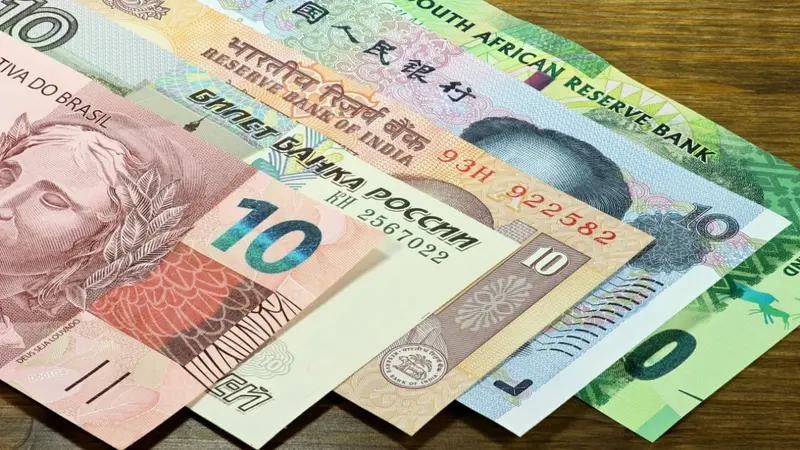
Asian currencies rose sharply in Q2 2025 against the U.S. dollar as markets reacted to escalating trade tensions and shifting economic policies.
The DXY index, which gauges the performance of the USD, plummeted to a three-year low of 96.20.
The Indian rupee, Chinese yuan, and Japanese yen all experienced a significant increase in value in the forex markets, surpassing the greenback. The FX sector’s top position was occupied by leading local currencies, which resulted in substantial returns for traders who bet against the USD.
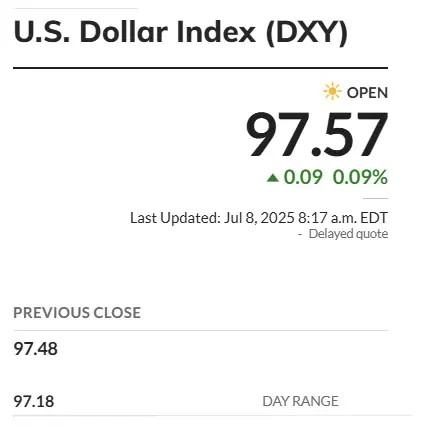
The DXY index experienced a swift increase in value following Trump’s announcement of a new set of tariffs, which imposed a 25% tariff on Japan and South Korea. It has remained on the more positive side of the continuum since Monday’s trading session, peaking at 97.57.
The development suggests that Asian currencies will continue under pressure due to price increases.
The value of the US dollar is expected to rebound, and there is pressure on Asian currencies.
Trump’s tariffs are currently undermining the impressive performance of Asian currencies in the forex market. In addition to addressing the tariffs, Asian leaders must project a sense of strength and avoid the appearance of subservience to the United States.
The consequences of appearing vulnerable diminish their prospects as leaders in domestic affairs.
Phillip Wool, the Head of Portfolio Management at Rayliant Global Advisors, anticipated that Asian currencies could continue to weaken shortly. “I anticipate that Asian markets susceptible to the most recent round of trade threats will experience a decline in value and a depreciation in their currencies.”

He also stated that Japanese stocks may experience a decline due to the high cost of doing business in the United States, specifically for manufacturers. “Specifically, stocks in markets with the highest tariff exposure, such as Japanese automakers,” he stated.
He also underscored that the market is perplexed as to why Japan and South Korea did not negotiate a deal with the United States as soon as possible. “We are unsurprised that countries such as South Korea and Japan did not establish agreements sooner.”
He summarized the situation by noting that the bargaining process is time-consuming and that there is domestic political pressure to avoid appearing to have yielded to Washington’s threats.