

Bitcoin exchange balances drop to 2019 lows at 2.4M BTC, signaling long-term HODLing and a potential supply shock as institutional demand rises.
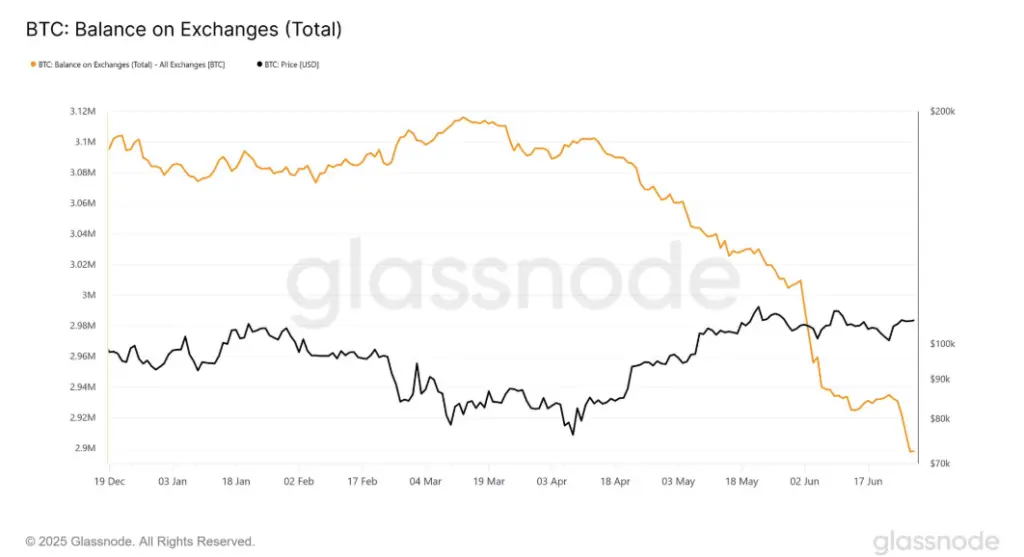
Bitcoin (BTC) exchange balances have fallen below 2.9 million BTC, marking a six-year low and sparking expectations of a potential supply shock. This decline has bullish investors optimistic about a price rally for the leading cryptocurrency, though some analysts remain cautious.
Exchange Balances Hit Lowest Level Since 2019
Glassnode data indicates that Bitcoin held on centralized exchanges has decreased steadily since mid-April 2025, dropping from 3.05 million BTC to approximately 2.85 million BTC, with around 150,000 BTC moved to cold wallets.
This is the lowest exchange balance since March 2019, when Bitcoin surged 233% in subsequent years. An X post from Whale Insider on June 29, 2025, noted, “Bitcoin exchange balances keep plunging, now at their lowest point in 6 years.”
A declining exchange balance typically signals strong investor confidence as coins are transferred from exchanges to long-term storage in digital or cold wallets. This reduces available supply, potentially triggering a supply shock as buyers compete for limited BTC, a pattern historically associated with price rallies. However, investor Robert Kiyosaki has predicted a Bitcoin price crash in July 2025, citing macroeconomic concerns, which contrasts with the bullish sentiment surrounding low exchange balances.
Corporate Treasuries and ETFs Drive Supply Reduction
The drop in exchange balances coincides with increased corporate Bitcoin acquisitions. Between June 23 and June 27, 2025, new Bitcoin treasury companies purchased 5,898 BTC, moving assets from exchanges to secure custody. Since April, corporate treasuries have acquired over 100,000 BTC, with MicroStrategy, led by Michael Saylor, continuing its aggressive buying alongside firms like ProCap Financial and GameStop. As of June 2025, 80 firms hold approximately 3.4% of Bitcoin’s total supply, with MicroStrategy alone owning around 580,000 BTC.
Spot Bitcoin exchange-traded funds (ETFs) have also contributed significantly to the decline. S&P Global reports strong demand for Bitcoin ETFs, with over 800,000 BTC held in ETF custody wallets as of June 2025, reducing exchange liquidity. Glassnode notes that much of the decline in exchange balance reflects coins being reshuffled into ETF wallets managed by custodians like Coinbase rather than a pure reduction in sellable supply. For instance, Coinbase Custody holds 81% of U.S. crypto ETF assets, totaling $140 billion, further tightening exchange availability.
Despite the supply shock narrative, Glassnode cautions that the decline may indicate a market structure shift rather than a straightforward reduction in sell pressure. Combined exchange and ETF balances remain stable at around 3.04 million BTC, similar to early 2024 levels before spot ETFs launched. Additionally, recent ETF activity shows mixed signals, with net outflows of 10,000 BTC in 2025 compared to 208,000 BTC in net purchases by mid-2024, suggesting a slowdown in institutional inflows.
Market Implications and Outlook
The shrinking exchange supply, now at 11% of Bitcoin’s 19.7 million circulating supply, is viewed as bullish by many, as it reduces selling pressure and amplifies the impact of new buy orders. Posts on X highlight corporate treasuries and ETFs as key drivers of a potential supply shock, with exchange reserves approaching 2 million BTC. However, Bitcoin’s price, consolidating around $107,500, has not yet reflected the expected rally, possibly due to macroeconomic uncertainties or profit-taking by miners, who have stabilized reserves after months of selling.
While corporate adoption and ETF demand underscore Bitcoin’s growing role as a treasury asset, the supply shock narrative is not without skepticism. Analysts warn that a sudden shift in market sentiment or regulatory changes could temper bullish expectations, and Kiyosaki’s bearish outlook highlights risks that investors must weigh.