
In 2025, blockchain interoperability becomes a critical component of the decentralized ecosystem, enabling seamless communication and asset transfers across multiple networks.
This capability is critical for overcoming the limitations of isolated blockchains, resulting in a more connected and efficient digital landscape.
Understanding Blockchain Interoperability
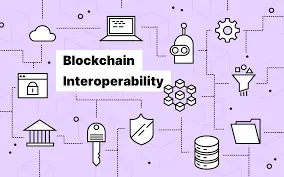
Blockchain interoperability is the ability of different blockchain networks to communicate, share data, and transfer assets seamlessly.
This feature allows blockchains to send and receive messages, data, and tokens from various platforms, resulting in a more connected and efficient ecosystem.
Challenges of Siloed Blockchains
Currently, many blockchains operate in isolation, posing several challenges:
- Liquidity Fragmentation: Assets are restricted to their native networks, limiting their utility and reducing overall liquidity.
- Data Isolation: Vital information remains confined within individual blockchains, preventing comprehensive data analysis and decision-making.
- Operational Inefficiencies: Because chains cannot interact, cross-chain transactions require complex and often insecure solutions.
Benefits of Blockchain Interoperability
Implementing interoperability solutions can address these issues through:
- Enhancing Liquidity: Allowing assets to move freely across networks increases their utility and market liquidity.
- Integrating Data: Allowing data to be shared across blockchains results in more informed and comprehensive analytics.
- Improving Efficiency: By streamlining cross-chain transactions, we reduce the need for intermediaries, which reduces costs and increases transaction speed.
Blockchain interoperability is critical for overcoming the limitations of isolated networks, resulting in a more unified and efficient blockchain ecosystem.
The Evolution of Blockchain Interoperability Solutions
Blockchain interoperability has evolved significantly over time, addressing the demand for seamless communication and asset transfers across multiple blockchain networks.
Early Attempts (2017–2022):
- Atomic Swaps: Introduced as a decentralized method, atomic swaps allow for direct peer-to-peer crypto exchanges between different blockchains with no intermediaries. Using smart contracts and cryptographic techniques, they ensured that either both parties completed the trade or neither did, boosting trust in cross-chain transactions.
- Basic Bridges: To facilitate asset transfers between different blockchains, basic bridge protocols were created. These bridges served as connectors, allowing tokens or data to move from one chain to another, though they usually relied on centralized entities to oversee the process.
- Centralized Solutions: Some early interoperability solutions relied on centralized exchanges or custodial services to handle cross-chain transactions. While effective, these approaches introduced trust issues and potential single points of failure, which went against the decentralized concept of blockchain technology.
Innovations (2023–2024):
- Cross-Chain Smart Contracts: The development of cross-chain smart contracts enabled decentralized applications (dApps) to operate on multiple blockchains. This innovation enabled more complex interactions, such as decentralized finance (DeFi) protocols that could draw on liquidity from multiple networks.
- Interoperability Protocols: Protocols such as LayerZero have emerged, enabling trustless omnichain interoperability by providing low-level communication primitives. These protocols enabled direct transactions across multiple chains without relying on trusted custodians, thereby improving security and decentralization.
- Multi-Chain Liquidity Networks: To address liquidity fragmentation, multi-chain liquidity networks were created, allowing assets to flow seamlessly between blockchains. This development increased capital efficiency and gave users access to a wider range of financial services.
2025 and Beyond:
- Advancements in Layer-0 Protocols: Layer-0 solutions, such as Polkadot’s relay chain and Cosmos’ Inter-Blockchain Communication (IBC) protocol, have played an important role in establishing the foundation for blockchain interoperability. These protocols allow different blockchains to connect and communicate more efficiently, resulting in a more cohesive ecosystem.
- Decentralized Bridges: The emergence of decentralized bridge technologies has reduced reliance on centralized intermediaries, increasing the security and trust in cross-chain asset transfers. These bridges use smart contracts to control the locking and minting of assets across chains, ensuring a secure exchange process.
- AI-Powered Cross-Chain Solutions: Integrating artificial intelligence into blockchain interoperability solutions is a growing trend. AI can optimize transaction routing, predict network congestion, and improve security, resulting in more efficient and intelligent cross-chain interactions.
Blockchain interoperability solutions are constantly evolving, reflecting the industry’s commitment to building a more interconnected and efficient decentralized ecosystem.
Key Technologies Powering Blockchain Interoperability in 2025
In 2025, blockchain interoperability is driven by several key technologies that allow for seamless communication and transactions across multiple networks.
Layer 0 Protocols:
Layer-0 protocols provide the foundational infrastructure for Layer-1 blockchains, addressing scalability and enabling interoperability between blockchains. They enable developers to create customized Layer-1 blockchains for specific applications or use cases.
Cosmos (IBC)
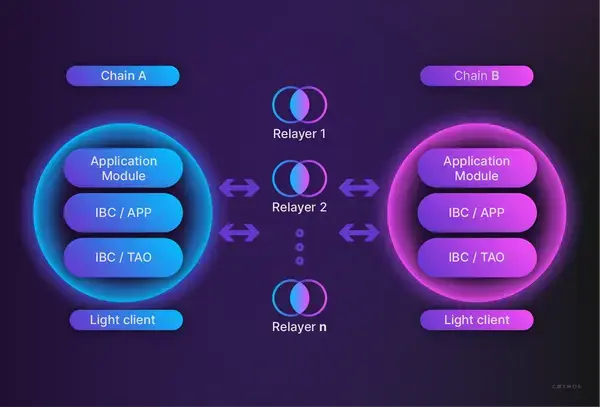
Cosmos (IBC): Cosmos uses the Inter-Blockchain Communication (IBC) protocol to facilitate interoperability among diverse blockchains, allowing them to exchange data and value seamlessly.
Polkadot (XCMP)
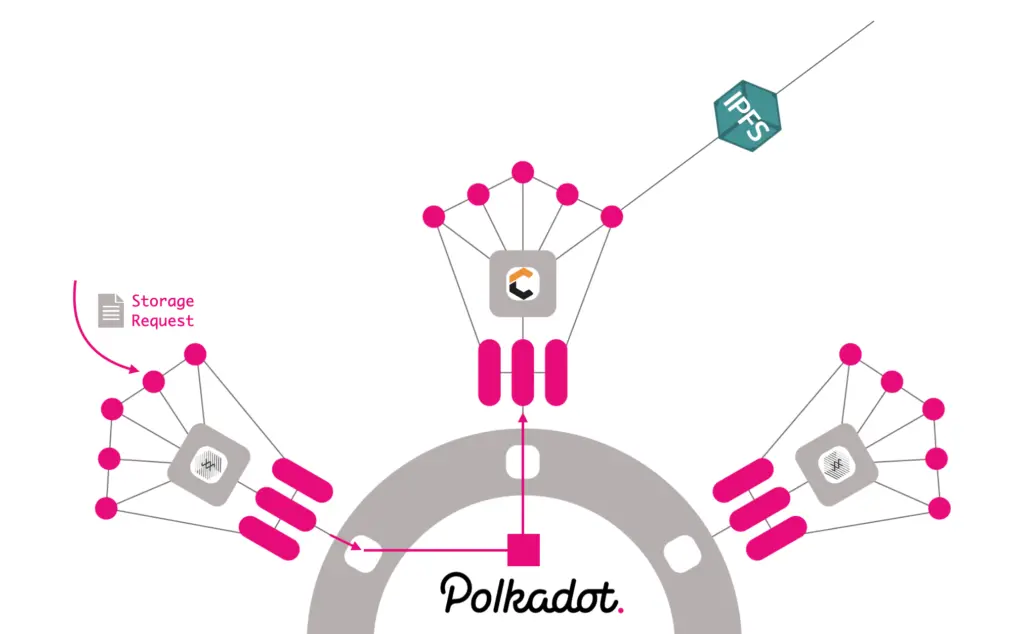
Polkadot (XCMP): Polkadot’s Cross-Chain Message Passing (XCMP) protocol allows parachains to securely communicate and share information within its ecosystem.
LayerZero
LayerZero: LayerZero abstracts the technical complexities of various blockchain protocols, allowing developers to create decentralized applications (dApps) that can run on multiple chains. It accomplishes this by using cross-chain messages to communicate between chains, eliminating the need for manual bridges or asset conversion.
Cross-Chain Bridges:
Cross-chain bridges are decentralized applications that allow for the transfer of assets from one blockchain to another, increasing token utility by enabling cross-chain liquidity.
They usually involve locking or burning tokens on the source chain using a smart contract and unlocking or minting tokens on the destination chain.
- Synapse: Synapse is a cross-chain bridge protocol that allows for secure and efficient asset transfers across multiple blockchain networks.
- Wormhole: Wormhole is a cross-chain bridge protocol that allows assets or tokens to be transferred (or “wrapped”) between blockchains, making it an essential component of blockchain interoperability.
- Chainlink’s CCIP: Chainlink’s Cross-Chain Interoperability Protocol (CCIP) is a secure, trust-minimized framework for cross-chain communication that enables the transfer of tokens and arbitrary data between blockchains.
Interoperable Smart Contracts:
Interoperable smart contracts are transforming decentralized finance (DeFi) and non-fungible tokens (NFTs) by allowing decentralized applications to run on multiple blockchains.
- Composable Finance: Composable Finance is a protocol that enables cross-chain smart contract interoperability, allowing DeFi applications to work seamlessly across multiple blockchain networks.
- Interchain dApps: These decentralized applications are designed to work across multiple blockchains, extending the utility and reach of DeFi and NFT platforms.
AI and Automation for Cross-Chain Transactions:
Artificial intelligence (AI) and automation are optimizing cross-chain transactions by increasing efficiency and security.
- Oracles: Oracles are entities that connect blockchains to other data sources, allowing smart contracts to interact with real-world data.
- MEV Protection: Maximal Extractable Value (MEV) protection mechanisms are used in blockchain networks to prevent the abuse of transaction ordering, ensuring fair and secure transaction processing.
- AI-Driven Routing: AI-driven routing algorithms optimize the path of cross-chain transactions, reducing latency and improving the overall efficiency of asset transfers between blockchains.
These technologies work together to make the blockchain ecosystem more interconnected and efficient, enabling seamless transactions and fostering innovation across multiple platforms.
Real-World Use Cases of Blockchain Interoperability
Blockchain interoperability has enabled numerous real-world applications in various industries, improving efficiency, transparency, and functionality.
DeFi (Decentralized Finance): Enhancing Capital Efficiency
Blockchain interoperability in the DeFi sector facilitates cross-chain lending and liquidity pools, allowing assets to move seamlessly between blockchain networks.
This fluidity improves capital efficiency by giving users access to a broader range of financial services and investment opportunities rather than being limited to a single blockchain ecosystem.
For example, cross-chain bridges make it easier to transfer tokens across networks, increasing liquidity and allowing for more dynamic financial interactions.
NFTs and Gaming: Creating Cross-Chain Ecosystems
The cross-chain NFT marketplaces and blockchain gaming economies have grown significantly. Interoperability enables non-fungible tokens (NFTs) and in-game assets to be used on multiple platforms, increasing their utility and value.
Gamers can transfer assets between games on different blockchains, and artists can showcase their NFTs on multiple marketplaces, reaching a larger audience and fostering more cohesive digital economies.
Institutional Adoption: Supporting CBDCs and Enterprise Solutions
Interoperability is critical for developing and implementing central bank digital currencies (CBDCs) and enterprise blockchain solutions.
It enables various financial institutions and corporate entities to securely transact and share data across multiple blockchain platforms.
This capability allows CBDCs to operate seamlessly within the existing financial infrastructure, promoting greater acceptance and integration of digital currencies.
Supply Chain and IoT: Streamlining Logistics and Automation
In supply chain management and the Internet of Things (IoT), blockchain interoperability enables multi-chain verification and the use of smart contracts to automate processes.
This integration ensures that goods are transparent and traceable as they move through the supply chain, which reduces fraud and errors.
For example, products can be tracked across multiple blockchain networks, providing real-time updates and verifiable records that improve logistics operations’ trust and efficiency.
These applications highlight how blockchain interoperability is transforming various industries by allowing seamless interactions across multiple networks, resulting in more integrated and efficient systems.
Challenges and Risks of Blockchain Interoperability
Blockchain interoperability has numerous benefits, but it also poses new challenges and risks that must be addressed in order to ensure secure and efficient cross-chain interactions.
Security vulnerabilities
Interconnecting multiple blockchain networks can pose security risks, such as:
- Bridge Hacks: Cross-chain bridges, which allow for asset transfers between blockchains, are frequently targeted due to their complexity. For example, the Ronin Bridge hack in 2022 resulted in more than $600 million in stolen assets. Mitigation strategies include rigorous auditing of bridge smart contracts and the implementation of decentralized bridge validation protocols.
- Smart Contract Exploits: Vulnerabilities in smart contract code can be exploited to gain unauthorized access or manipulate data. Regular audits and adherence to best coding practices are critical for mitigating these risks.
- Sybil Attacks: In Sybil attacks, an adversary creates multiple fake identities in order to gain disproportionate control over the network. Implementing strong consensus mechanisms like Proof of Stake (PoS) or Proof of Authority (PoA) can help protect against these attacks.
Scalability Issues
As blockchain networks expand, scalability becomes an important consideration:
- Transaction Bottlenecks: Limited processing capabilities can result in longer transaction times and higher fees. For example, Bitcoin processes approximately 7 transactions per second (TPS), whereas Ethereum’s Layer 1 handles 20 to 30 TPS. Traditional payment systems, such as Visa, can process more than 24,000 TPS. Interoperability can help address these issues by distributing transaction processing across multiple chains, reducing congestion and transaction costs.
Regulatory Uncertainty
Navigating the regulatory landscape presents challenges to interoperable blockchain systems:
- Compliance Across Jurisdictions: Data privacy, financial transactions, and digital assets are regulated differently in each country. Ensuring that cross-chain activities comply with all applicable laws is difficult and requires continuous monitoring.
- Know Your Customer (KYC) Integration: Implementing KYC procedures across decentralized and interoperable platforms can be difficult because it may violate the principles of user anonymity and decentralization inherent in blockchain technology.
Addressing these challenges is essential for the long-term development of blockchain interoperability solutions.
Implementing strong security measures, improving scalability, and developing clear regulatory frameworks are all critical steps toward realizing the full potential of interconnected blockchain networks.
The Future of Blockchain Interoperability Beyond 2025
As we look beyond 2025, blockchain interoperability is poised to soar, fueled by advancements in technology and evolving applications.
Predictions for Completely Interoperable Blockchain Ecosystems
The future envisions a landscape in which diverse blockchain networks work in tandem to enable seamless asset transfers and data exchanges. This interconnected environment improves liquidity, scalability, and usability across platforms.
Innovations such as cross-chain technology are expected to facilitate this seamless communication, increasing the overall efficiency of blockchain ecosystems.
The Role of AI, Quantum Computing, and zk-SNARKs in Cross-Chain Security
Emerging technologies will play a critical role in strengthening cross-chain security:
- Artificial intelligence (AI): AI can improve blockchain security by analyzing large datasets to identify patterns and predict potential threats. In the context of quantum-resistant cryptography, AI can help with algorithm design and optimization, vulnerability identification, and transitioning to post-quantum cryptographic systems.
- Quantum Computing: While quantum computing poses a threat to current cryptographic methods, development of quantum-resistant algorithms is underway to protect blockchain networks. Transitioning to quantum-safe protocols will be critical for mitigating vulnerabilities introduced by quantum advancements.
- Zero-Knowledge Succinct Non-Interactive Arguments of Knowledge (zk-SNARKs): zk-SNARKs allow for transaction validation without revealing underlying data, improving privacy and security in cross-chain interactions. They enable secure cross-chain transactions, paving the way for increased interoperability among blockchain networks.
How Web3 Super Apps Will Drive Mass Adoption
The emergence of Web3 super apps, which are comprehensive platforms that integrate various decentralized services, will play an important role in bringing blockchain technology into the mainstream.
These applications will lower the barrier to entry for everyday users by providing user-friendly interfaces and seamless access to multiple blockchain-based services, promoting widespread adoption.
The integration of AI and blockchain in these super apps will improve privacy and security, making them more appealing to a wider audience.
The future of blockchain interoperability beyond 2025 looks promising, with advances in AI, quantum-resistant cryptography, and user-centric applications driving the evolution of a fully interconnected and secure blockchain ecosystem.
Conclusion
Blockchain interoperability in 2025 is at the forefront of global blockchain adoption, enabling seamless transactions across diverse networks.
As the crypto ecosystem matures, the ability to transfer assets, data, and smart contract functionality across chains will become critical for scalability, efficiency, and mainstream adoption.
The rise of Layer-0 protocols, decentralized bridges, and AI-powered automation is transforming blockchain interoperability from a niche innovation to a requirement.
However, difficulties such as security risks, regulatory uncertainties, and scalability constraints must be addressed using standardized protocols and decentralized solutions.