
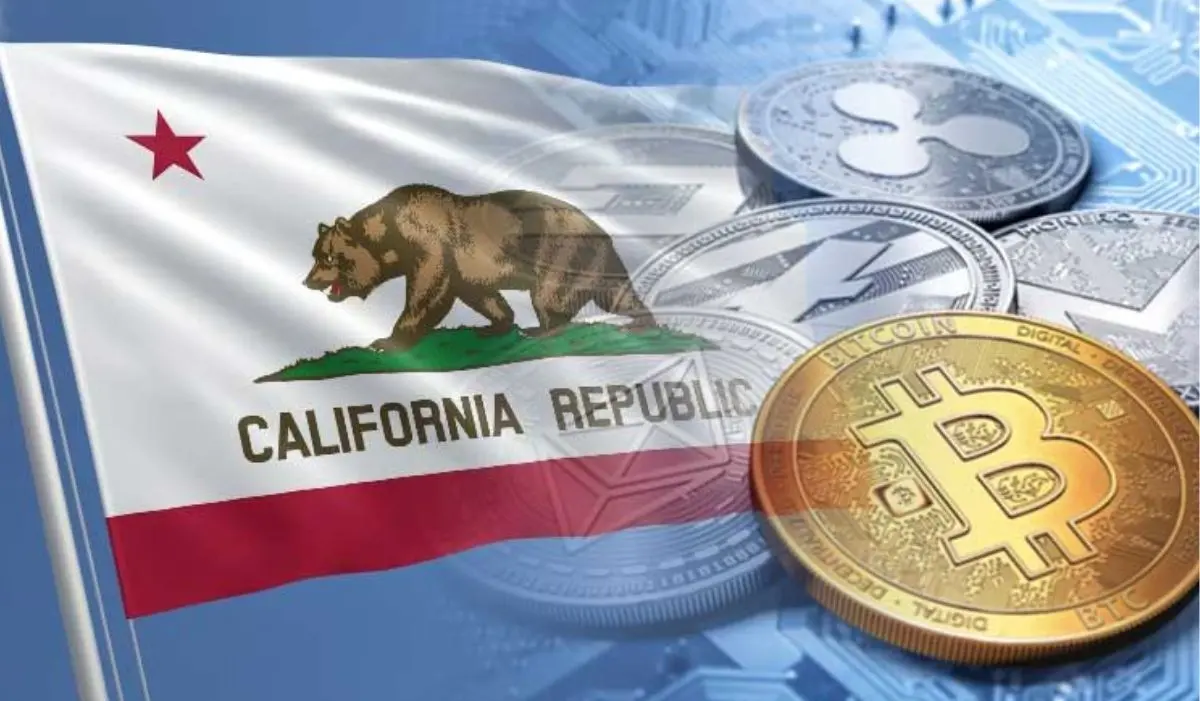
California plans to accept crypto for payments under a new bill that could make Bitcoin and stablecoins valid for state fees by 2026.
- 1 Introduction
- 2 What the Business Is: AB 1180 in a Nutshell
- 3 Following Others: National and State Context
- 4 Political & Industry Dynamics
- 5 Practical Implications & Risks
- 6 Tech & Administrative Roll‑Out
- 7 Adoption Outlook & Ripple Effects
- 8 Next Steps & Date Tracker
- 9 Conclusion
- 10 Frequently Asked Questions (FAQs)
Introduction
California just RSVP’d to the crypto party; will it arrive fashionably late, or is it about to steal the mic and run the show?
As digital currencies gain momentum globally, California plans to accept crypto for payments, marking a significant milestone with the passage of Assembly Bill 1180 (AB 1180).
This legislation greenlights government agencies across the state to begin exploring cryptocurrency as a method for collecting payments, such as taxes, fees, and fines.
It’s a bold move from the world’s fifth-largest economy and a hotbed of innovation, but is the Golden State paving the road ahead or simply following footsteps already pressed into the digital pavement?
In this piece, we’ll unpack what AB 1180 actually allows, the broader adoption landscape in the U.S., and what it could mean for businesses, residents, and crypto developers alike.
Whether you’re a seasoned blockchain buff or just figuring out what gas fees mean, this shift deserves your attention.
Stay tuned as we break down how and why California plans to accept crypto for payments—and what that might look like in practice.
What the Business Is: AB 1180 in a Nutshell
On June 2, 2025, California’s legislature unanimously passed Assembly Bill 1180 (AB 1180) with a sweeping 68–0 vote, a clear sign that Sacramento is leaning into crypto’s momentum.
The bill empowers the state’s Department of Financial Protection and Innovation (DFPI) to draft and implement rules for accepting digital assets under the state’s Digital Financial Assets Law.
In essence, California plans to accept crypto for payments, but it’s not just flipping a switch. This is a carefully orchestrated rollout.
The plan kicks in officially on July 1, 2026, with a structured pilot program that runs through January 1, 2031.
During this phase, state agencies will experiment with crypto-based payment systems for fines, fees, permits, and taxes.
Think of it as a regulatory sandbox with real stakes. The state also mandates a detailed report by January 1, 2028, tracking transaction data, identifying technology or compliance issues, and flagging risks or inefficiencies.
By laying this groundwork, California plans to accept crypto for payments in a way that balances innovation with accountability.
It’s a cautious but confident play toward modernizing government payment rails while still respecting the high bar of regulatory compliance.
The Other Half: AB 1052 (“Bitcoin Rights”)
Where AB 1180 creates the pipes, AB 1052 turns on the faucet. Dubbed the “Bitcoin Rights” bill, AB 1052 solidifies the rights of Californians to self-custody their digital assets and explicitly prohibits discrimination based on crypto-based transactions.
So, whether you’re buying groceries or donating to a political campaign using Bitcoin or stablecoins, your method of payment can’t be a reason for rejection, at least under state law.
With AB 1052 in place, private businesses are free to accept crypto with reduced fear of agency interference.
It signals that California not only plans to accept crypto for payments at the government level, but also wants to normalize its use in the broader economy.
This two-pronged legislative approach shows the state is aligning both its institutional backbone and its private-market outlook. AB 1180 sets the rails for public sector adoption, while AB 1052 ensures individuals and enterprises are free to build and transact atop those rails.
Together, they mark a turning point in how California plans to accept crypto for payments and, potentially, how the rest of the U.S. might follow suit.
Following Others: National and State Context
California may be late to the party, but it’s arriving with its own playlist. Several U.S. states have already opened their doors to crypto-based payments in varying degrees. Florida, for example, launched a pilot program allowing businesses to pay certain fees in crypto.
Colorado accepts crypto for tax payments via a PayPal integration. Louisiana and Utah have also taken steps to integrate crypto into their payment frameworks, testing the waters through state portals or treasury offices.
While these states have jumped in early, California plans to accept crypto for payments with a different flavor, one rooted in flexibility.
Rather than mandating usage, Assembly Bill 1052 (AB 1052) offers optionality: both government agencies and individuals may choose crypto, but they’re not forced to.
This means if an agency wants to pilot crypto payments for DMV renewals or park fees, it can—but it won’t be penalized for opting out. That soft rollout is a key distinction.
Digging deeper, this isn’t just about legal flexibility. California’s institutional interest in digital assets is already playing out in the financial background.
As of mid-2025, public pension funds in the state reportedly hold nearly $276 million in MicroStrategy stock, an indirect but significant exposure to Bitcoin.
This investment decision quietly underscores the broader bullish sentiment within California’s public finance sector.
So, while other states race toward implementation, California plans to accept crypto for payments in a more measured and strategic way, rooted in infrastructure, rights-based policy, and economic signaling.
It’s not just a technical adoption; it’s a cultural and financial stance. And in true West Coast fashion, it might just influence the next wave of national crypto norms.
Political & Industry Dynamics
Bipartisan & Advocacy Support
When California plans to accept crypto for payments, it’s not just a tech trend—it’s a political statement with rare bipartisan harmony.
AB 1180 passed the State Assembly with a unanimous 68–0 vote, showcasing a level of political unity that’s uncommon even for low-stakes bills. In an era marked by polarization, crypto appears to be a unique area of cross-party alignment.
Fueling this effort behind the scenes was the Satoshi Action Fund, a nonprofit crypto advocacy group with national reach.
Despite ties to politically charged figures, including former President Trump, their involvement in shaping AB 1180 reflects how decentralized finance is gaining traction across ideological lines.
Rather than pushing a partisan agenda, the fund’s influence signals that California’s approach is about pragmatism and economic positioning, not tribal politics.
That’s critical, because when California plans to accept crypto for payments, it doesn’t just mirror tech innovation—it represents an alignment of political will, civic experimentation, and financial modernization. This type of coalition-building could be key to scaling crypto adoption in other jurisdictions, both within and beyond U.S. borders.
Tech Hubs in Play
Let’s not forget the hardware behind the headlines. California is already the beating heart of the global crypto industry. Giants like Ripple, Kraken, Coinbase, and the Solana Foundation all have major operations anchored in the state.
These firms aren’t just building products—they’re shaping the infrastructure that will underpin future payment rails.
Payment processors like BitPay, Coinbase Commerce, and PayPal are also headquartered or deeply integrated in California’s fintech ecosystem.
These companies are likely to play a crucial role in operationalizing how California plans to accept crypto for payments.
Whether it’s integrating with state tax systems or powering utility bill platforms, these vendors already have the tooling and compliance chops to make public-sector crypto transactions frictionless.
California isn’t merely adopting crypto, it’s doing so with the full weight of its tech industry behind it. When the state decides to make a move, it brings Silicon Valley, venture capital, and a global developer base along for the ride.
That’s why, when California plans to accept crypto for payments, it’s not just a policy change; it’s a market signal to the world.
Practical Implications & Risks
For California residents and businesses, the move toward crypto isn’t just symbolic—it’s functional. As California plans to accept crypto for payments, day-to-day transactions with state agencies could soon include options for Bitcoin, Ethereum, or stablecoins like USDC.
Imagine paying vehicle registration fees or business licensing charges directly from a crypto wallet, no credit card fees, no banking middlemen, and near-instant settlement.
This isn’t theoretical. The pilot program, slated to run from July 1, 2026, through January 1, 2031, is designed to collect real-world insights: What’s the optimal fee structure? How do users respond to volatility and confirmation times?
Are fraud or refund risks significant? These questions will guide the state’s approach and help determine whether crypto becomes a permanent fixture in California’s payment systems.
But convenience doesn’t come without caveats. The most glaring concern is price volatility. If someone pays a $100 fee in Bitcoin, and the price drops 5% within minutes, who eats the loss?
To manage that, California plans to accept crypto for payments only through processors that guarantee dollar conversions in real time.
That’s where the Department of Financial Protection and Innovation (DFPI) steps in—overseeing vendor procurement and making sure the state receives USD equivalents, not fluctuating tokens.
Technical hiccups and UX challenges also loom large. What happens if a transaction gets stuck? What if users accidentally send from the wrong network? While blockchain promises transparency, it doesn’t come with a help desk.
California will need to ensure robust customer support and intuitive interfaces to avoid alienating first-time users.
And then there’s the environmental factor. Proof-of-work coins like Bitcoin still carry a significant energy footprint, sparking concerns among climate advocates.
While stablecoins and Ethereum (post-merge) offer more sustainable options, the optics of public agencies embracing energy-intensive assets may stir resistance.
Still, as California plans to accept crypto for payments, it enters the risk-reward zone with eyes open. By piloting gradually, enforcing conversion safeguards, and soliciting user feedback, the state aims to thread the needle between innovation and caution.
Tech & Administrative Roll‑Out
Making crypto payments a reality in the public sector isn’t just about passing bills—it’s about building infrastructure that doesn’t break.
As California plans to accept crypto for payments, the heavy lifting falls squarely on the shoulders of the Department of Financial Protection and Innovation (DFPI).
The agency has been tasked with designing the entire backend: from licensing crypto service providers to setting up integrations with state agency portals and enforcing AML/KYC standards.
The DFPI’s job is to ensure this isn’t just a digital gimmick. They must create a system that can handle high transaction volumes, verify user identities, prevent money laundering, and settle payments in real time.
To navigate the inherent volatility of cryptocurrencies, California plans to accept crypto for payments only through third-party processors that instantly convert digital assets into U.S. dollars.
This approach mirrors Colorado’s model and allows California to protect its budgets from market swings while still offering the flexibility and innovation of blockchain rails.
That conversion mechanism is key. For instance, when a resident pays a $300 vehicle registration fee in Ethereum, the processor must guarantee the state receives exactly $300 in USD, even if ETH dips 3% mid-transaction.
This shields public accounts from balance sheet shocks and helps maintain financial predictability, which is essential for long-term budget planning.
But even with dollar conversion in place, there are still technical challenges ahead. The state must identify which blockchains it will support (Ethereum, Bitcoin, Solana?), how to handle transaction disputes or refunds, and which digital wallets will be deemed compliant.
DFPI’s roadmap will also need to include standards for wallet security, support for tax documentation, and compliance APIs to plug into existing accounting systems.
As California plans to accept crypto for payments, the administrative challenge isn’t just building something that works; it’s building something that scales securely across dozens of agencies.
From DMV offices to tax boards, every touchpoint must be aligned, audited, and stress-tested. If done right, California could set the gold standard for state-level crypto adoption. If rushed, it risks turning innovation into confusion.
Adoption Outlook & Ripple Effects
When California plans to accept crypto for payments, the reverberations are felt far beyond Sacramento. As the largest economy in the U.S. and the fifth-largest in the world, California’s policy shifts often have national and even global implications.
This isn’t just about enabling crypto for DMV fees or business taxes. It’s about signaling that digital assets are becoming mainstream within the governmental fabric of one of the world’s most influential economies.
Under Assembly Bill 1052’s permissive framework, local governments are empowered—but not required- to join the crypto initiative.
That means cities like San Francisco, Los Angeles, or San Diego could choose to accept Bitcoin, Ethereum, or stablecoins for municipal payments such as parking tickets, utility bills, or property taxes.
This flexibility could accelerate bottom-up adoption across counties and cities that are already crypto-curious, especially those with strong tech ecosystems or startup scenes.
The impact doesn’t stop at the state line. Because California plans to accept crypto for payments with a structured, rights-based, and pilot-driven approach, its model could provide a template for other states crafting similar legislation.
States like New York, Illinois, and Washington may look to California’s phased strategy and regulatory safeguards as a blueprint for balancing innovation with consumer protection.
At the federal level, California’s move could add urgency to national crypto policy debates, especially around stablecoin frameworks, taxation standards, and interoperability.
When the most populous state introduces crypto as a functional payment tool, federal agencies may feel increased pressure to harmonize regulatory guidelines across the board.
Ultimately, the fact that California plans to accept crypto for payments means the country’s financial operating system is evolving—slowly, but visibly. And when California leads, history shows others tend to follow.
Next Steps & Date Tracker
With Assembly Bill 1180 already clearing the Assembly floor with a unanimous 68–0 vote, the next mile markers are in clear view.
As California plans to accept crypto for payments, the legislation is now headed to the State Senate for review.
Barring any surprises, analysts expect a green light by late summer 2025, followed by the governor’s signature shortly thereafter. That would formally set the clock ticking toward a historic policy rollout.
Here’s what to watch:
July 1, 2026 — Pilot Program Launch
State agencies begin implementing crypto payment systems. Expect initial participation from departments with high-volume, low-risk transactions, such as vehicle registration, business licensing, or parks and recreation fees.
January 1, 2028 — DFPI Report Due
By this date, the Department of Financial Protection and Innovation must publish a comprehensive analysis of the pilot’s outcomes, covering transaction volumes, user adoption, tech performance, regulatory hurdles, and public sentiment.
This report will heavily influence whether California plans to accept crypto for payments beyond the pilot phase.
January 1, 2031 — Pilot Expiration
Unless extended by future legislation, the program sunsets on this date. Lawmakers will need to vote on either cementing crypto into the state’s payment framework or retiring it based on the pilot’s results.
As these milestones approach, stakeholders from both public and private sectors will be watching closely. Whether you’re a resident, developer, or policymaker, now is the time to get familiar with how and why California plans to accept crypto for payments.
Conclusion
California’s crypto pivot isn’t a headline-grabbing stunt—it’s a calculated, data-driven step toward modernizing public finance.
With bipartisan legislative support, tech industry alignment, and regulatory guardrails, this isn’t crypto mania, it’s crypto maturity.
From AB 1180’s pilot structure to AB 1052’s emphasis on user rights, the framework reflects deliberate innovation grounded in economic pragmatism.
In choosing to lead rather than lag, California reinforces its longstanding role as a bellwether for financial and technological change.
It’s not just that California plans to accept crypto for payments, it’s that it’s doing so while balancing flexibility, compliance, and user experience in one of the world’s most complex economies.
As implementation unfolds, other states, and perhaps even federal bodies, will be watching closely. Because if the Golden State can make crypto work at scale within government systems, it won’t just validate the technology.
\It could signal the start of a broader realignment in how Americans pay, interact with institutions, and define money in a digital age.
California plans to accept crypto for payments, and if it gets this right, the next wave of regional crypto adoption may already be on the horizon.
Frequently Asked Questions (FAQs)
Why is California planning to accept crypto for payments?
To modernize payment systems and explore crypto’s role in public finance under the Digital Financial Assets Law.
When will crypto payments begin in California?
The pilot program is set to begin on July 1, 2026, pending final approvals.
Which cryptocurrencies will be accepted?
Bitcoin, Ethereum, and select stablecoins are likely, depending on the state’s chosen vendors.
Is crypto payment mandatory for Californians?
No. It will be optional for both residents and state agencies under AB 1052.
How will the state handle crypto volatility?
Most payments will likely be converted immediately to USD to avoid price swings.
What role does the DFPI play?
The Department of Financial Protection and Innovation (DFPI) will oversee implementation, licensing, and reporting.