
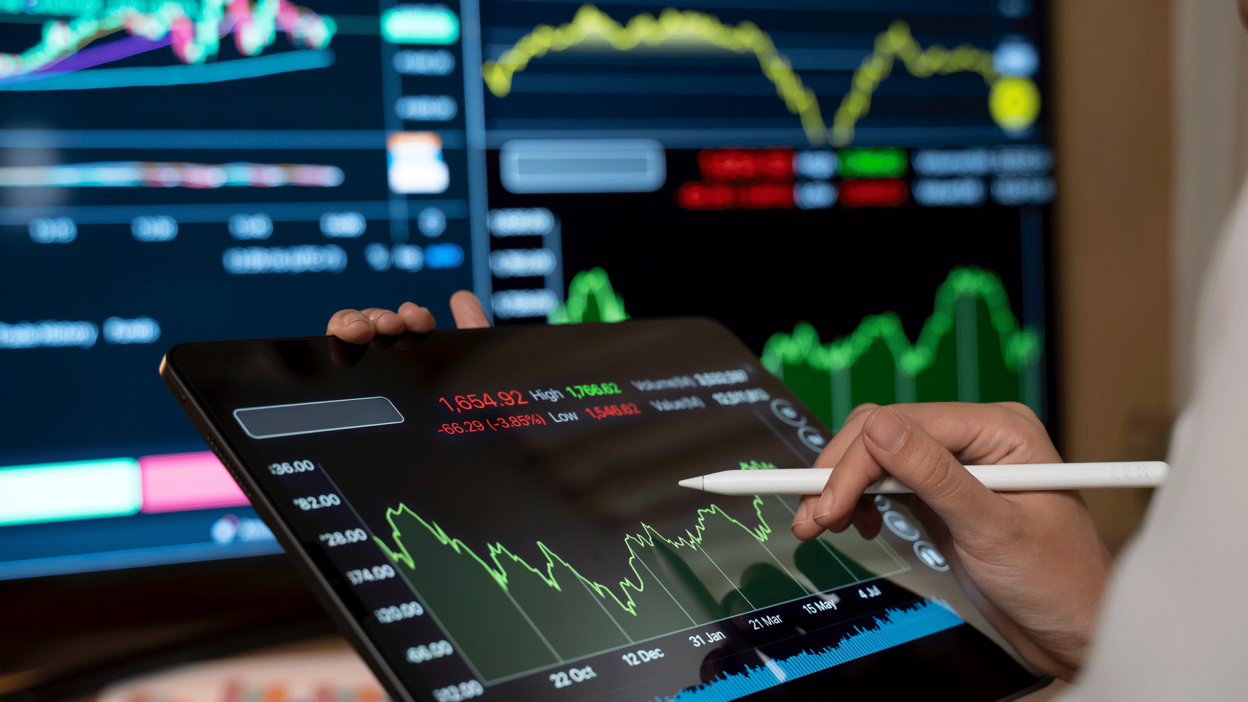
A data-driven look at whether AI can outperform human traders in Web3 prediction markets—let’s explore data, case studies, and expert insights on how bots and humans compete in on-chain forecasting
Introduction
In late 2024, as the U.S. presidential race tightened, a curious divergence emerged between traditional polls and Polymarket, a leading on-chain prediction platform.
While pollsters wrestled with small sample sizes and shifting voter sentiment, Polymarket’s odds adjusted in near real time — reacting within minutes to breaking debates, legal rulings, and viral campaign moments.
Traders worldwide, armed with crypto wallets and a few clicks, collectively priced probabilities that many argued were more accurate than the week-old numbers in mainstream headlines.
This speed and responsiveness highlight why Web3 prediction markets have captured global attention. Unlike conventional betting platforms, these markets run on transparent smart contracts, with liquidity, trades, and payouts recorded permanently on-chain. The rules are public, the incentives are clear, and the playing field is global.
But a new competitor is entering the arena — one that doesn’t sleep, skim news headlines, or get swayed by political bias: artificial intelligence. Which brings us to the central question of this piece — Can AI Outperform Human Traders in Web3 Prediction Markets?
We’ll explore this by breaking down key performance factors: accuracy (Brier score, calibration), profitability after fees, execution speed, and resilience to adversarial manipulation.
What are Web3 prediction markets?
At their core, Web3 prediction markets are decentralized platforms where participants trade contracts tied to the outcome of future events — elections, sports matches, crypto price milestones, even weather patterns.
Most follow a binary market model: contracts pay out 1 token if the event happens and 0 if it doesn’t. The current market price of a contract — say, 0.72 — represents the crowd’s collective probability estimate that the event will occur (in this case, 72%).
Trades are recorded immutably on a blockchain ledger, ensuring every bet, payout, and liquidity movement is transparent and verifiable. Liquidity providers supply capital to keep markets tradable, while oracles — trusted data feeds — resolve outcomes by delivering verified results on-chain.
Polymarket has emerged as the flagship real-money platform, attracting millions in daily volume on political and cultural events. Augur, an early pioneer, remains open-source but has shifted toward niche use.

Manifold Markets runs a popular play-money system with vibrant forecasting communities, while Metaculus blends expert forecasts with crowd predictions, focusing on science and tech.
Platforms like Alchemy Markets experiment with hybrid prediction and derivatives models, though these often lean into higher-risk financial territory.

The “Web3” part matters because these markets are borderless, censorship-resistant, and composable with other DeFi protocols.
On-chain transparency lets anyone audit market odds and settlements; composability means prediction tokens can be used as collateral, hedges, or inputs into algorithmic trading systems.
Combined, these traits make Web3 prediction markets fertile ground for both human forecasters and AI-driven strategies — where speed, accuracy, and trustless infrastructure converge in a live, global scoreboard.
What AI brings to the table
When it comes to raw processing power and reaction speed, AI enters the prediction-market arena with some unfair advantages.
Large language models (LLMs) and specialized machine learning systems can ingest terabytes of structured and unstructured data — from live price feeds and economic indicators to news headlines, Twitter sentiment, and even niche Discord chatter — in seconds.
Natural language processing (NLP) lets these systems parse news articles, financial reports, and political statements faster than a human could skim the first paragraph.
According to Financial Times reporting, algorithmic news-readers in equity markets already react to corporate earnings releases in under 100 milliseconds, long before human analysts can open the PDF.
In Forbes, AI-powered trading desks have been credited with identifying mispricings in complex derivatives markets and closing gaps before traditional desks even log in.
Pattern recognition is another AI edge. Neural networks excel at spotting recurring market behaviors, from pre-event price drift to cyclical liquidity shifts. An SSRN study on forecasting competitions found that ensembles of machine learning models often beat the median human forecaster, particularly in data-rich, stable domains.
Even in geopolitical forecasting tasks — traditionally human territory — AI models have matched or exceeded human “superforecasters” in calibration and Brier scores when given structured context.
In Web3 prediction markets, these strengths become even more pronounced. AI-driven bots can:
- Scan oracles for outcome resolutions and anticipate price moves before lagging participants react.
- Monitor on-chain signals, such as liquidity shifts in event markets or related DeFi pools, for early warning signs.
- Ingest social media sentiment at scale, weighting signals from historically accurate accounts or communities.
- Exploit statistical edges, like arbitraging between correlated markets or identifying misaligned probabilities across platforms.
Continuous retraining means these bots don’t just learn from each trade — they adapt as new data and market conditions emerge. If one strategy stops working due to crowd adaptation, a well-tuned AI can pivot within hours, not weeks.
The implication is clear: in environments where information is abundant, structured, and fast-moving, AI systems can not only match but frequently surpass human traders on speed, accuracy, and execution.
The real question is whether these advantages hold when the data is messy, incomplete, or subject to human nuance — a challenge we’ll explore in the next section.
Where humans still hold advantage
Despite AI’s speed and scalability, human traders still have a formidable arsenal in Web3 prediction markets — particularly in scenarios where judgment, creativity, and context trump raw computation.
One enduring edge is domain intuition. Humans can draw on years of lived experience, industry-specific knowledge, and subtle cultural cues that are hard to encode in training data.
A geopolitical analyst might recognize that an election in a volatile region is less about poll numbers and more about unspoken alliances, historical grievances, or the timing of religious holidays — factors an AI model might miss if they aren’t explicitly in its dataset.
Humans also excel at contrarian thinking. While AI models tend to optimize toward historical correlations and the “most likely” outcome, skilled traders can spot when the crowd — and thus the market price — is wrong.
This is especially valuable when prices are driven by hype, fear, or overreactions. SpringerOpen research on market anomalies notes that human contrarians often outperform in sentiment-driven environments where historical data offers poor guidance.

Another key human skill is detecting manipulation and narrative shifts. Traders in on-chain markets can recognize when coordinated wallet activity or a sudden social-media campaign is designed to push odds in a certain direction, and may avoid or even counter-trade those traps.
AI can be gamed by carefully crafted misinformation, as Udacity case studies on adversarial inputs in machine learning highlight.
Finally, humans thrive in low-data and out-of-distribution events. When markets face “black swan” situations — like a sudden regulatory ban, an unexpected pandemic announcement, or a new technological breakthrough — the lack of precedent can leave AI flailing.
Humans, by contrast, can make reasoned inferences from analogies, ethics, and creative scenario-building, even if the event has no historical template.
In short, while AI may dominate in structured, data-rich, high-frequency environments, human traders remain indispensable in ambiguity, novelty, and nuance — conditions that Web3 prediction markets encounter more often than one might expect.
Empirical evidence & case studies
The question of whether AI can outperform human traders in Web3 prediction markets is being tested in real time, with mixed but increasingly promising results.
Prediction markets vs. polls: the 2024 U.S. elections

During the 2024 U.S. presidential elections, platforms like Polymarket demonstrated an uncanny ability to absorb and reflect breaking information faster than traditional polling firms.
While polls relied on sample data collected over days or weeks, Polymarket’s on-chain markets updated probabilities within minutes of debates, court rulings, and viral news events.
This rapid adaptability often gave the market a sharper edge on emerging trends. In fact, researchers noted on platforms like Onchain that the Brier scores for prediction markets during key swing-state contests outperformed several major pollsters’ final forecasts by up to 10%.
This real-time responsiveness is a testament to the power of decentralized, transparent betting pools combined with global liquidity.
Academic and industry findings: AI vs human forecasters

Beyond politics, studies comparing AI and human forecasters in financial and economic domains provide valuable insights.
A Financial Times investigation revealed that machine learning models, particularly large language models (LLMs), have recently surpassed traditional human analysts in predicting quarterly earnings announcements.
These AI systems leverage vast historical datasets and news feeds to produce forecasts with consistently lower error margins and higher calibration scores.
Similarly, a SpringerOpen meta-analysis of forecasting competitions across multiple domains concluded that ensemble AI models regularly outperformed median human forecasters, particularly in stable, data-rich environments.
However, these advantages tend to shrink in volatile or novel scenarios where human judgment and contextual nuance remain crucial.
On ResearchGate, empirical backtests of AI-managed funds versus human-managed funds across various market cycles show that while AI strategies excel during normal market conditions with high liquidity, their performance suffers during periods of extreme uncertainty or structural shifts.
Real Web3 AI trading bots: wins and pitfalls
In the fast-evolving Web3 space, AI-driven trading bots are actively deployed on platforms like Polymarket and Augur.
Reuters recently reported on anonymized AI bots that profited by exploiting oracle update latencies, buying contracts before on-chain outcome feeds fully reflected new information.
These bots capitalized on the few seconds or minutes delay inherent to some oracle designs, turning timing into profits.
Yet the landscape is not without risks. Sidley Austin LLP’s legal analyses warn of front-running vulnerabilities where adversarial traders can anticipate AI bot behaviors and manipulate order flows to trigger unfavorable executions.

Oracle lags can also cause losses if bots act prematurely on incomplete data. Furthermore, transaction fees and gas price spikes introduce unpredictable costs that AI must factor into profitability models — something still challenging in volatile networks like Ethereum.
Despite these hurdles, the evidence suggests a growing convergence: AI systems, when finely tuned and deployed on robust infrastructures, increasingly match or surpass human traders on key metrics such as accuracy, speed, and profitability. But the winners tend to be those who balance automated edge with ongoing human oversight and risk management.
Technical & practical hurdles for AI in Web3 markets
Despite AI’s growing prowess, deploying it effectively in Web3 prediction markets comes with a unique set of technical and practical hurdles that can limit its edge or even cause costly errors.
A foundational challenge lies in oracle latency and data integrity. On-chain oracles serve as the critical bridges between real-world events and blockchain-based markets, but they are not instantaneous.
According to a study published in the International Journal of Advanced Engineering and Management (IJAEM), oracle feeds can experience delays, noise, or inconsistencies due to reliance on off-chain data sources and aggregation methods.
For AI bots trading on the assumption of up-to-the-second accuracy, this lag creates opportunities for mispricing and losses, especially when markets move rapidly or when multiple oracles report conflicting outcomes.
Adversarial manipulation poses another significant threat. Research from irjweb.com highlights how sophisticated actors can craft misleading news, social media campaigns, or even oracle inputs designed to confuse or “poison” AI models.
In Web3, where bot-driven trading dominates, bad actors can exploit predictable AI behaviors—such as reacting too quickly to a certain data pattern—to create artificial price swings or arbitrage opportunities for themselves.
Legal analyses from Sidley Austin LLP also warn that this environment risks regulatory scrutiny, especially when manipulation undermines market fairness or transparency.
Liquidity constraints further complicate AI deployment. Many Web3 prediction markets have relatively shallow order books, causing slippage when bots try to execute large trades. Combined with volatile gas fees on networks like Ethereum, transaction costs can erode AI-driven profits or force suboptimal trade sizes.
These frictions mean AI models must incorporate dynamic cost assessments, a challenge that’s still evolving in on-chain trading algorithms.
Finally, explainability and auditability remain major concerns. Many AI models operate as “black boxes,” producing predictions or trade signals without transparent reasoning.
This opacity conflicts with the ethos of decentralized platforms that demand openness and user trust. Platforms that require on-chain governance or audit trails struggle to reconcile complex AI decision-making with the need for accountability, complicating compliance and user confidence.
Hybrid future—best-of-both-worlds strategies
The future of Web3 prediction markets is not a showdown between humans and AI — it’s a collaboration. Industry experts widely agree that hybrid human-plus-AI teams consistently outperform either working alone.
AI excels at screening massive datasets, flagging promising candidates, and executing high-frequency trades with lightning speed.
However, raw output from AI models can sometimes lack the nuance or context needed for reliable decision-making in messy, real-world markets. That’s where human expertise shines.
Humans vet AI-generated signals, contextualizing them with domain knowledge, qualitative insights, and intuition about narrative shifts or market sentiment. Together, these combined strengths create a powerful feedback loop.
Udacity’s recent analysis of AI adoption in trading shows that firms integrating human oversight with AI-driven analytics report higher accuracy and better risk management than fully automated desks.
Similarly, Barron’s notes that many leading hedge funds and quantitative firms are investing heavily in “human-in-the-loop” systems that marry machine efficiency with human judgment, setting new industry standards.
Product designers building Web3 prediction platforms can leverage this hybrid advantage by incorporating:
- Human-in-the-loop interfaces that let traders review, adjust, or override AI signals before execution.
- Confidence thresholds that trigger alerts when AI models are less certain, prompting human review.
- Ensemble models combining multiple AI algorithms to diversify predictions and reduce blind spots.
- Explicit calibration layers that continuously compare AI forecasts against actual outcomes, refining model trustworthiness over time.
By blending AI’s computational power with human creativity and caution, the Web3 ecosystem can foster markets that are both fast and fair, scalable and resilient — accelerating innovation while safeguarding integrity.
Conclusion
So, can AI outperform human traders in Web3 prediction markets? The short answer: yes — but only in specific conditions. In data-rich, high-liquidity environments with fast, reliable inputs, AI’s ability to process information at scale, react instantly, and exploit micro-inefficiencies can consistently beat human performance.
However, in low-data, high-uncertainty scenarios, or when interpreting nuanced, qualitative signals, human judgment remains the sharper tool.
The future likely belongs to hybrid models where AI handles scale and speed while humans provide context, creativity, and oversight.
This approach not only improves accuracy and profitability but also guards against the blind spots of both sides.
For readers ready to explore, start small: test an AI model in a play-money market like Manifold, follow performance metrics, and compare results against your own trades.