

Standard Chartered’s latest report shows corporate Bitcoin reserves on the rise, revealing why top companies are adding BTC to their balance sheets.
Introduction
Institutional interest in Bitcoin has gone from speculative curiosity to strategic reserve planning. While hedge funds and family offices were early to adopt, corporations are now entering the arena in greater numbers.
A newly released Standard Chartered report (2025) confirms what many in the crypto space have long suspected: Corporate Bitcoin Reserves are on the Rise, and not by chance.
According to the report, over 7% of publicly traded companies in North America now hold Bitcoin on their balance sheets, up from just 1.5% in 2022. This dramatic uptick signals a new wave of long-term conviction in Bitcoin’s role as a store of value, inflation hedge, and liquidity tool in volatile markets.
Standard Chartered attributes the trend to several key drivers: macroeconomic uncertainty, dwindling trust in fiat currencies, and growing confidence in Bitcoin’s institutional infrastructure. The bank’s analysts also hint that regulatory clarity in jurisdictions like the U.S. and U.K. has helped ease corporate fears about compliance and custodianship.
In this piece, we’ll unveil what the Standard Chartered report reveals, explore why Corporate Bitcoin Reserves are on the Rise, and consider what it all means for the future of corporate finance.
Key Findings from Standard Chartered’s 2025 Report
Published in May 2025, the report titled “Digital Assets in Corporate Treasury: Trends and Outlook” cements Standard Chartered’s role as a credible voice in institutional crypto research.
Known for its deep macroeconomic insight and early support of blockchain-based finance, the bank offers compelling evidence that Corporate Bitcoin Reserves are on the Rise, faster than many analysts predicted.
The headline statistic: corporations globally are estimated to hold $150 billion worth of Bitcoin in reserves as of mid-2025.
That’s nearly triple the $52 billion recorded just two years prior, highlighting a sharp acceleration in institutional conviction.
Standard Chartered’s data shows that North American firms account for 53% of that figure, with Europe at 27% and Asia at 18%, driven largely by progressive regulatory stances in Singapore, Germany, and Canada.
Leading the charge are companies like MicroStrategy, Tesla, and Block, which continue to set benchmarks for Bitcoin adoption.
But the report also spotlights a wave of newcomers from the fintech, energy, and logistics sectors, industries that are integrating Bitcoin as both a treasury hedge and a strategic asset.
This rise is being driven in part by diversified treasury strategies, as companies look beyond traditional bonds and cash equivalents.
With inflation-resistant characteristics and growing liquidity, Bitcoin is increasingly seen as a modern tool for capital preservation.
These shifts underscore why Corporate Bitcoin Reserves are on the Rise, and why this trend is just getting started.
Why Are Corporate Bitcoin Reserves on the Rise?
Several macroeconomic and company-level dynamics are converging to explain why Corporate Bitcoin Reserves are on the Rise in 2025.
At the macro level, persistent inflation across key economies, especially in the U.S., U.K., and parts of Europe, has eroded confidence in fiat currencies.
Add to this a string of high-profile bank collapses between 2023 and 2024, and it’s clear why companies are seeking alternative stores of value.
On the micro level, Bitcoin’s status as digital gold has matured. Unlike speculative assets, it is increasingly perceived as a long-term hedge against fiat debasement.
The Financial Accounting Standards Board (FASB) also played a crucial role by approving the fair value accounting rule for crypto in late 2023, making it easier for corporations to reflect Bitcoin gains and losses accurately. This move removed a long-standing hurdle to institutional adoption.

Standard Chartered’s 2025 report frames this shift well: “Bitcoin is being repositioned as a balance sheet hedge, not a speculative gamble.” CEOs are echoing that sentiment.
Michael Saylor of MicroStrategy continues to affirm Bitcoin as a superior asset to cash, while Jack Dorsey recently stated in a shareholder letter, “Bitcoin strengthens our financial independence and aligns with our long-term vision.”
These perspectives highlight the confidence behind the trend. In an era of economic uncertainty, it’s no surprise that Corporate Bitcoin Reserves are on the Rise, not out of hype, but out of strategic necessity.
Who’s Leading the Corporate Bitcoin Race?
As Corporate Bitcoin Reserves are on the Rise, a clear leaderboard is taking shape, led by tech giants, energy disruptors, and green-tech pioneers.
At the forefront is MicroStrategy, which now holds over 250,000 BTC, valued at more than $17 billion as of Q2 2025.
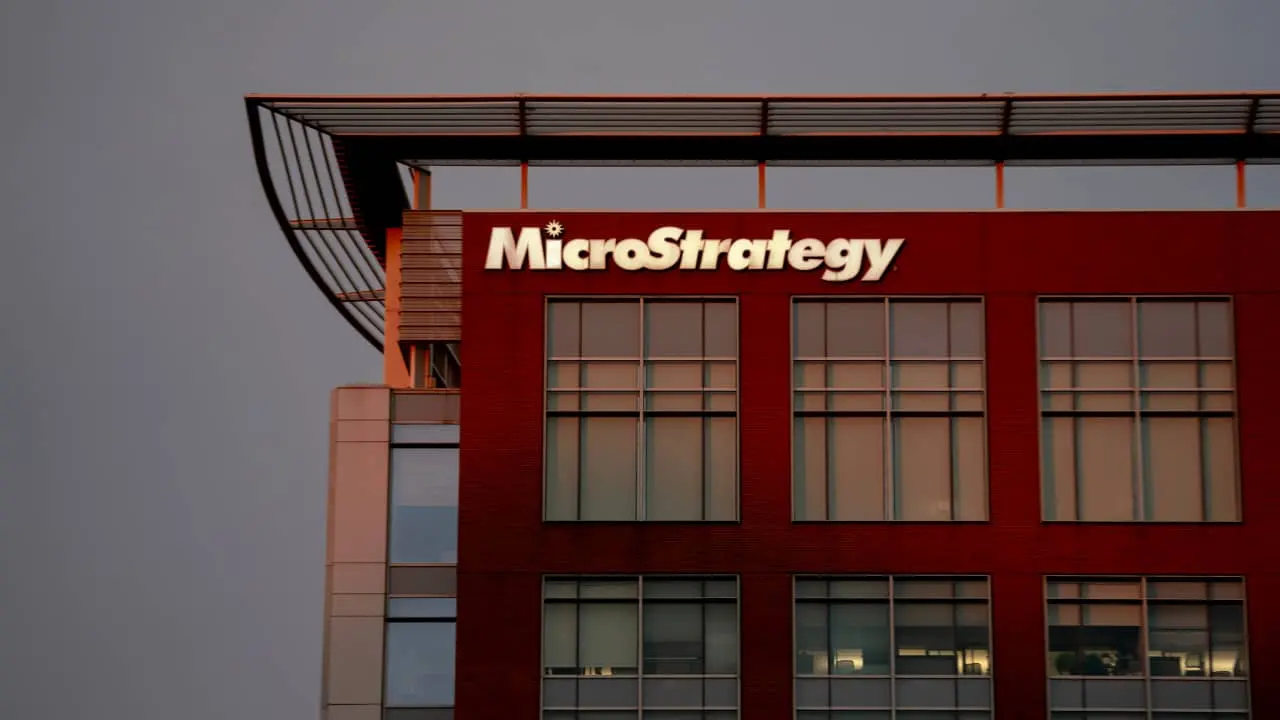
Chairman Michael Saylor’s conviction has remained unwavering, positioning the company as a bellwether for corporate Bitcoin strategy.
Tesla, after initially selling a portion of its holdings in 2022, made headlines again in early 2025 by re-entering the market.

The shift came as environmental, social, and governance (ESG) perceptions around Bitcoin improved, largely due to the increased use of renewable energy in mining.
Elon Musk emphasized Bitcoin’s “emerging green footprint” in the company’s recent earnings call.
New entrants are also gaining momentum. Latin American energy firms, particularly in Argentina and Paraguay, are converting surplus hydropower into Bitcoin reserves.
Meanwhile, EU-based green-tech companies like Solaria and EnerGreen are adopting Bitcoin as both a treasury hedge and a tool for cross-border payments.


From a sectoral view, tech and finance remain dominant, but retail and manufacturing are catching up, each contributing to why Corporate Bitcoin Reserves are on the Rise.
Corporations are no longer just watching from the sidelines; they’re moving capital into Bitcoin as part of broader strategic shifts.
With ESG concerns addressed and infrastructure maturing, the corporate race to stack sats is intensifying and diversifying fast.
What This Means for Bitcoin’s Price Trajectory
With Corporate Bitcoin Reserves on the Rise, pressure on the demand side is intensifying—and that has direct implications for Bitcoin’s price.
As more corporations allocate significant portions of their balance sheets to BTC, the available supply on exchanges continues to shrink.
Standard Chartered’s 2025 report now predicts Bitcoin could reach $200,000 by early 2026, citing sustained institutional accumulation as a primary driver.
This comes on the heels of the 2024 halving, which cut the block reward to 3.125 BTC, slashing the inflow of new coins.
Pair that with ongoing corporate purchases, led by firms like MicroStrategy, Tesla, and a growing cohort of energy and fintech players, and liquidity is drying up.
Analysts warn this could create a “supply sink,” where large corporate holdings reduce circulating BTC and amplify price volatility.
As corporate treasuries continue stacking, they’re not trading; most view Bitcoin as a long-term hedge, not a short-term asset.
This means fewer coins in active circulation, further tightening the market. It’s a key reason Corporate Bitcoin Reserves are on the Rise, and a big part of why bullish price predictions now carry more weight.
In short, corporate accumulation isn’t just a balance sheet strategy—it’s reshaping Bitcoin’s market structure.
And with fewer coins available and institutional demand accelerating, the upward pressure on price looks set to intensify.
Risks and Considerations
While Corporate Bitcoin Reserves are on the Rise, the strategy isn’t without risks. Chief among them is volatility—a core feature of Bitcoin that doesn’t align easily with traditional corporate treasury mandates.
To manage this, many firms employ dollar-cost averaging (DCA) or use BTC-backed loans to gain exposure without directly impacting liquidity. This reduces short-term price shocks while allowing participation in long-term upside.
Regulatory uncertainty remains another major consideration. Although the U.S. SEC has yet to issue Bitcoin-specific guidelines for corporate holdings, tax authorities in the EU, Asia, and Latin America are increasing scrutiny.
Varying treatment of BTC for tax and reporting purposes can complicate global treasury operations. Despite the FASB’s fair value rule, accounting treatment for crypto assets remains inconsistent across jurisdictions.
Then there’s the reputational dimension. Even with Bitcoin’s improving ESG profile, some markets, particularly in Western Europe, still view BTC with skepticism due to historical associations with carbon-heavy mining and illicit finance.
Companies must weigh these factors when communicating their treasury strategy to shareholders and the public.
In short, while Corporate Bitcoin Reserves are on the Rise, the path isn’t risk-free. Firms must navigate volatility, regulatory ambiguity, accounting disparities, and reputational challenges.
Those who succeed tend to treat Bitcoin not as a quick-win asset but as a long-term hedge within a carefully managed risk framework.
Conclusion
The data is clear: Corporate Bitcoin Reserves are on the Rise, and not just as a speculative bet, but as part of a serious, long-term treasury strategy.
From MicroStrategy’s bold leadership to Tesla’s ESG-informed reentry, corporate adoption is accelerating.
Institutions like Standard Chartered are no longer sitting on the sidelines—they’re validating Bitcoin’s role in modern finance with credible research and bullish forecasts.
We’ve seen the drivers: inflation hedging, balance sheet diversification, regulatory clarity, and maturing infrastructure.
We’ve also acknowledged the risks: volatility, compliance burdens, and reputational concerns. Yet the trend persists.
Bitcoin is no longer a fringe experiment in corporate circles. It’s becoming a strategic fixture in boardroom discussions, much like gold was in decades past.
And if current momentum holds, Bitcoin’s place in the corporate world is not just rising—it’s being cemented.
Frequently Asked Questions (FAQ)
Why are corporate Bitcoin reserves on the rise in 2025?
Due to growing demand for inflation hedges, clearer regulatory frameworks, and stronger institutional custody and accounting infrastructure.
Which companies have the most Bitcoin in their reserves in 2025?
Leaders include MicroStrategy, Tesla, and rising players in the fintech and energy sectors, especially in Latin America and Europe.
What does Standard Chartered say about Bitcoin’s future in corporate finance?
The bank suggests Bitcoin could become a standard treasury asset, similar to gold, driven by its hedging utility and long-term scarcity.
How do companies manage Bitcoin’s volatility in their reserves?
They use long-term strategies, such as dollar-cost averaging (DCA), BTC-backed loans, and diversified treasury models to mitigate risk.
Is Bitcoin a safe corporate investment in 2025?
While still volatile, it’s increasingly viewed as a strategic hedge, not just a speculative asset—especially in inflationary or unstable markets.