
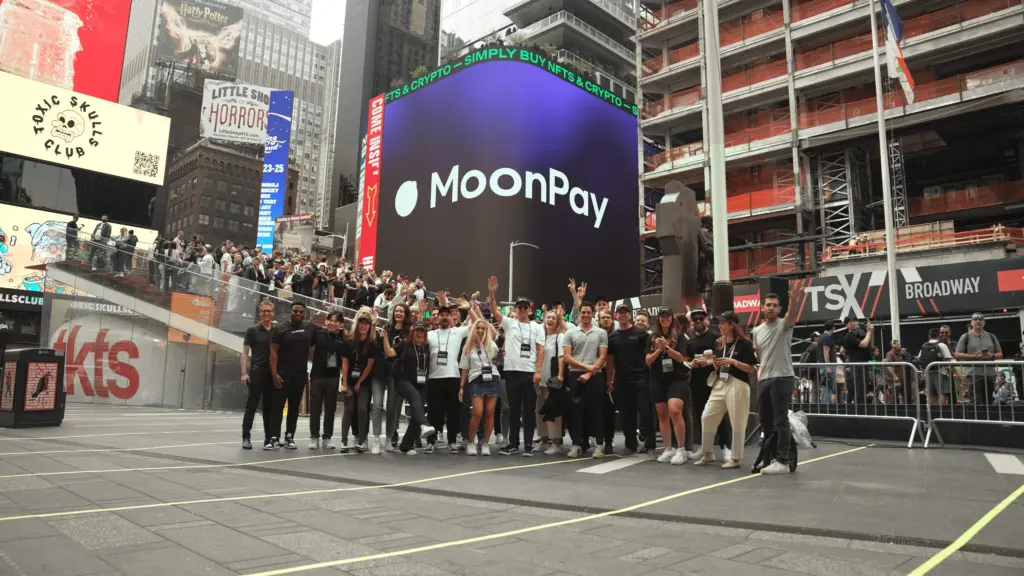
The question of why MoonPay Is Betting Big on NYC connects to a growing trend where crypto-native companies are stepping off the blockchain and planting physical roots in prime global cities
MoonPay’s recent acquisition of a $38 million Manhattan penthouse near Central Park is emblematic of this pivot. The luxury property will serve as part office, part event hub, and part brand showroom—fusing prestige with accessibility. It’s a bold move that aligns with a wider wave of institutional crypto firms investing in high-visibility, high-impact real estate to attract talent, court regulators, and make a public statement: we’re not just surviving the crypto winter—we’re thriving and expanding.
This article unpacks the motivations behind this acquisition, the ripple effects on the industry, and MoonPay’s bet on New York City could redefine how crypto companies scale in the real world.
Contextual Backdrop: Why Crypto Firms Are Moving Into Real Estate
MoonPay’s big bet on NYC reflects a broader paradigm shift among leading crypto companies: a move away from purely digital operations toward tangible, high-impact real estate investments.
In an industry once defined by decentralized remote teams and Discord channels, today’s crypto firms are rethinking presence—not just online, but in the real world.
Owning or leasing landmark properties offers several strategic advantages. For one, real estate acts as a hedge against the notorious volatility of crypto markets.
While token prices may swing wildly, a prime property in Manhattan or Dubai holds steady value and serves as an appreciating asset.
It’s no coincidence that as regulatory scrutiny increases and user bases expand, crypto firms are investing in the physical world to balance their digital exposure.
Why MoonPay Is Betting Big on NYC is also about branding. Physical locations give crypto companies a way to create immersive community experiences, host regulators and partners, and present themselves as legitimate, established players.
In this light, real estate becomes a branding tool—a bold statement of financial maturity and permanence.
This strategy isn’t new, but it’s accelerating. Before its collapse, FTX poured millions into Miami real estate, including a naming rights deal for the Miami Heat arena.
Binance has opened regional headquarters in Dubai and Paris, bolstering its regulatory standing while strengthening its global footprint.
Coinbase, meanwhile, has redefined its headquarters model, maintaining a footprint in San Francisco but operating on a remote-first hybrid that includes flexible event and workspace hubs.
Ultimately, why MoonPay is betting big on NYC boils down to optics, positioning, and security.
As Web3 matures, firms can no longer afford to be seen as ghost entities floating in cyberspace. They need legitimacy, authority—and sometimes, a penthouse in Manhattan to prove it.
MoonPay’s NYC Acquisition: The Facts
Why MoonPay Is Betting Big on NYC becomes clearer when you examine the specifics of its headline-making real estate deal.
In late April 2025, MoonPay finalized the acquisition of a luxury SoHo property in downtown Manhattan, making a bold entry into the competitive and symbolic New York real estate landscape.
The estimated cost of the property sits at around $38 million, placing it among the most high-profile crypto real estate acquisitions of the year.
The building—an architecturally distinct, multi-level space located near Broadway in SoHo—is expected to serve as MoonPay’s flagship headquarters on the East Coast.
According to sources close to the deal, the property will be designed as a multifunctional space, combining office infrastructure, branded experience zones, and an event-hosting floor aimed at community engagement and institutional onboarding.
This mixed-use format mirrors a growing trend in the fintech sector of turning office real estate into hybrid community hubs.
In a statement to Bloomberg, MoonPay CEO Ivan Soto-Wright said, “New York is more than a global financial center—it’s a cultural engine. Our new SoHo HQ puts us at the intersection of finance, art, and tech, where we believe the next wave of Web3 adoption will happen.”
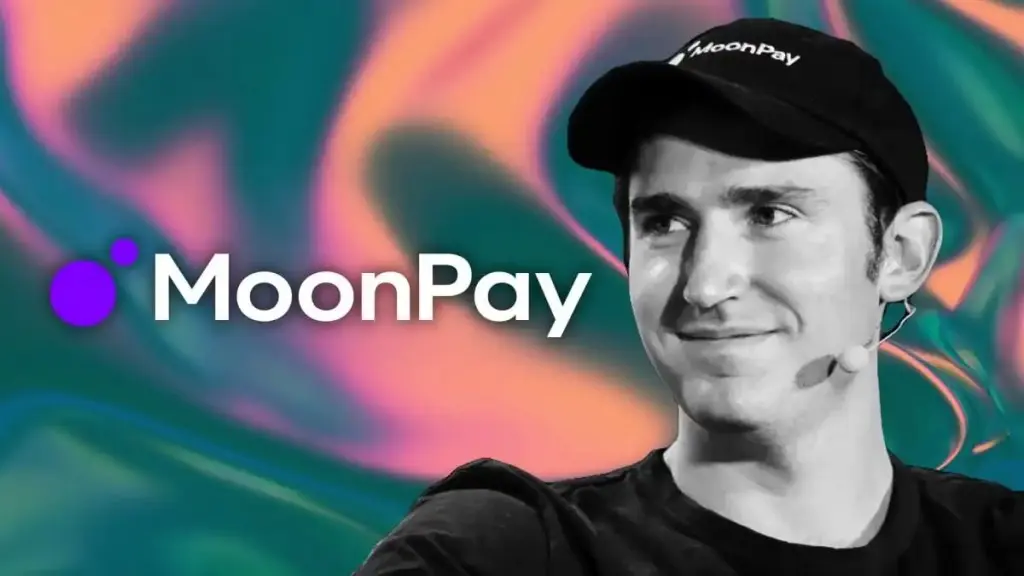
This echoes a broader sentiment within the crypto industry that proximity to regulators, enterprise partners, and media influence is becoming essential.
MoonPay’s New York property deal also draws comparisons to similar moves by other tech-forward financial firms.
Robinhood has leased new office space near Hudson Yards. Galaxy Digital maintains a prime location on the Upper West Side.
Even crypto-native firms like ConsenSys, based in Brooklyn, have expanded their footprint to facilitate talent acquisition and regulatory positioning.

This crypto real estate acquisition by MoonPay is not just a real estate play—it’s a calculated move to align the company with the financial gravitas and cultural dynamism of New York City.
In essence, why MoonPay is betting big on NYC has everything to do with visibility, influence, and future-proofing its brand in a city where reputation matters as much as innovation.
Why MoonPay Is Betting Big on NYC
First, New York City remains the global epicenter of finance, home to Wall Street, institutional capital, and a growing body of regulators now shaping the future of digital assets.
As U.S. lawmakers and financial watchdogs tighten their grip on the crypto sector in 2025, proximity to these decision-makers offers MoonPay an edge in navigating compliance, lobbying for favorable frameworks, and presenting itself as a transparent, cooperative player in a post-FTX landscape.
Second, the city is a magnet for fintech capital. MoonPay’s New York property deal places the company just blocks from many of the venture firms, private equity funds, and financial media outlets driving conversation—and funding—around blockchain innovation.
In an era where reputation is as important as runway, MoonPay’s SoHo presence offers visibility and credibility with both legacy finance and crypto-native investors.
Third, branding power. New York isn’t just a place to do business—it’s a place to be seen. In a climate still recovering from the reputational damage of the FTX collapse and Celsius scandals, MoonPay’s visible investment in a premium physical space sends a strong signal: this is a stable, scaling firm that’s here for the long haul.
Moreover, the move aligns with MoonPay’s transformation into a Web3 infrastructure powerhouse.
As the firm pushes deeper into NFT partnerships, luxury brand integrations (like its work with Dolce & Gabbana and Universal), and tokenized commerce experiences, NYC offers access to top-tier talent in design, fashion, entertainment, and tech.
It also allows the company to host high-impact events, from NFT drops to corporate showcases, all in the cultural heartbeat of the East Coast.
Finally, talent acquisition remains a key driver. The war for skilled Web3 engineers, designers, compliance officers, and brand strategists is intensifying—and New York’s talent pool is unmatched.
A dynamic HQ in SoHo gives MoonPay both the prestige and the environment needed to attract top minds.
NYC’s Crypto-Friendliness in 2025: A Mixed Bag
MoonPay Betting Big on NYC also raises questions about the city’s regulatory environment—a factor that has long made New York a paradox for crypto firms: a global financial capital with both opportunity and constraint.
In 2025, that paradox persists, though notable shifts are making the city more hospitable to Web3 innovators.
At the heart of the issue is the BitLicense, New York’s hallmark regulatory framework introduced in 2015. While initially criticized as a barrier to entry, recent reforms in early 2025 have signaled a more flexible approach.
The New York Department of Financial Services (NYDFS) has streamlined the application process, introduced conditional licensing for smaller startups, and opened pathways for firms to operate under limited scopes while scaling compliance.
These moves, though incremental, have started to thaw the city’s icy reputation among crypto entrepreneurs.
Still, the state’s cautious stance contrasts with Mayor Eric Adams’ pro-crypto rhetoric. Since taking office, Adams has promoted blockchain education in public schools, accepted his paycheck in Bitcoin, and positioned NYC as a future tech capital.
However, state-level oversight remains tight, creating a mixed landscape where vision and regulation often clash.
Even so, real estate in Manhattan has become a quiet enabler of crypto’s comeback in the city. Post-COVID market corrections left commercial properties undervalued, especially in districts like SoHo, Flatiron, and FiDi.
This has allowed well-funded crypto firms like MoonPay to strike favorable deals, acquiring premium real estate at a discount compared to pre-pandemic prices.
These acquisitions not only secure strategic positioning but also hedge against digital market turbulence.
When compared to crypto-friendly rivals like Miami, Austin, and Dubai, New York’s edge lies in institutional gravity. Miami’s luster dimmed after the FTX collapse and Mayor Suarez’s political exit.
Austin remains vibrant for tech talent but lacks regulatory heft. Dubai, while aggressively pro-crypto, is geographically and culturally distant from U.S. financial policy shaping.
In this context, why MoonPay is betting big on NYC becomes clearer: it’s a long-term play for legitimacy, access, and influence.
Despite regulatory friction, New York’s blend of financial history, cultural capital, and cautious optimism makes it a strategic foothold for crypto firms ready to evolve beyond the volatility.
Industry Reactions and Expert Commentary
MoonPay Betting Big on NYC has ignited conversation well beyond the crypto sphere.
The move is being scrutinized and celebrated in equal measure—by real estate analysts, fintech investors, and traditional finance veterans alike—as a signal of where the crypto industry might be headed in 2025: toward grounded, strategic expansion rather than speculative hype.
Real estate professionals see MoonPay’s SoHo acquisition as a savvy entry point. “Luxury commercial space in Manhattan has rebounded post-COVID, but there are still rare windows of opportunity,” says Claire Mendelson, a property strategist with Cushman & Wakefield. “MoonPay’s timing is strong—they’re locking in a branding asset with long-term appreciation potential.”

From the crypto side, the tone is both strategic and self-aware. “It’s not just about optics,” notes Linda Cho, a Web3 infrastructure advisor.
“MoonPay has spent the last two years building partnerships with major entertainment and fashion brands.
A physical NYC hub helps anchor that evolution and makes it tangible to partners who still want to ‘see’ legitimacy.”
That said, some skeptics in traditional finance view the move with caution. “If you’re burning $38 million on a Manhattan building, it better be more than a flex,” comments Robert Tilley, a fintech VC with Evergreen Capital.
“It’s easy to misread the moment—especially with the regulatory fog still hanging over parts of the industry.”
Still, there’s a consensus that this isn’t a rogue play. MoonPay has weathered the 2022–2023 crypto winter, pivoted from transactional services to Web3 infrastructure, and survived the collapse of competitors like FTX without scandal. That gives the company credibility—and the benefit of the doubt.
Risks and Controversies
Even as the industry applauds the ambition behind why MoonPay is betting big on NYC, skeptics and analysts are raising valid concerns.
MoonPay’s $38 million SoHo acquisition may reflect confidence in crypto’s mainstream future—but it’s not without risk.
First, there’s the looming shadow of another potential crypto winter. While the market has shown signs of stabilization in early 2025, volatility remains intrinsic to digital assets.
A sudden downturn in Bitcoin, Ethereum, or regulatory sentiment could ripple through the industry, squeezing liquidity and depressing investor appetite.
In such a climate, tying up tens of millions in illiquid real estate might appear premature—even reckless.
Second, critics argue this move represents a misalignment of priorities for a growth-stage firm. Should MoonPay, a company still scaling its enterprise partnerships and global user base, be focusing on luxury Manhattan property?
“A flashy HQ doesn’t build core tech,” warns Cassandra Liu, a fintech analyst at Bain Capital. “In a capital-intensive space like crypto infrastructure, you want to be lean and agile—especially with regulatory uncertainty still unresolved.”
And that regulatory fog is especially thick in New York. Despite recent reforms to the BitLicense, many firms still consider NYC one of the more complex jurisdictions for crypto compliance.
From licensing requirements to anti-money laundering audits, the oversight is rigorous. One misstep could invite penalties or operational restrictions—especially in a state that remains cautious post-FTX.
There’s also the optics dilemma. In a post-FTX world, highly visible spending by crypto firms is viewed through a more critical lens.
For some observers, MoonPay’s real estate deal risks being perceived as a “vanity flex,” echoing the kinds of overconfident expansions that preceded past collapses.
“Trust is fragile right now,” says Elie Danvers, a blockchain governance researcher. “For every dollar spent on a penthouse, there’s an unspoken question—could that have gone into tech, compliance, or user protection?”
From Web3 Wallets to Manhattan Walk-Ups
Will Others Follow? A Trend in the Making
So is MoonPay setting the tone for others? Signs suggest yes. A wave of similar activity is already underway:
- Kraken has reportedly been exploring property in San Francisco and Berlin to house compliance and enterprise partnership teams.
- Blockchain.com opened a sleek London HQ near Canary Wharf in late 2024.
- Coinbase, despite being remote-first, maintains hybrid hubs for face-to-face interaction with regulators and partners.
These moves echo the same motivations: proximity to regulation, investor relations, and talent. It’s likely that MoonPay’s New York property deal won’t be the last major real estate headline we see in 2025.
Rather, it could trigger a domino effect, especially as more crypto firms achieve profitability and seek to establish long-term roots.
“Crypto Alley”: Could NYC Become the Next Blockchain Capital?
If MoonPay’s investment in SoHo is successful, we could very well see the birth of “Crypto Alley”—a dense cluster of blockchain firms headquartered in lower Manhattan, akin to how “Silicon Alley” rose in the Flatiron District during the 2000s tech boom.
SoHo, TriBeCa, and the Financial District offer prime conditions: prestige, access to capital markets, modern infrastructure, and cultural cachet.
These are not just trendy neighborhoods—they’re zones of influence. A cluster effect would further validate crypto’s permanence in the financial and tech world, attracting:
- Startup accelerators focusing on blockchain infrastructure and real-world asset tokenization.
- Fintech VCs looking to fund the next MoonPay or LayerZero.
- Academic partnerships with NYU, Columbia, and Cornell Tech for R&D and legal frameworks.
The benefits of such a cluster include knowledge spillovers, easier regulatory engagement, and a consolidated talent pool.
And if NYC manages to soften its stance on licensing while doubling down on its mayoral pro-crypto vision, the city could easily leapfrog Miami and Austin to become the de facto U.S. crypto capital.
Real Estate Tokenization: The Next Frontier?
MoonPay’s move also indirectly shines a spotlight on the tokenization of real-world assets (RWAs)—a trend gaining steam in 2025.
Already, startups like RealT, Propy, and Brickken are making it easier to fractionalize property ownership using blockchain.
With a physical HQ in Manhattan, MoonPay could become a gateway to tokenized luxury assets, furthering its evolution into a comprehensive Web3 infrastructure player.
Its partnerships with brands like Dolce & Gabbana and Universal suggest a move into phygital (physical + digital) commerce, where real estate, art, and experiences could be tokenized, tradable, and rentable via MoonPay’s platform.
As a result, the firm may not only benefit from owning real estate—but also from facilitating the tokenization of real estate for others.
That’s a massive potential revenue vertical in a world where RWAs are projected to surpass $16 trillion in tokenized value by 2030 (according to a 2025 report by Boston Consulting Group and 21Shares).
Risks for Followers: Timing and Perception Matter
Still, it’s worth noting that not every crypto firm should follow this path. Timing, financial stability, and public perception all play a role.
MoonPay is in a position of strength—it survived the post-FTX turbulence, has institutional partnerships, and maintains a positive regulatory track record.
Smaller or less stable firms might burn precious capital on real estate rather than innovation. Moreover, public sentiment remains volatile. Lavish spending in a market still rebuilding trust can backfire.
As why MoonPay is betting big on NYC becomes a case study, other firms must ask:
- Is our brand ready for this kind of visibility?
- Do we have a long-term regulatory strategy to support it?
- Will a physical HQ improve our operations or simply inflate our balance sheet?
The Big Picture: Physical Infrastructure for Digital Economies
At its core, MoonPay’s real estate investment is about building physical infrastructure for a digital-first industry.
It mirrors the trajectory of past tech revolutions—where early skepticism gave way to permanence through physical presence.
Think Amazon warehouses, Google campuses, and Facebook data centers. These companies proved that digital dominance often depends on real-world roots.
Crypto may be decentralized, but its institutions are centralizing—around regulation, branding, and trust. The movement into real estate is part of that maturation.
As MoonPay plants its flag in SoHo, it paves the way for others to follow—and signals that the next crypto bull run might have a street address.
Conclusion
MoonPay’s bold move into Manhattan real estate stands as a striking signal of intent. At a time when much of the crypto world is still defined by volatility and skepticism, Why MoonPay Is Betting Big on NYC marks both a literal and symbolic investment in the industry’s staying power.
This isn’t just about a luxury building in SoHo. It’s a long-term play to secure legitimacy, visibility, and institutional relevance in the heart of the global financial ecosystem.
By embedding itself in New York’s cultural and economic landscape, MoonPay is doing more than building an HQ—it’s building trust, access, and longevity.
For an industry often criticized for being too speculative, too remote, or too intangible, MoonPay’s real estate acquisition represents a grounding moment.
It aligns with the company’s evolution from a simple on-ramp provider to a sophisticated Web3 infrastructure leader.
It also reflects a maturing market mindset: that success in crypto isn’t just about who can scale fast—it’s about who can stay relevant as the lines between physical and digital worlds continue to blur.
Why MoonPay Is Betting Big on NYC isn’t just about real estate—it’s about anchoring the next wave of crypto growth where finance meets culture, and where innovation meets influence.
If crypto is to become the financial fabric of tomorrow, it will need both smart contracts and smart cities. And with this move, MoonPay is making sure it has a seat at the table—in the boardrooms, the galleries, and the skyscrapers shaping the next era of decentralized finance.