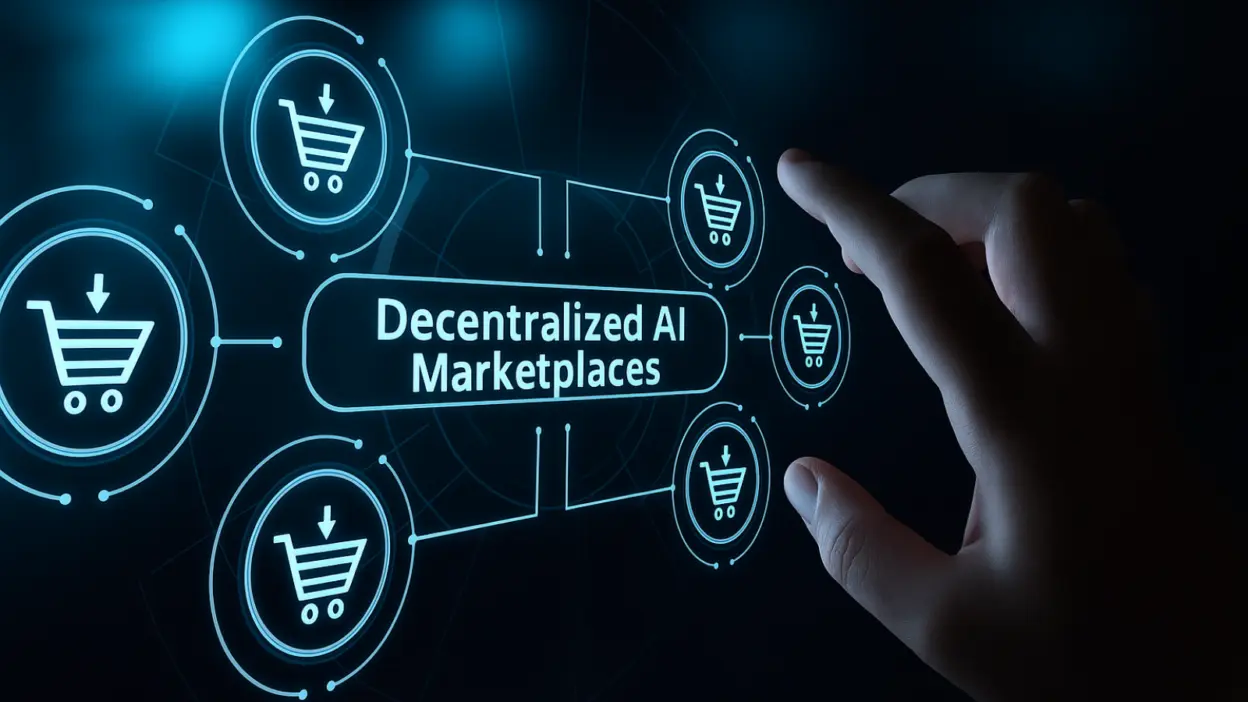
Decentralized AI marketplaces are unlocking open, fair AI innovation—learn how they transform access to data, models, and compute power
Introduction
Decentralized AI Marketplaces are becoming a critical counterpoint to the centralized gold rush dominating today’s AI development landscape.
While giants like OpenAI, Google, and Meta control the bulk of models, compute power, and training data, access remains locked behind proprietary walls—limiting innovation, suppressing developers, and reinforcing vendor lock‑in.
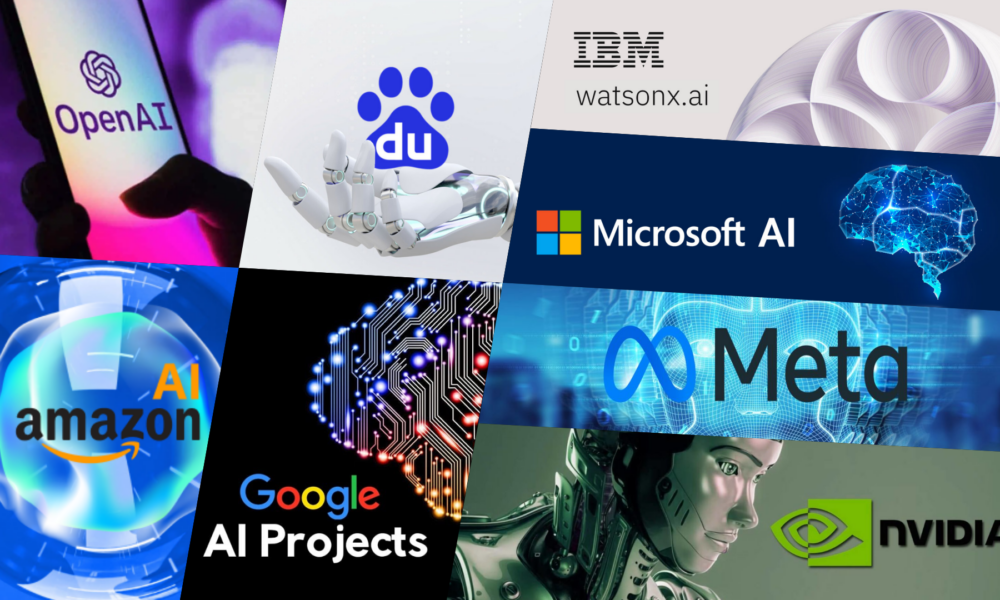
The AI gold rush is on—but the tools and data remain locked in walled gardens. Centralized platforms have amassed vast resources and control analogous to medieval lords hoarding gold, deciding who may work, who may profit, and under what terms.
This results in a core problem: centralized platforms dominate access to AI models, inference APIs, GPU compute, and training datasets—extracting fees, enforcing usage policies, and making changing providers prohibitively expensive.
Decentralized AI marketplaces offer a radically different path. Rather than relying on a few corporations, these emerging blockchain‑powered ecosystems enable peer‑to‑peer model trading, compute sharing, and data exchange via smart contracts—redistributing power to developers, independent data providers, and end users.
In this article, you’ll explore what decentralized AI marketplaces are, how they operate, and why they represent the likely next evolution of infrastructure in machine learning.
What Are Decentralized AI Marketplaces?
Decentralized AI marketplaces are peer‑to‑peer platforms that enable trustless exchange of AI resources—models, data, compute power, and algorithms—without relying on a central authority.
At their core, Decentralized AI marketplaces allow individuals and organizations to upload, trade, rent, or use AI assets in a fully decentralized setting.
Transactions and access are managed via blockchain‑based smart contracts that automate license delivery, payments, and royalties in a transparent, immutable ledger.
Core Features
Blockchain & Decentralized Storage Layers
These marketplaces use networks like Ethereum or Solana for smart contracts, combined with decentralized storage solutions such as IPFS, Filecoin, or Arweave to host datasets and models securely.
Smart Contracts for Licensing & Payments
Smart contracts automate licensing agreements, verify model access, and distribute payments without intermediaries—reducing costs and ensuring trust.
Crypto‑Based Incentive Structures
Tokenized reward systems incentivize developers, data providers, and compute hosts. For example, contributors can earn native tokens based on model usage, data quality, or shared GPU power.
Difference from Centralized AI Platforms
Unlike centralized AI platforms such as OpenAI, Google, or Meta, decentralized marketplaces remove gatekeepers. Pricing is transparent and governed by smart contracts rather than opaque corporate policies.
Community governance through DAOs ensures that updates and rules are determined collectively, and users can access resources like GPU compute or indie-developed AI models without vendor lock-in.
Unlike Google Cloud ML—where pricing and policies are tightly controlled—a Decentralized AI Marketplace allows you to rent GPU compute from idle machines or buy an NLP model directly from an independent developer.
Everything is secured by smart contracts and powered by blockchain, eliminating intermediaries and fostering open collaboration.
Why Machine Learning Needs Decentralization
The urgency of moving toward Decentralized AI Marketplaces becomes clear when we examine the growing structural failures of centralized AI systems—and the emerging trends pushing toward open alternatives.
Problems with Centralization
- Censorship & Access Throttling: Centralized platforms routinely filter or restrict content based on internal policy. As echoed by Cardano’s co-founder, censorship decisions—such as withholding technical knowledge about nuclear devices—reflect the broader risk of a few gatekeepers determining what AI can or cannot share
- Expensive, Opaque APIs: Developers face unpredictable pricing and vendor lock‑in with API-based platforms like OpenAI or Google—without visibility into training data or licensing terms
- Closed Ecosystems Stifle Innovation: When only a few corporations control foundational models like GPT‑4 or Gemini, they inherently shape innovation toward their own priorities—sidelining startups, indie researchers, and non-Western voices
Trends Driving Decentralization
Sovereign AI Movements
Governments and regions are demanding digital autonomy: India’s Bhashini initiative aims for linguistic AI sovereignty, while the EU’s AI Act pushes for transparent, verifiable systems under democratic oversight.
Demand for AI Bias Transparency
Growing public backlash over algorithmic bias—especially in hiring, credit scoring, and content moderation—is pressuring developers to ensure training data, inference processes, and impact outcomes are auditable.
Web3’s Push for Open Infrastructure
Web3 concepts like DePIN (decentralized physical infrastructure networks), DePAI, and tokenized economics are powering a growing infrastructure that resists censorship, central failure, and proprietary lock‑in.
Use Case: 2025 Adoption of Decentralized Storage
Messari reported that over 18% of AI training datasets globally are being hosted on decentralized storage networks such as Filecoin or Arweave—an indicator that even data infrastructure is shifting toward decentralization.

This migration not only reduces dependence on centralized clouds (like AWS or Google Cloud), but also improves censorship resistance, lowers cost, and enhances data traceability—vital for trust in AI.
Why Decentralization Matters Now
Centralized AI’s grip isn’t just archaic—it’s increasingly dangerous. With concentration of control comes risk: bias, manipulation, surveillance, and suppression. Meanwhile, decentralized AI ecosystems offer a powerful alternative: transparent governance, verifiable outputs, and broad-based innovation.
By distributing compute, data storage, and model ownership across independent contributors, Decentralized AI Marketplaces promise a future where AI systems are fairer, more resilient, and truly accessible to all—not just the powerful few.
Benefits of Decentralized AI Marketplaces
Lower Barriers to Entry for ML Developers
One of the most significant advantages of decentralized AI marketplaces is their ability to lower the prohibitive entry costs associated with machine learning development.
In centralized systems, developers often face steep hurdles: high costs for GPU compute, limited access to quality datasets, and restrictive APIs that lock them into vendor ecosystems.
Decentralized marketplaces break these barriers by enabling fractionalized compute leasing, open access to tokenized datasets, and flexible, on-demand resource sharing.
Instead of requiring tens of thousands of dollars in infrastructure, independent developers can train and deploy models using affordable, distributed resources rented peer-to-peer. This shift empowers solo researchers and small teams to compete in a field once dominated exclusively by Big Tech.
Incentivized Collaboration Over Closed Competition
Unlike the traditional model, where companies hoard their data and research in closed silos, decentralized AI marketplaces foster a culture of incentivized collaboration.
Tokenomics reward data contributors, model developers, and compute providers based on measurable value, aligning incentives in a way that encourages cooperation rather than competition.
As more participants join and stake their resources, datasets grow richer, models improve faster, and distributed compute becomes more efficient.
This networked approach accelerates collective progress in AI, enabling innovations that would be impossible within the walls of isolated corporate research labs.
By replacing rivalry with co-creation, decentralized marketplaces turn AI development into a global, community-driven effort.
Transparent Pricing and Provenance
Centralized AI platforms are notorious for opaque pricing, unpredictable API costs, and black-box models with unverifiable origins. In contrast, decentralized AI marketplaces introduce radical transparency.
Every dataset, model, and transaction is immutably recorded on-chain, allowing users to verify provenance, licensing terms, and performance benchmarks before committing resources.
Smart contracts automate payment flows, ensuring that contributors are compensated fairly and consistently without intermediary overhead.
This level of transparency not only eliminates pricing ambiguity but also instills greater trust, especially in industries that require auditable AI pipelines for compliance and accountability.
Privacy-Preserving Learning
Decentralized AI marketplaces also offer a crucial advantage in handling sensitive data through privacy-preserving mechanisms like zero-knowledge proofs and federated learning.
Instead of exposing raw data to centralized servers controlled by third parties, training can occur locally, with only cryptographic proofs or aggregated updates shared on-chain.
This approach is transformative for sectors such as healthcare, finance, and government, where regulatory requirements demand stringent privacy protections.
By combining decentralized governance with advanced cryptographic techniques, these marketplaces make it possible to build high-utility AI models without compromising confidentiality or violating data sovereignty laws.
Interoperability with Web3 Ecosystems
Native integration with Web3 infrastructure is another hallmark of decentralized AI marketplaces. Because they are built on blockchain, they connect seamlessly with decentralized finance (DeFi), non-fungible tokens (NFTs), and decentralized autonomous organizations (DAOs).
For instance, NFT collections can dynamically generate AI-driven content using models sourced from a marketplace, with royalties automatically distributed among model creators, dataset curators, and compute providers via programmable smart contracts.
Similarly, DAOs can collectively govern which models and datasets to fund, effectively crowd-sourcing the development of open AI tools. This interoperability expands the utility of AI beyond standalone applications, embedding it into the fabric of the broader decentralized internet.
“It’s the democratization of AI infrastructure, not just its decentralization.” — Elena Sinel, AI4Good Advocate
This perspective captures the essence of the movement. By decentralizing access to data, compute, and models, these marketplaces dismantle entrenched power structures and create a participatory AI economy.
The result is not only more equitable access to machine learning but also faster, more diverse innovation driven by a truly global community.
Challenges and Risks to Watch
While decentralized AI marketplaces promise to democratize machine learning infrastructure, they also come with significant challenges that must be addressed for long-term viability.
These issues span technical, legal, and operational domains, underscoring that decentralization is not a silver bullet but rather a complex shift requiring careful governance and robust solutions.
Quality Control
Open participation can be a double-edged sword. While decentralized platforms thrive on inclusivity, they also risk being flooded with low-quality, unverified, or even malicious AI models and datasets.
Without rigorous curation mechanisms, end users may struggle to distinguish between reliable resources and harmful ones. DAO-driven staking and reputation systems offer partial solutions, but ensuring consistent quality in a permissionless marketplace remains a formidable challenge, particularly as these platforms scale.
Scalability Limitations
Decentralized compute infrastructure has made progress through networks like Akash and Gensyn, but it still lags far behind the raw processing power and efficiency of hyperscalers like AWS or Google Cloud.
Large-scale model training requires immense GPU clusters and optimized networking, which decentralized nodes often struggle to match.
Until decentralized infrastructure matures and achieves parity with enterprise-grade cloud providers, some high-performance AI workloads will remain better suited to centralized environments.
Interoperability Gaps
With multiple protocols and standards emerging—each with its own token models, governance rules, and technical stacks—fragmentation is a growing risk.
A lack of interoperability between marketplaces can limit composability, forcing developers to operate in siloed ecosystems.
Efforts are underway to build bridges between platforms, but until unified frameworks or cross-chain standards are widely adopted, seamless collaboration across different decentralized AI networks will remain constrained.
Regulatory Uncertainty
Legal frameworks around AI ownership, intellectual property rights, and liability are still unsettled, and decentralization further complicates the picture.
Questions such as who owns a collaboratively trained model, who is responsible for its misuse, or how data compliance laws (like GDPR) apply in a permissionless environment remain unresolved.

As regulators increasingly scrutinize both AI and Web3, decentralized AI marketplaces will need to navigate evolving compliance demands without sacrificing their open, borderless nature.
Conclusion
Decentralized AI marketplaces represent a fundamental reimagining of how artificial intelligence is built, distributed, and monetized.
By breaking free from the centralized silos of Big Tech, these platforms open access to models, data, and compute power in ways that empower developers, researchers, and organizations worldwide.
They are transforming AI from a closed, gatekept service into an open infrastructure layer—one governed by transparency, collaboration, and shared incentives.
As adoption accelerates, it’s becoming clear that these marketplaces are not a passing trend but a necessary evolution.
They address core problems in centralized AI—high costs, limited access, and opaque governance—while introducing a framework for innovation that is participatory and borderless.
In this new paradigm, AI ceases to be the exclusive domain of a handful of corporations and instead becomes a collectively owned and continually evolving network of intelligence.