
Elon Musk confirmed over the weekend that Tesla has disbanded the team responsible for its Dojo AI training supercomputer.
This announcement was made weeks after Musk announced that he anticipated Tesla’s second cluster would be operational at “scale” in 2026.
On Sunday, Musk posted on X, the social media platform he owns, “Once it became apparent that all paths converged to AI6, I was compelled to close Dojo and make some difficult personnel decisions, as Dojo 2 was now an evolutionary dead end.”
“Dojo 3 is arguably perpetuated by a multitude of AI6 [systems-on-a-chip] on a single board.”
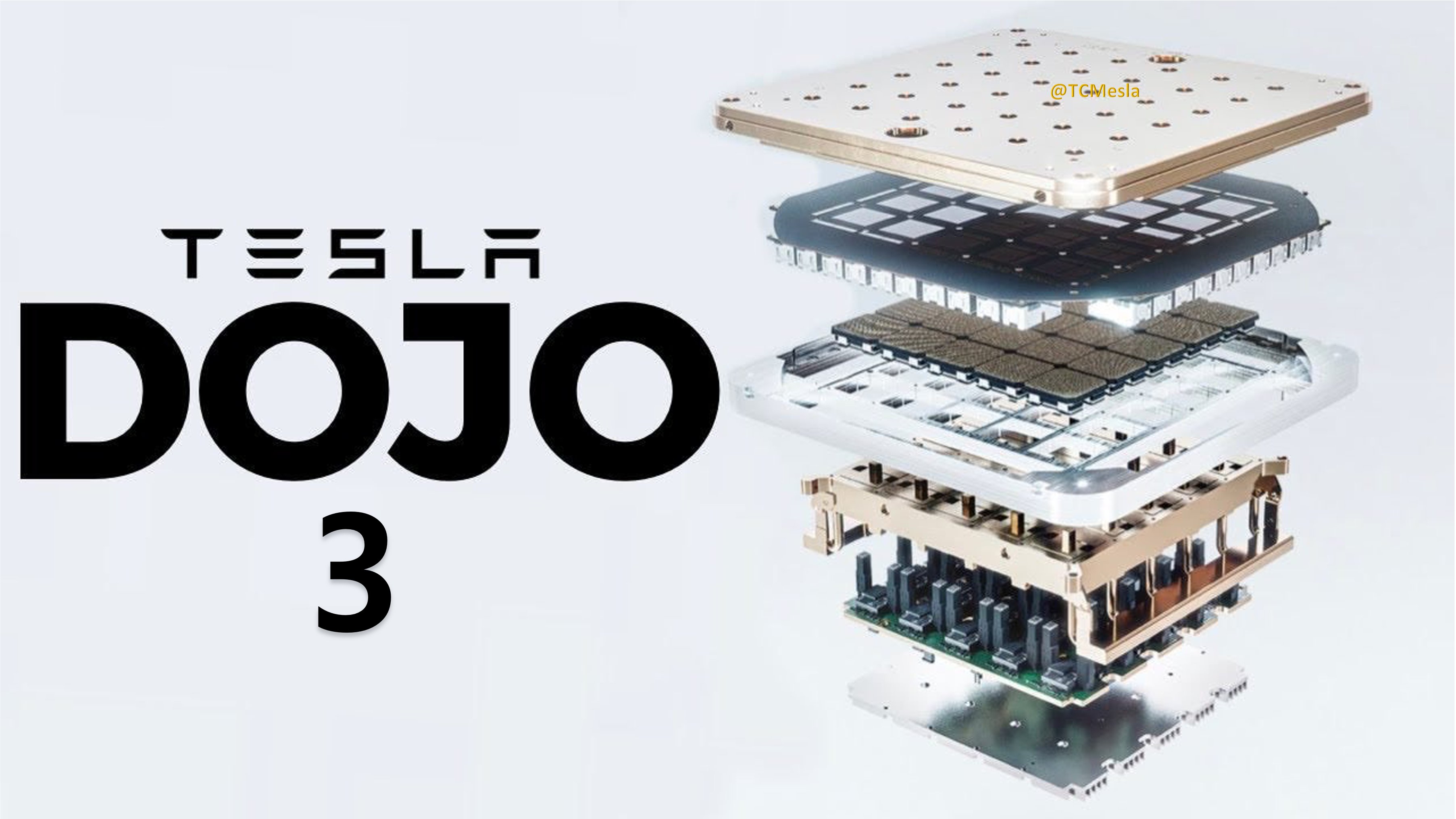
Tesla had intended to construct a second Dojo factory, which Musk referred to as “Dojo 2,” that would have been powered by a second-generation D2 processor, following the launch of its first Dojo supercomputer, which was powered by a combination of Nvidia GPUs and in-house-made D1 chips.
Tesla’s attention has shifted to the AI5 and AI6 processors, which are being produced by TSMC and Samsung, respectively, as the D2 chip under development has been shelved, along with the broader Dojo project.
The AI5 chip predominantly powers FSD, Tesla’s driver assistance system. In contrast, the AI6 chip is intended for both onboard inference (i.e., the powering of self-driving in cars and autonomous capabilities in humanoid robots) and large-scale AI training.
Musk posted on Friday evening, “It is illogical for Tesla to allocate its resources and scale two AI chip designs that are fundamentally distinct.” “The Tesla AI5, AI6, and subsequent chips will be exceptional for inference and at least moderately effective for training.” That is the sole focus of our endeavors.
He further stated that it is more logical to install “a multitude of AI5/AI6 chips on a board, whether for inference or training, to reduce the complexity and cost of network cabling by a few orders of magnitude” for a supercomputer cluster.
“I suppose that could be referred to as Dojo 3,” he stated.
Musk has been discussing Dojo since 2019, emphasizing that it would be a fundamental component of Tesla’s mission to commercialize humanoid robots and accomplish full self-driving capabilities.
Around August 2024, Musk transitioned from discussing Dojo to promoting Cortex, a “giant new AI training supercluster being built at Tesla HQ in Austin to solve real-world AI challenges.”
It is uncertain whether Cortex is still in development. TechCrunch has contacted Tesla to obtain additional information and inquire about the status of the Dojo facility in Buffalo, New York, where Tesla invested $500 million in the construction.
Tesla is currently confronted with declining EV sales and substantial brand harm due to Musk’s political involvement. Thus, the strategic shift is timely.
Musk has tried to persuade investors that Tesla still has a future in autonomy, even though the robotaxi launch in Austin this past June was sluggish and limited, resulting in numerous reported incidents of the vehicles exhibiting problematic driving behavior.