
The emergence of hybrid physical-digital fashion on the blockchain is reshaping authentication, loyalty, and commerce with NFC, DPP rules, and phygital drops.
- 1 Introduction
- 2 Market Context and Momentum
- 3 What “Hybrid” Looks Like in Practice
- 4 Case Studies (Inside View)
- 5 Tech Stack Blueprint (Brand-Side)
- 6 Data and Compliance You Must Prepare
- 7 Risks and Pitfalls (and How to Mitigate)
- 8 Roadmap: 6–12–24 Months
- 9 Conclusion
- 10 Frequently Asked Questions (FAQs)
Introduction
In recent years, hybrid physical-digital fashion on the blockchain has emerged as a groundbreaking fusion of tangible garments and virtual experiences secured by decentralized technology.
This transformative trend is not only reshaping how fashion is designed and consumed but also answering critical industry challenges such as anti-counterfeit, resale provenance, regulatory compliance, customer engagement, and immersive storytelling across channels.
Why Now
1. New Regulation & Digital Product Passport (EU DPP)
With the implementation of the EU Digital Product Passport framework, every physical product must now carry verifiable information about its origin, composition, and lifecycle. In this context, hybrid physical-digital fashion on the blockchain offers an ideal solution.
Each garment can be linked to a blockchain record that verifies its materials, manufacturing details, certifications, and authenticity in real time. Brands can meet compliance while delivering transparent, trustworthy data to consumers.
2. Combating Counterfeits
Counterfeiting costs the fashion industry annually tens of billions of euros and continues to rise. The concept of hybrid physical-digital fashion on the blockchain allows every item to have a unique, tamper-proof digital twin.
This digital record ensures that consumers and customs authorities can authenticate an item instantly. Blockchain’s immutable ledger makes duplication virtually impossible. As a result, counterfeit risk falls dramatically.
3. Resale Provenance
Resale and secondhand markets are booming and are currently estimated at over 50 billion dollars globally. Buyers increasingly demand proof of provenance.
Through a hybrid physical-digital fashion on the blockchain, each sale or transfer of a garment is recorded. Ownership history becomes transparent, verifiable, and publicly accessible.
This builds trust in resale markets and enables brands to capture data from each resale interaction for marketing and service enhancement.
4. CRM and Loyalty Integration
Brands eager to deepen customer relationships can leverage hybrid physical-digital fashion on the blockchain to tie customer behavior to garment usage.
Owning a digital twin of a physical garment can unlock personalized rewards, exclusive virtual content, loyalty points, or early access to new drops. Tracking owner engagement creates opportunities for bespoke offers and retention strategies that go beyond traditional CRM.
5. Omnichannel Storytelling
Today’s consumers expect immersive, connected experiences. With hybrid physical-digital fashion on the blockchain, a physical garment becomes a gateway to a digital universe. Imagine scanning a garment’s tag to unlock AR filters, virtual fashion shows, styling suggestions, or gamified brand quests.
Such omnichannel storytelling fosters engagement in both real-world and metaverse contexts. It also adds perceived value to the item and aligns with Gen Z and Millennial expectations for interactivity.
By weaving tangible and digital experiences into fashion through blockchain, hybrid physical-digital fashion on the blockchain delivers authenticity, traceability, engagement, and innovation.
In a rapidly evolving industry, it positions brands to meet regulatory requirements, delight customers, and unlock entirely new value ecosystems.
Market Context and Momentum
Luxury Standardization as Infrastructure
Luxury brands are no longer treating blockchain-enabled garments as one-off experiments. The Aura Blockchain Consortium now supports over 50 million products on the chain with participation from more than 50 global brands.
This scale signals that hybrid physical-digital fashion on the blockchain is evolving into a long-term infrastructure layer rather than a short-lived campaign.
It enables standardized authentication, lifecycle tracking, and interoperability between brands, making it possible for consumers to trust the origin and value of luxury goods across multiple channels.
Regulatory Tailwind in Europe
The EU Digital Product Passport for textiles is progressing from policy guidance to tangible adoption deadlines. This regulation will require brands to make origin, material composition, and environmental impact accessible through scannable IDs.
For companies adopting hybrid physical-digital fashion on the blockchain, compliance is built into the system. Each product’s on-chain record becomes a transparent, verifiable product passport accessible via NFC or QR scan, satisfying regulatory requirements while enhancing customer trust.
Utility Over Hype
The market is shifting from speculative hype to utility-driven applications. Nike’s strategic pivot from RTFKT’s purely digital offerings toward programs like SWOOSH highlights a focus on loyalty ecosystems and redeemable goods.
This approach reflects a broader industry understanding that hybrid physical-digital fashion on the blockchain works best when it provides durable value such as product authentication, exclusive content, and benefits tied to real-world items. The focus is on long-term engagement rather than short-lived digital collectibles.
What “Hybrid” Looks Like in Practice
NFC and QR-Linked Items
By embedding NFC chips or QR codes into garments, consumers can tap or scan to access a digital product passport. This includes authenticity verification, detailed care instructions, and brand-offered benefits.
The underlying framework often uses GS1 Digital Link standards to ensure that hybrid physical-digital fashion on the blockchain integrates seamlessly with retail systems worldwide.
Tokenized Receipts and Certificates
Blockchain technology allows the issuance of tokenized proofs of ownership and authenticity. These digital certificates can be transferred when the item is resold, enabling provenance tracking and, in some programs, secondary royalties for brands.
This integration reinforces the value proposition of hybrid physical-digital fashion on the blockchain by combining verifiable authenticity with resale enablement.
Phygital Drops
Luxury houses are experimenting with exclusive “phygital” releases where digital collectibles unlock limited physical items or physical purchases grant access to virtual assets. Examples include time-limited capsule collections and exclusive luxury bags paired with NFTs.
This form of hybrid physical-digital fashion on the blockchain strengthens brand storytelling, fosters scarcity, and gives customers tangible and intangible value in one integrated experience.
Case Studies (Inside View)
Luxury Consortium Play

The Aura Blockchain Consortium has built a shared infrastructure that enables brand-agnostic product passports, verified ownership transfers, and circularity features like authenticated resale.
Recent Digital Product Passport rollouts from brands such as Tod’s and Lalique show how hybrid physical-digital fashion on the blockchain supports both regulatory compliance and new customer experiences.
Consumers can scan an item’s embedded code to confirm origin, access care instructions, and view sustainability credentials, all secured on a distributed ledger.
Mass Retail On-Ramp
The partnership between Pudgy Penguins and Walmart offers a glimpse into how mainstream retail can bridge physical sales with digital engagement. Shoppers purchasing plush toys can scan QR codes to unlock avatars in a zkSync-powered online game.
This is a hybrid physical-digital fashion on the blockchain applied in a mass-market context, where real-world sales directly fuel digital interaction, increasing brand reach and customer stickiness without requiring deep crypto literacy.
Fashion Experiments Recalibrated
RTFKT’s phase-out of certain purely collectible projects reflects the broader pivot from speculative hype to persistent utility.
Brands are realizing that hybrid physical-digital fashion on the blockchain delivers the greatest value when tied to functional programs such as loyalty, authenticated resale, and first-party data capture.
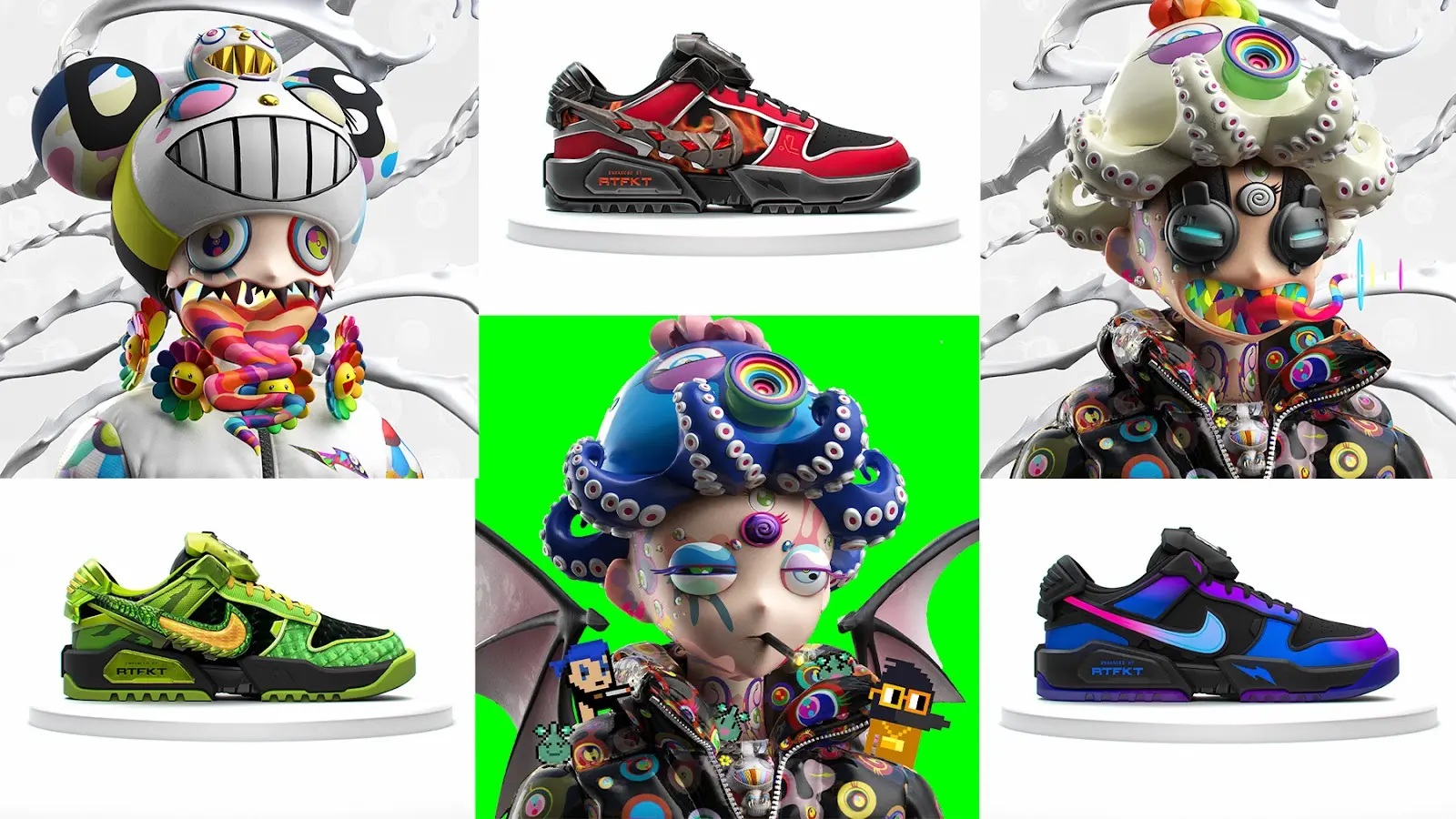
The focus is shifting toward sustainable engagement models where digital elements support a tangible, ongoing brand relationship.
Tech Stack Blueprint (Brand-Side)
Identity Layer
Every item in a hybrid physical-digital fashion on the blockchain requires a unique identifier. Brands achieve this through GS1 Digital Link QR codes or NFC chips bound to per-item serial numbers.
These identifiers connect the physical garment to its secure digital twin, enabling instant verification and access to associated services.
Ledger Layer
Brands choose between consortium or private blockchain frameworks like Aura or Quorum variants, or public Layer 2 networks for improved consumer experience. The decision often hinges on compliance requirements, scalability, and brand ecosystem goals.
This layer is critical for ensuring that ownership records and product data in a hybrid physical-digital fashion on the blockchain remain transparent and tamper-proof.
Middleware
Wallet-abstracted sign-ins remove onboarding friction. Middleware handles token gating for exclusive access, CRM or CDP connectors for integrated customer profiles, and consented data capture for personalization.
In a hybrid physical-digital fashion on the blockchain, middleware ensures the flow between the ledger layer and customer-facing experiences is smooth and secure.
Front-End Experience
Progressive web applications guide customers from initial purchase through to care, warranty, and resale options. Integrated features such as embedded returns or warranty registration make hybrid physical-digital fashion on the blockchain a practical utility rather than a novelty, while keeping the brand’s digital touchpoints cohesive.
Governance
Effective governance includes rotating content keys, maintaining secure anti-phishing landing pages, and establishing revocation policies for compromised credentials.
In a hybrid physical-digital fashion on the blockchain, governance safeguards not only the data integrity but also the brand’s long-term credibility.
Data and Compliance You Must Prepare
Mandatory Passport Fields
The EU Digital Product Passport for textiles is moving toward mandatory inclusion of key data points such as material composition, country of origin, care instructions, repairability, and circularity metrics.
All of these must be machine-readable and portable. For brands adopting hybrid physical-digital fashion on the blockchain, these fields can be embedded directly into each item’s on-chain record.
This ensures long-term accessibility and interoperability across resale platforms, regulatory systems, and consumer devices.
Authentication Posture
To prevent spoofed QR or NFC redirects, authentication measures like signed links and digital signatures should be standard.
In a hybrid physical-digital fashion on the blockchain, these safeguards validate the integrity of the digital twin and ensure customers only interact with authorized brand portals. This reduces fraud risks while maintaining user trust.
Privacy Alignment
Consent for first-party engagement through scans must align with local privacy regulations.
Lawful bases for processing vary by jurisdiction, making it essential for hybrid physical-digital fashion on the blockchain implementations to integrate region-specific consent flows that allow compliant engagement without sacrificing customer experience.
Risks and Pitfalls (and How to Mitigate)
Spoofed QR/NFC Pages
Counterfeiters may replicate QR codes or NFC tags to redirect consumers to fraudulent sites. Mitigation in a hybrid physical-digital fashion on the blockchain includes signed links, allow-listed domains, and chip provenance verification to guarantee authenticity.
Wallet Friction
Many consumers are unfamiliar with blockchain wallets, which can deter engagement. Solutions for hybrid physical-digital fashion on the blockchain include embedded custodial wallets with export options and progressive disclosure that minimizes technical jargon until necessary.
Compliance Drift
As EU acts evolve, the required fields for product passports may shift. Mapping Digital Product Passport fields to evolving regulations and keeping a change log ensures that hybrid physical-digital fashion on the blockchain deployments remain compliant without costly retrofits.
Roadmap: 6–12–24 Months
6 Months
Pilot select SKUs with embedded product passports. Define GS1 Digital Link or NFC format, choose the blockchain framework, and implement analytics to measure scan activity. These initial steps lay the groundwork for hybrid physical-digital fashion on the blockchain at scale.
12 Months
Expand to regional rollouts and attach tangible benefits like repair services, extended warranties, and members-only product drops. This phase reinforces the utility-driven model of hybrid physical-digital fashion on the blockchain, encouraging repeat engagement.
24 Months
Integrate authenticated resale with buy-back incentives, automated royalty or benefit splits, and interoperability between participating brands.
At this stage, hybrid physical-digital fashion on the blockchain matures into a connected ecosystem where ownership, sustainability, and customer value intersect seamlessly.
Conclusion
The brands that succeed with hybrid physical-digital fashion on the blockchain will see it as core product infrastructure rather than a short-term collectible.
By anchoring identity, service, and circularity into every item, they create lasting value that aligns with regulatory requirements.
As the EU Digital Product Passport accelerates adoption, the combination of great user experience and measurable customer benefits will determine which programs become permanent fixtures in the fashion industry.
Frequently Asked Questions (FAQs)
What is a digital product passport, and why does it matter for fashion?
It is a standardized, scannable record detailing materials, origin, care, and lifecycle. In hybrid physical-digital fashion on the blockchain, it ensures authenticity, compliance, and resale transparency.
How is this different from a normal QR code?
A normal QR code links to static content. In hybrid physical-digital fashion on the blockchain, it connects to a secure, verifiable digital twin tied to an immutable ledger.
Do I need a public blockchain?
Not always. Brands can use consortium, private, or public blockchains depending on compliance, scalability, and customer experience goals.
How do phygital drops help retention?
They link exclusive physical items to digital rewards or collectibles, creating scarcity, engagement, and loyalty touchpoints that keep customers returning.
What’s a realistic starter budget and timeline?
Small pilots can start from mid-five figures with rollout in 6–12 months, scaling investment as adoption and benefits grow.