
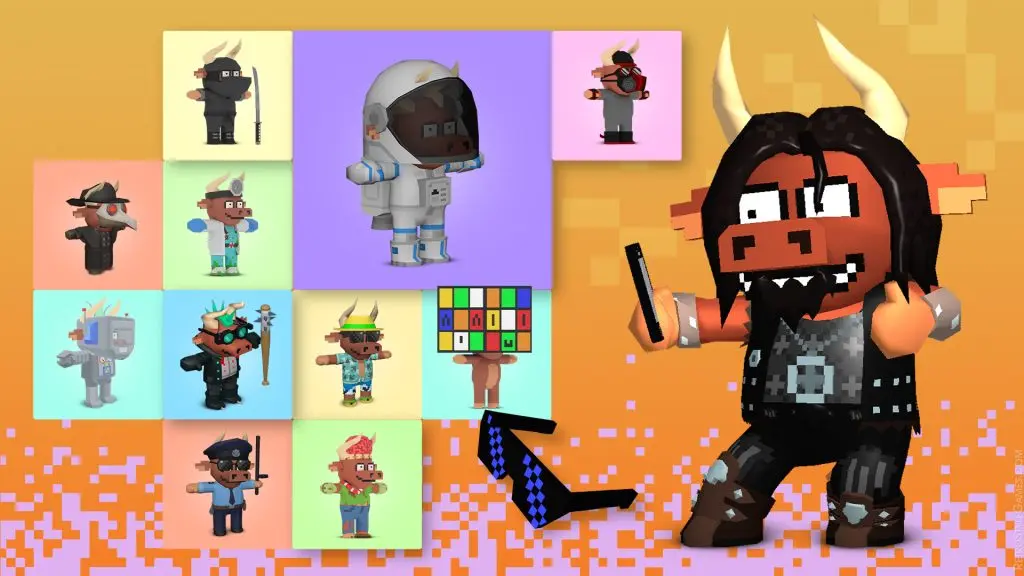
This is how gaming NFTs with built-in AI characters are redefining gameplay, enabling evolving NPCs, new monetization models, and immersive player experiences.
Introduction
In 2025, gaming NFTs with built-in AI characters are redefining what it means to own digital assets. These intelligent NFTs are more than collectibles; they are autonomous, evolving in-game AI avatars that learn, adapt, and interact with players in dynamic ways.
For gamers, this means immersive experiences where characters remember past encounters, adjust strategies, and form unique bonds over time.
Builders can integrate these AI-driven assets into cross-platform worlds, enabling interoperability and persistent character development beyond a single game.
For investors, the blend of blockchain-backed scarcity and AI-driven utility creates a new category of high-value digital assets, with potential growth fueled by both gaming adoption and the expanding AI economy.
This article explores how these innovations work, the technologies making them possible, and the opportunities they present for creators and collectors alike.
From dynamic quest generation to AI-powered NPC economies, we will examine how the fusion of AI and blockchain is shaping the future of interactive entertainment and asset ownership.
What Are Gaming NFTs with Built-In AI Characters?
Gaming NFTs with built-in AI characters combine the immutable ownership of non-fungible tokens with the adaptability of artificial intelligence.
An NFT is a unique digital asset stored on a blockchain, identified by a token ID and associated metadata. That metadata can be on-chain, meaning permanently written into the blockchain, or off-chain, stored externally but referenced in the token’s record.
When an NFT is paired with a trained AI model, the result is often called an intelligent NFT or iNFT. If that AI can reason, make autonomous decisions, and interact dynamically with game environments, it becomes an agentic AI character.
These characters can learn from a player’s actions, adapt strategies, and maintain consistent personalities across multiple gaming worlds.
The Technology Stack
Delivering gaming NFTs with built-in AI characters requires a hybrid tech stack:
- Smart Contracts: These govern ownership, transfer, and logic for NFT-based assets, ensuring scarcity and verifiable provenance.
- Hosted Model Endpoints: AI models powering character behaviors can be run on cloud-based inference servers, enabling real-time decision-making.
- Edge Inference: For latency-sensitive gameplay, parts of the model may run locally on the player’s device, allowing faster interactions without network delays.
- Wallets for Identity: Player wallets act as the bridge between in-game identity and NFT ownership, enabling characters to carry achievements, skills, and relationships across games.
Why It Matters
Platforms and projects are already launching intelligent NFTs into active game ecosystems. These range from NFT-based RPGs where AI companions evolve alongside the player to metaverse hubs where AI avatars conduct trades, guide quests, and even form alliances without direct human control.
By integrating AI into NFTs, developers unlock new layers of personalization and persistence. For example, a sword-bearing AI companion could remember your past battles, adjust its combat style to your preferences, and carry those memories into entirely different games that recognize the same NFT.
Opportunities for Stakeholders
- For Gamers: Deeply immersive, emotionally engaging gameplay with characters that feel alive.
- For Builders: Interoperable AI agents that work across multiple platforms, creating shared economies and storylines.
- For Investors: Digital assets that appreciate not only from scarcity but also from their evolving capabilities and in-game reputations.
Some Gaming NFTs with Built-in AI Characters
1. Treasure DAO – AI Agent Creator
This lets NFT holders (like Bored Apes, Azuki, Pudgy Penguins) upgrade their tokens into AI-powered agents. These agents can chat, have personalities, move autonomously, and perform tasks.
2. Alethea AI – iNFTs (Intelligent NFTs)
Transforms static NFTs into interactive characters using personality modules. These iNFTs can talk, broadcast, and even evolve into artists, entertainers, or companions across different metaverses.
3. OP Games – Spark NPCs
Turns NFTs into AI-driven NPCs that can adapt and remember player interactions. Perfect for dynamic storytelling and immersive gameplay.
4. GameGPT – Genesis AI NFTs
A collection where each NFT doubles as an AI agent that can play games, execute blockchain transactions, or even run social accounts. Comes with an AI-powered game builder that creates games from text prompts.
5. Mirror World – Solana-based AI Avatars
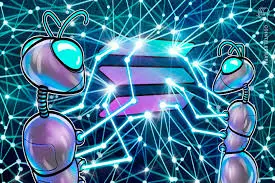
Every NFT in this collection has its own AI personality, from historical figures to celebrities. Players can interact with them through a “portal” that connects to games and social environments.
6. AI Arena
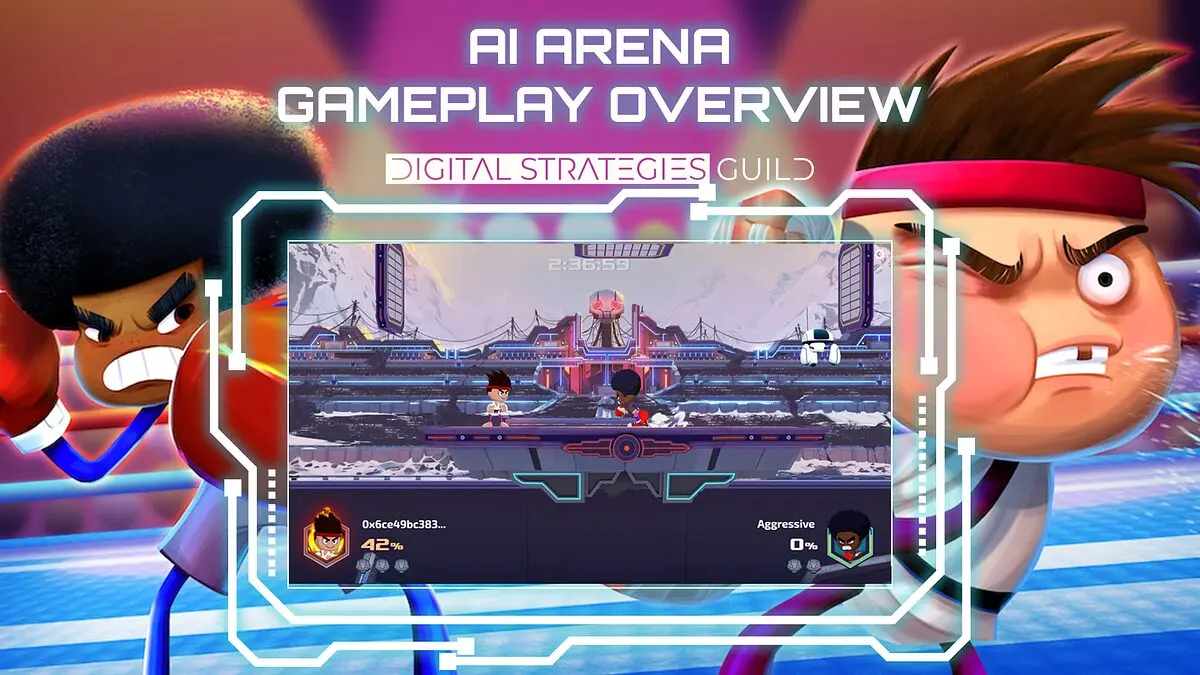
A competitive NFT game where players train AI-powered fighters. Each NFT learns through neural networks and can battle other AI characters in PvP.
7. RFOX VALT
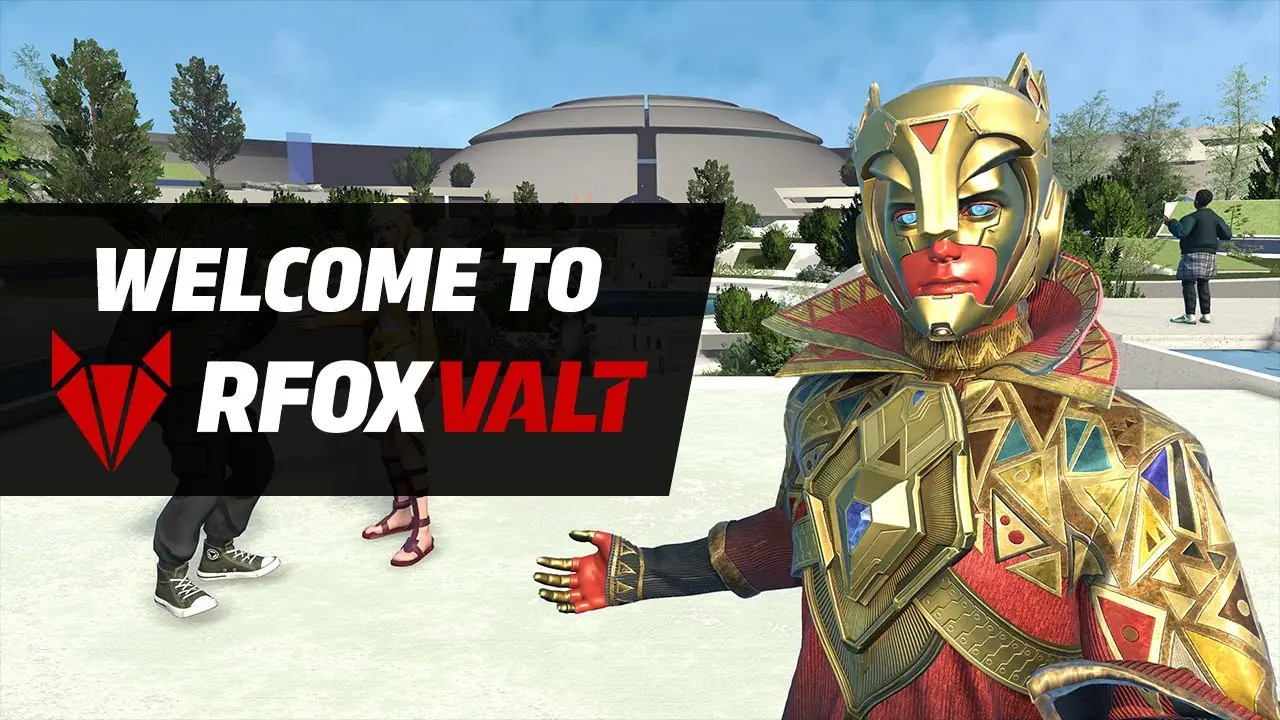
A metaverse project where avatars and spaces come alive with voice-enabled AI assistants that help you customize, decorate, and interact naturally.
8. R Games
A racing-focused project blending NFTs, AI, and competitive modes. Characters and vehicles evolve through gameplay, with AI adapting to racing styles.
Risks and Challenges
- Model Exploitation: AI logic could be manipulated for unfair gameplay advantages.
- Ownership Conflicts: Unclear rights over AI-generated storylines or assets could spark disputes.
- Model Hosting Sustainability: Maintaining AI services for years requires long-term infrastructure planning.
Gaming NFTs with built-in AI characters are not just a trend but a foundational shift in how players, creators, and investors think about digital ownership.
They merge scarcity with intelligence, creating a new class of assets that can grow in both value and capability over time. As more projects integrate iNFTs and agentic NFTs into their worlds, the line between game content and autonomous digital life will continue to blur.
How the Tech Works: Architecture and Developer Choices
Designing gaming NFTs with built-in AI characters requires both blockchain architecture and AI infrastructure working in sync. The most effective implementations follow a modular approach, allowing developers to upgrade, scale, or migrate parts of the stack without breaking asset integrity.
Architecture Patterns
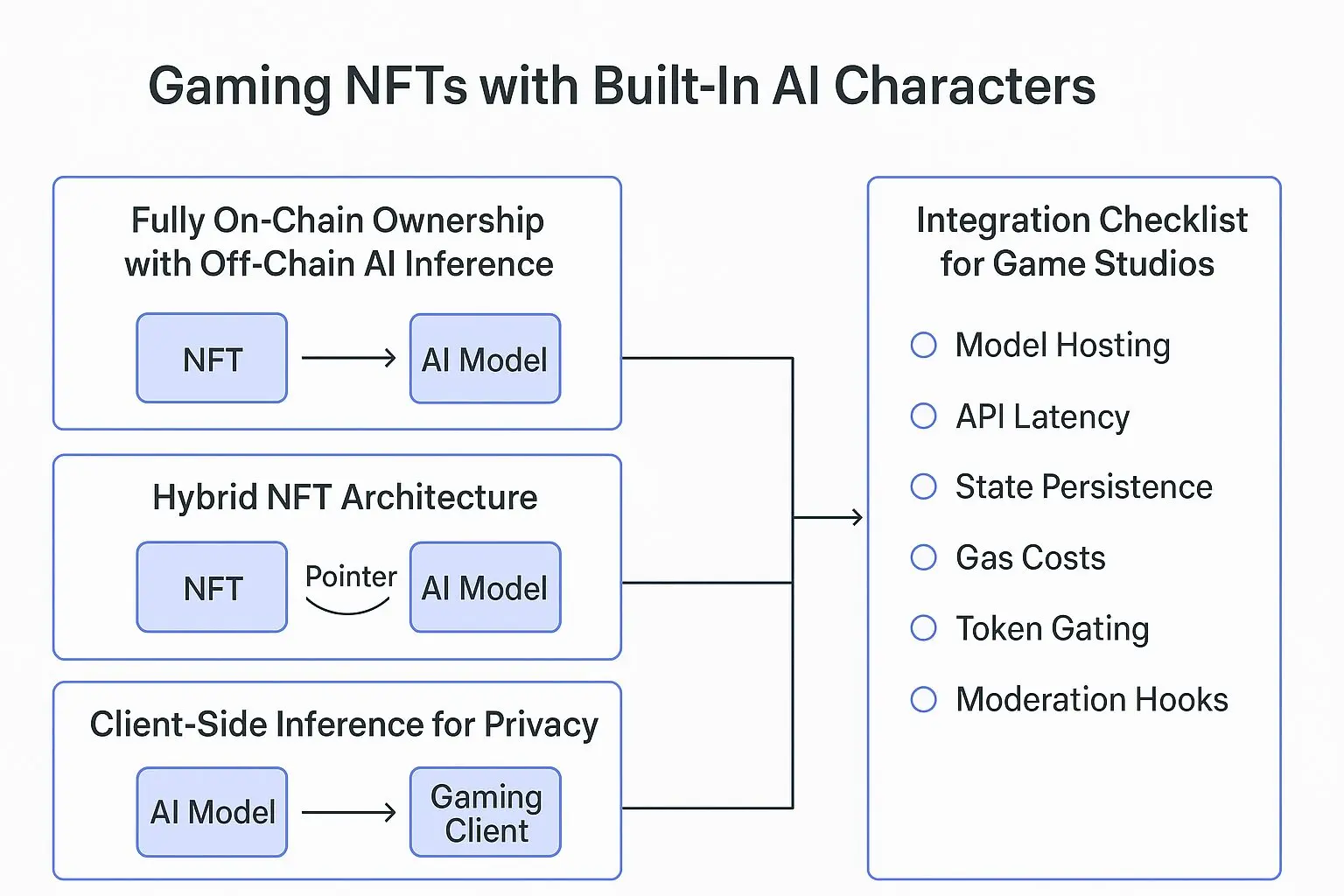
- Fully On-Chain Ownership with Off-Chain AI Inference
The NFT lives entirely on-chain, securing identity and ownership, while AI inference runs on external servers to handle processing-heavy model computations. This is the most common tradeoff for reducing gas costs and latency in live games. - Hybrid NFT Architecture
The NFT contains pointers to model endpoints and periodic training checkpoints stored on IPFS or Arweave. This enables AI state recovery and model migration while maintaining the NFT’s persistent identity. - Client-Side Inference for Privacy and Performance
AI models run locally on a player’s machine or console, ensuring ultra-low latency and keeping sensitive player interaction data private.
Integration Checklist for Game Studios
To launch NFT game architecture that supports AI NPCs effectively, studios should address:
- Model hosting (cloud, decentralized compute, or hybrid)
- API latency budgets for smooth in-game AI behavior
- State persistence for NPC memories and skills
- Gas cost optimization for frequent metadata updates
- Token gating for restricted features or content
- Moderation hooks to prevent abusive AI behavior
Implementation Examples and Tools
Studios building gaming NFTs with built-in AI characters often rely on:
- LLMs for dynamic dialogue generation
- Vector databases for memory retrieval and personalized responses
- Webhooks and event listeners for triggering AI actions in response to blockchain or gameplay events
This architecture enables AI NPCs to be more than scripted assets — they become evolving, tradable entities in NFT game ecosystems.
Use Cases and Player Experiences
The real power of gaming NFTs with built-in AI characters lies in how players interact with them. By combining AI NPCs with blockchain’s verifiable ownership, developers create experiences that are both personal and transferable.
Example Player Experiences
- Persistent NPCs That Learn Player Style
Imagine an AI mercenary who has fought alongside you for months, adapting to your combat style and remembering your tactical preferences. This NPC can be traded as an NFT to another player, retaining its learned traits. - Branded Virtual Influencers with NFT Ownership
Brands can launch AI-powered avatars that live in games and social platforms, with NFT ownership granting rights to control, monetize, or even collaborate with them. - Competitive AI Companions or PvP Bots
In competitive games, AI allies or opponents evolve with each match, improving their skills based on player feedback and match history. - Narrative Engines
AI-driven NFTs can generate procedurally authored quests, dialogues, and branching storylines unique to each player, reshaping replayability in narrative-rich worlds.
Case References
Projects like Alethea AI’s smart avatar experiments have demonstrated how AI NFT characters can act as conversational agents in games and metaverse spaces. Integrations with Alethea AI Labs and NFT Plazas show early examples of persistent AI avatars across virtual environments.
These examples prove that agentic AI NPCs are not speculative — they’re already being tested in real-world platforms, delivering dynamic, replayable, and marketable in-game experiences.
Business Models and Monetization
The monetization potential of gaming NFTs with built-in AI characters extends beyond initial asset sales, as these assets can generate ongoing value through AI services, customization, and interoperability.
Revenue Streams
- Primary Sales and Mint Mechanics
Initial NFT sales can include bundled AI capabilities or tiered access levels, with rarity impacting AI intelligence or cosmetic uniqueness. - Royalties on Secondary Sales
Smart contracts can enforce royalties not just on resales, but also capture a share of AI training or compute usage fees when the asset is used in-game. - Subscription or Compute-Access Fees
Players can pay for premium AI behaviors, additional dialogue complexity, or specialized combat algorithms. - Licensing for Brand Uses
AI avatars can be licensed for in-game appearances, advertising, or cross-platform influencer roles, with NFT ownership conferring commercial rights.
Token Gating, Rarity Mechanics, and Economy Design
Developers can implement token-gated events or areas that only certain AI NFTs can access, adding scarcity-driven demand. Rarity mechanics may be tied to unique AI training datasets, while in-game economies benefit from AI NPCs creating emergent, player-driven markets.
By blending blockchain scarcity with AI adaptability, these models make gaming NFTs with built-in AI characters a recurring revenue engine for developers and a dynamic asset class for investors.
Market Players and Ecosystem
The ecosystem around gaming NFTs with built-in AI characters is expanding quickly, with both established companies and emerging startups shaping the market.
Key Players and Moves
- Alethea AI
Known for pioneering iNFTs, Alethea AI continues to innovate with its Fusion and agentic avatar launches. These avatars combine blockchain-backed ownership with advanced conversational and behavioral models, making them versatile for both games and metaverse integrations. - Major Game Engines
Epic Games is integrating AI NPC toolsets into Unreal Engine, including tools like the Persona Device for Fortnite. Such native support allows developers to embed intelligent NFTs directly into live-service games, speeding up adoption. - Virtual Influencer and AI Avatar Startups
Several startups are building end-to-end AI avatar stacks, attracting significant fundraising. Their focus is on creating branded AI characters that can serve as influencers, in-game merchants, or quest givers — all linked to NFT ownership for monetization and portability.
As more platforms recognize the potential of gaming NFTs with built-in AI characters, interoperability between engines, wallets, and AI model services will be critical. Linking these advancements to internal coverage of major NFT games and engine integrations helps track how the industry is converging.
Risks, Moderation, and Legal Red Flags
The rapid deployment of gaming NFTs with built-in AI characters raises legal, safety, and operational risks that developers and publishers cannot ignore.
Legal and Safety Issues
- IP and copyright ambiguity when AI models are trained on third-party data.
- Consumer confusion over what rights NFT ownership actually grants, especially regarding AI-generated outputs.
- Regulatory scrutiny over whether NFT-linked AI assets could be classified as securities.
- Content-safety challenges, including toxic or manipulated AI outputs from prompt abuse.
A recent USPTO/USCO joint study and multiple ongoing legal actions have highlighted growing IP and consumer-protection concerns for AI-enabled NFT assets.
Practical Mitigation Steps
- Include explicit rights language in NFT smart contracts and metadata.
- Apply off-chain content filters to all AI outputs before rendering in-game.
- Implement human moderation tiers for high-impact AI interactions.
- Maintain provenance logs to record AI training sources, model updates, and generated outputs.
Addressing these areas helps ensure that gaming NFTs with built-in AI characters can operate in compliance with both legal frameworks and community trust expectations.
Design and UX Best Practices
Well-designed experiences around gaming NFTs with built-in AI characters can improve adoption, engagement, and monetization.
Guidelines for Developers
- Communicate Ownership Scope
Clearly explain what owning the NFT grants — access rights, commercial usage rights, or only gameplay functions. - Onboarding Flows for AI Training
Provide guided experiences to help players customize and train their AI characters from day one. - Transparent Compute Costs
Show when AI interactions incur cloud compute fees and let players choose premium vs. free-tier behaviors. - Data Privacy Controls
Offer opt-out settings for data collection and retraining contributions, respecting user preferences.
Focusing on these UX principles ensures that gaming NFTs with built-in AI characters feel like empowered, secure, and player-first assets rather than experimental tech with hidden costs.
Technical Checklist for Builders
For teams creating gaming NFTs with built-in AI characters, a clear, actionable build plan prevents costly redesigns later.
- Decide on On-Chain Footprint and Gas Budget
Choose which metadata, pointers, and checkpoints will live on-chain vs. off-chain to control costs and maintain scalability. - Choose Model Provider and Latency SLA
Select an AI model host with clear service-level guarantees to ensure smooth in-game AI NPC behavior. - Design Tokenomics and Royalty Schema
Plan for primary sale pricing, secondary market royalties, and potential AI usage fees baked into smart contracts. - Build Moderation and Safety Middleware
Deploy content filters, prompt sanitizers, and real-time abuse detection to protect player experience. - Prepare Legal Terms and IP Assignment Templates
Define ownership scope, commercial usage rights, and AI output licensing before minting assets.
Having this checklist embedded in your development workflow ensures that gaming NFTs with built-in AI characters launch with stability, compliance, and long-term operability.
Roadmap and What to Watch Next
The market for gaming NFTs with built-in AI characters is set for rapid expansion as multiple technological and regulatory milestones converge.
- More Engine Integrations
Expect deeper AI NPC support in major engines like Epic, Unity, and Unreal, lowering the barrier for integrating intelligent NFTs into mainstream games. - Consumer Devices and Mobile Support
Partnerships will bring AI-powered NFT characters to smartphones, AR headsets, and consoles, expanding their reach beyond PC-focused ecosystems. Examples include collaborations cited by Alethea AI Labs and coverage of mobile integrations from The Verge. - Legal Clarifications and Regulatory Tests
Anticipate precedent-setting rulings around AI-generated NFT content, ownership rights, and securities classification. - Micro-Angles for New Coverage
- Impact of decentralized model hosting on latency and cost.
- NFT rarity linked to unique AI training datasets.
- Player-driven marketplaces for AI personality modules.
- Impact of decentralized model hosting on latency and cost.
These signals will determine not only how quickly gaming NFTs with built-in AI characters move into the gaming mainstream, but also how developers structure their next wave of AI-integrated digital economies.
Conclusion
Gaming NFTs with built-in AI characters represent one of the most transformative intersections of blockchain and artificial intelligence in interactive entertainment. They are no longer speculative concepts but active, evolving assets that blend verifiable ownership with adaptive, lifelike behavior.
For gamers, they offer persistent companions, rivals, and storytellers who learn, remember, and adapt over time. For builders, they open a modular development path where NFTs can carry intelligence across platforms and genres.
For investors, they introduce a new class of digital property with both collectible scarcity and functional utility.
As engine integrations deepen, consumer devices adopt AI NPC capabilities, and legal frameworks mature, the technology will likely shift from niche innovation to a standard game feature.
However, this evolution demands careful handling of IP rights, player safety, moderation, and transparent tokenomics. The builders who succeed will be those who design with clarity, compliance, and player-first experiences in mind.
The convergence of blockchain permanence and AI adaptability is redefining the boundaries of asset ownership and gameplay immersion.
In the coming years, gaming NFTs with built-in AI characters may become as common as traditional NPCs, only smarter, owned by players, and capable of writing their own chapter in a game’s history.
Frequently Asked Questions (FAQs)
What are gaming NFTs with built-in AI characters?
They are blockchain-based NFTs that embed intelligent, adaptive AI agents capable of learning, evolving, and interacting dynamically in games.
How are they different from regular NFTs?
Unlike static NFTs, they combine verifiable ownership with AI-driven functionality, allowing the asset to change and improve over time.
Can AI characters move between games?
Yes, if developers support interoperability, the AI’s skills, memories, and traits can transfer across compatible platforms.
What are the main risks?
Key risks include unclear IP rights, regulatory scrutiny, AI abuse or manipulation, and long-term hosting sustainability.
How can developers monetize them?
Through primary sales, royalties on resales, AI usage fees, subscriptions for premium behaviors, and brand licensing opportunities.