
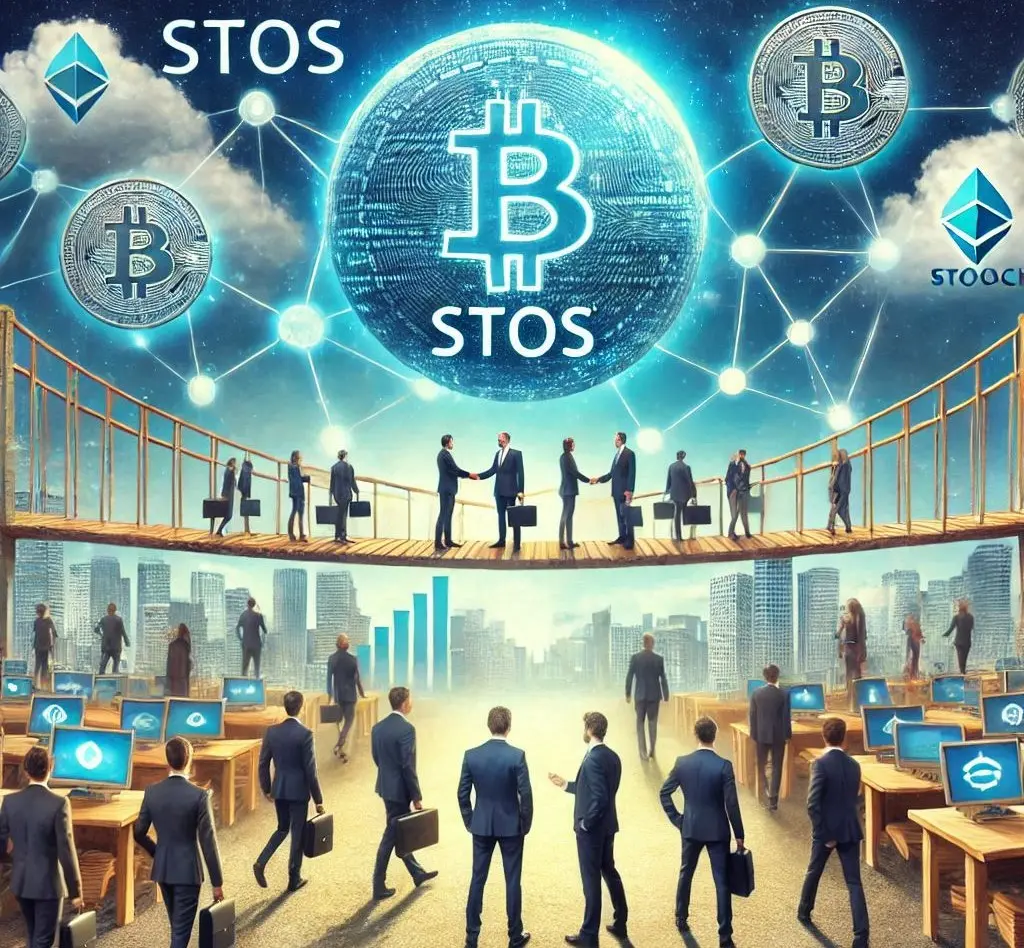
Traditional finance and blockchain are converging through security token offerings (STOs), unlocking transparency, efficiency, and wider accessibility.
Let’s explore how STOs are bridging the gap between traditional finance and blockchain, transforming global finance, and creating innovative investment opportunities.
What are Security Token Offerings (STO)?
Security Token Offerings (STOs) are blockchain-based financial instruments that reflect ownership of real-world assets, including stocks, real estate, bonds, and other tangible and intangible assets.
STOs combine the technological benefits of blockchain with the regulatory compliance and legitimacy of traditional financial systems.
Definition of an STO
An STO is a tokenized security that is issued on the blockchain network. Unlike Initial Coin Offerings (ICOs), which often offer utility tokens without backing by physical assets, STOs are backed by real-world assets, giving them intrinsic value and ensuring compliance with traditional financial regulations.
For example, an STO could represent partial ownership of a luxury property, stock in a company, or rights to future project profits, all of which are recorded and monitored on a blockchain for transparency and immutability.
How Do STOs Work?
- Asset Tokenization: Converting a physical or financial asset into digital tokens.
- Regulatory Compliance: Tokens are issued in accordance with local and international securities regulations, protecting investors.
- Blockchain Integration: These tokens are managed on a blockchain, which provides tamper-proof records and seamless transactions.
- Distribution: During the STO campaign, investors buy tokens and gain ownership or rights to the asset.
Benefits of STOs
- Regulatory Compliance: Reduces legal risks for investors and issuers by adhering to financial regulations.
- Transparency: Blockchain technology provides secure, tamper-proof records of ownership and transactions.
- Fractional Ownership: Dividing high-value assets into smaller portions, allows more investors to participate.
- Enhanced Liquidity: STOs can be traded on regulated secondary markets, resulting in increased liquidity.
- Global Accessibility: STOs provide investors globally with access to previously exclusive asset classes.
Security token offerings are creating a more transparent, accessible, and efficient financial ecosystem by bridging the gap between traditional finance and blockchain technology.
By aligning innovation and regulation, STOs are boosting investor trust and opening up new investment opportunities in the digital age.
Traditional Finance vs Blockchain: Major Differences
The financial environment is swiftly evolving, with blockchain technology presenting innovative solutions that challenge old practices of traditional finance.
While both strive to ease transactions and manage financial systems, their fundamental principles, processes, and infrastructure differ substantially. Here are some of their major differences:
- Infrastructure & Technology
- Transparency
- Accessibility and Inclusivity
- Speed and Efficiency
- Cost
1. Infrastructure & Technology
Traditional Finance:
Traditional finance operates on centralized systems managed by banks, governments, and financial entities. Transactions are processed through intermediaries like clearinghouses or payment processors, which frequently results in delays and extra costs.
Blockchain:
Blockchain uses decentralized ledger technology (DLT) to record transactions on a distributed, tamper-proof network. This eliminates the need for intermediaries, leading to faster and less costly transactions.
2. Transparency
Traditional Finance:
Traditional finance has limited transparency, with transaction data often only available to authorized institutions and parties. The opacity can lead to inefficiencies and a lack of confidence among players.
Blockchain:
Blockchain technology promotes transparency by recording transactions on a public or permissioned ledger that network participants can access. This promotes confidence and accountability in the financial ecosystem.
3. Accessibility and Inclusivity
Traditional Finance:
Traditional finance requires access to financial services, thus excluding large population, especially in developing nations. strict regulations and high fees further limit accessibility.
Blockchain:
Blockchain provides global accessibility, allowing anybody with an internet connection to participate in financial transactions regardless of location or socioeconomic status.
4. Speed and Efficiency
Traditional Finance:
Processes, such as cross-border payments and loan approvals, can take days or weeks due to intermediaries, manual verification, and regulatory requirements.
Blockchain:
Blockchain enables faster transactions, processing transactions almost instantly, even for cross-border payments, as there are no intermediaries to delay the process.
5. Costs
Traditional Finance:
Traditional finance relies on intermediaries such as banks, brokers, and payment processors, which results in high transaction fees, administrative costs, and service charges.
Blockchain:
Blockchain technology significantly cuts costs by removing intermediaries and automating operations using smart contracts.
Blockchain represents a significant shift in the way financial systems work, providing transparency, efficiency, and accessibility that traditional banking cannot match. Traditional finance, on the other hand, remains important because of its robust regulatory oversight and long-standing trust.
The convergence of these two systems, aided by innovations such as Security Token Offerings (STOs), has the potential to result in a more inclusive and efficient financial future.
The Role of STOs in Bridging the Gap Between Traditional Finance and Blockchain
Security Token Offerings (STOs) have emerged as strong tools to integrate the best of traditional finance and blockchain technology.
By combining regulatory compliance with blockchain efficiency, STOs are reshaping asset trading and management. Below, we’ll explore how STOs can help bridge this gap.
- Tokenizing Real-World Assets
STOs enable the tokenization of physical assets like real estate, stocks, and bonds, making them available on blockchain networks.
- Traditional Finance Contribution: Provides investors with stability and familiarity through established asset classes such as stocks, bonds, and real estate.
- Blockchain Contribution: Tokenization divides assets into smaller, fractional parts, allowing more investors to engage with lower capital.
Example: Tokenized real estate allows investors to own fractions of properties rather than purchasing complete assets, making high-value investments more accessible to investors.
- Regulatory Compliance and Investor Protection
STOs operate under tight regulatory frameworks, ensuring investor safety while leveraging blockchain’s potential.
- Traditional Finance Contribution: Ensures compliance with securities laws, legal recourse, and investor protections.
- Blockchain Contribution: Increases transparency by storing immutable records of ownership and transactions on a public ledger.
Example: STOs issued in accordance with SEC’s guidelines in the United States ensure that only accredited investors participate, maintaining regulatory control while leveraging blockchain for efficiency.
- Increased Liquidity in Illiquid Markets
STOs bring liquidity to traditionally illiquid assets by allowing secondary trading on blockchain-based exchanges.
- Traditional Finance Contribution: Offers reliable market infrastructure but struggles with asset liquidity (for example, private equity or real estate).
- Blockchain Contribution: Establishes 24/7 trading platforms worldwide that enable the instant purchase and sale of tokenized assets.
Example: An STO for a private equity fund allows token holders to trade their shares on a decentralized market, enhancing liquidity over traditional private equity investments.
- Transparency and Efficiency
STOs combine blockchain transparency and efficiency with the legitimacy of traditional financial practices.
- Traditional Finance Contribution: Offers proven valuation methods and risk evaluations.
- Blockchain Contribution: Enables transparent reporting, fast transaction settlement, and reduced administrative overhead.
Instead of waiting days for settlement, STO transactions are conducted and recorded on the blockchain instantly, lowering costs and increasing confidence.
- Democratizing Investment Opportunities
STOs provide opportunities for a broader range of investors, closing the accessibility gap.
- Traditional Finance Contribution: High-value assets are often limited to institutional or high-net-worth individuals.
- Blockchain Contribution: Fractional ownership enables retail investors to engage in markets that were previously out of reach.
Example: A tokenized art collection issued through an STO allows small-scale investors to own units of high-value artwork that would otherwise be inaccessible.
Key Benefits of STOs in Bridging the Gap
| Feature | Traditional Finance | Blockchain (via STOs) |
| Asset Accessibility | Limited to institutional investors | Democratized through tokenization |
| Transparency | Private and opaque processes | Public, immutable ledgers |
| Regulatory Compliance | Robust but slow | Integrated with blockchain speed |
| Efficiency | High transaction costs and delays | Faster, cost-effective transactions |
| Liquidity | Illiquid markets | Increased via secondary trading |
STOs serve as a bridge between the traditional financial system’s trust and regulatory compliance and the blockchain’s innovation and efficiency.
STOs help to create a more inclusive and efficient financial ecosystem by tokenizing real-world assets, increasing liquidity, and maintaining compliance.
As the adoption of STOs rises, they will continue to play an important role in connecting these two financial worlds.
Benefits of Bridging Traditional Finance and Blockchain with STOs
STOs integrate traditional finance and blockchain innovation, resulting in a more accessible, efficient, and secure financial environment. Here are the major benefits of this integration:
- Broader Accessibility
- Enhanced liquidity
- Increased Efficiency
- Transparency and Security
Broader Accessibility
STOs democratize access to high-value assets that were previously only available to high-net-worth individuals or institutions.
- Fractional Ownership: By tokenizing assets such as real estate, art, or private equity, retail investors can make smaller investments and have access to high-value opportunities.
- Global Reach: Blockchain facilitates cross-border participation, allowing investors from all over the world to get access to tokenized assets regardless of location.
- Lower Entry Barriers: STOs eliminate the requirement for investors to invest large capital in asset classes that were previously reserved for high-net-worth individuals.
Example: Investors can own a fraction of a tokenized luxury property for as low as $100, thereby increasing participation significantly.
Enhanced liquidity
The tokenization of assets offers greater liquidity to markets that were previously illiquid or difficult to trade.
- 24/7 Trading: Unlike traditional markets, which have limited operation hours, blockchain-based platforms provide continuous trading.
- Secondary Markets: STOs enable trading on regulated secondary markets, allowing investors to buy and sell tokens at any time.
- Broader Market Participation: Increased liquidity attracts a wide range of investors, which helps to maintain market stability and growth.
Example: A tokenized stake in a private equity fund can be sold on a compliant exchange before the fund matures.
Increased Efficiency
Blockchain technology minimizes inefficiencies associated with traditional financial systems.
- Lower Transaction Costs: By removing intermediaries such as brokers and clearinghouses, blockchain drastically lowers transaction fees.
- Faster Settlement Times: Unlike traditional systems, which take days or weeks, transactions on blockchain networks are almost instantaneous.
- Streamlined Processes: Automated smart contracts eliminate paperwork and administrative burdens, resulting in seamless and error-free transactions.
Example: A real estate deal settled through an STO can be completed in hours rather than weeks since smart contracts automate verification and payment processes.
Transparency and Security
STOs capitalize on blockchain’s inherent transparency and security features, boosting investor trust.
- Immutable Records: Every transaction is permanently recorded on a public or private blockchain ledger, which reduces the risk of fraud.
- Auditability: Investors and regulators can verify token ownership and transaction history in real-time, which improves supervision.
- Enhanced Security: The decentralized structure of blockchain reduces the risk of data breaches or manipulation, providing investors with a secure environment.
Example: Investors may use blockchain explorers to validate their ownership of a tokenized bond and analyze transaction data, therefore increasing trust in the system.
STOs bridge traditional finance and blockchain, providing investors and institutions with access to a more inclusive, liquid, and efficient financial environment.
With the added benefits of transparency and improved security, STOs are more than simply a financial innovation; they represent a paradigm shift that has the potential to transform global investment practices.
As adoption grows, the integration of traditional finance and blockchain will present unprecedented opportunities for retail and institutional investors.
Real-world Examples of STOs Bridging Finance and Blockchain
STOs have evolved beyond theory, transforming traditional finance through real-world applications utilizing blockchain technology. These examples highlight how STOs are transforming the investment environment, especially in real estate and stock ownership.
Case Study 1: Tokenization of Real Estate through STOs
One of the most significant applications of STOs is in the real estate industry, where traditionally illiquid and high-value properties are made more available to a larger pool of investors.
Platform Example: tZERO
tZERO, a blockchain-powered platform, has enabled the tokenization of real estate properties, allowing for fractional ownership of luxury developments.
- How It Works: Properties are tokenized into security tokens, with each representing a unit of ownership. Investors can acquire these tokens, allowing them to possess a share of high-value assets without having to buy all the properties.
Advantages:
- Real estate investments will become more democratized as the entry barrier is reduced.
- Secondary market trading provides liquidity by allowing investors to sell their holdings without waiting for property resale.
- Notable Project: The St. Regis Aspen Resort in Colorado was tokenized and made available to global investors using the Securitize platform.
Case Study 2: Equity-Based STOs Allow for Fractional Ownership of Startups
STOs have also transformed equity investment by making startup shares more accessible to retail investors, allowing them to participate in opportunities traditionally reserved for venture capitalists and institutional investors.
Platform Example: Neufund
Neufund, a European investment platform, pioneered equity-based STOs that let startups raise capital while providing investors with tokenized shares of their companies.
- How It Works: Companies issue security tokens that represent shares, which investors can purchase during the STO. These tokens provide fractional ownership and voting rights comparable to traditional stock.
Advantages:
- Eliminating geographical barriers allows for global access to equity investments.
- Compliance with regulatory frameworks ensures investor protection.
- Notable projects: Greyp Bikes, a tech startup, successfully raised funds through an STO on Neufund, which offered equity tokens to global investors.
Important Takeaways: The Real-world Impact of STOs
These case studies highlight the revolutionary ability of STOs in bridging traditional finance and blockchain:
- Accessibility: Fractional ownership allows smaller investors to invest in high-value asset types such as real estate and startups.
- Liquidity: Platforms like tZERO and Neufund offer secondary marketplaces for trading tokens, enabling investors to enter and exit positions easily.
- Efficiency and Transparency: Blockchain-powered STOs automate operations, cut costs, and ensure transactions are secure and tamper-proof.
The success of projects such as the St. Regis Aspen Resort and Greyp Bikes indicates STOs’ rising potential to bridge traditional finance and blockchain.
As more assets and equities are tokenized, STOs will boost investment opportunities while also reshaping the global financial environment.
Challenges STOs Face In Bridging Traditional Finance and Blockchain
While Security Token Offerings (STOs) have immense potential to merge traditional finance and blockchain, a number of challenges impede widespread adoption and implementation. These challenges highlight the necessity for continued innovation and regulatory clarity in the growing financial ecosystem.
Regulatory Uncertainty
One of the most significant challenges facing STOs is managing the complex and inconsistent regulatory landscape across several jurisdictions.
- Global Variability: Countries have different ways of regulating STOs. While some regions, such as the United States and Europe, have established frameworks, others remain ambiguous or restrictive.
- Example: The United States follows securities laws such as the SEC’s Regulation D and Regulation S, but other nations may lack equivalent frameworks.
- Compliance Costs: Adhering to different regulations raises the cost and complexity of launching STOs.
- Impact: Regulatory uncertainty deters potential issuers and investors, slowing adoption.
Investor Awareness
Despite their benefits, STOs are still a new concept for many traditional investors.
- Knowledge Gap: Many investors, particularly those used to traditional markets, are unfamiliar with blockchain, tokenization, and STOs.
- Perceived Risk: Lack of familiarity frequently leads to distrust, with investors viewing STOs as risky or unduly complex.
- Impact: Inadequate knowledge hampers demand for STOs, limiting their capacity to attract mainstream investors.
Technological Obstacles
While blockchain is at the heart of STOs, technological limitations hinder scalability and efficiency.
- Scalability: Popular blockchains, like Ethereum, sometimes experience congestion and high transaction fees, which might hinder widespread adoption.
- Interoperability: The inability of multiple blockchains to communicate seamlessly results in inefficiencies in token trading and management.
- Example: An STO issued on one blockchain may have difficulty integrating with platforms or markets that use another blockchain.
- Impact: Due to technological constraints, STOs struggle to meet the demands of traditional financial systems.
Liquidity Concerns
Although STOs offer improved liquidity, not all tokenized assets have access to robust secondary markets.
- Limited Exchanges: There are few regulated platforms for trading security tokens, which restricts liquidity.
- Low Trading Volume: Many STOs experience minimal activity on secondary markets, making them less attractive to investors looking for fast exits.
- Impact: Without sufficient liquidity, STOs struggle to deliver on one of their fundamental value propositions: making assets more tradeable.
Overcoming the Challenges
Efforts are ongoing to resolve these challenges and unleash the full potential of STOs:
- Regulatory Harmonization: Governments and regulatory bodies are attempting to create clear, harmonized frameworks for STOs.
- Education Initiatives: Industry leaders and platforms are investing in investor education to help bridge the knowledge gap.
- Blockchain Innovation: Layer-2 scaling, enhanced interoperability protocols, and specialized STO platforms are all contributing to resolving technical challenges in the blockchain.
- Expanding Marketplaces: The expansion of regulated exchanges such as tZERO and INX increases liquidity for security tokens.
STOs face challenges like regulatory uncertainty, investor awareness, and technological and liquidity issues, although they are not insurmountable.
With ongoing advancements in technology, regulation, and educational improvements, STOs are well-positioned to play a critical role in uniting traditional finance and blockchain for a more accessible and efficient financial future.
The Future of Traditional Finance and Blockchain Integration Through STOs
As Security Token Offerings (STOs) gain traction, their ability to bridge the gap between traditional finance and blockchain becomes more apparent.
By tackling current challenges and capitalizing on fresh opportunities, STOs can help to create a more inclusive, efficient, and transparent financial sector.
- Regulatory Clarity: Promoting STO Growth
Evolving regulatory frameworks will be critical to legitimizing STOs and boosting their adoption.
- Unified Global Standards: Regulatory bodies throughout the world are attempting to develop harmonized regulations that encourage cross-border participation in STOs.
- Example: The European Union’s Markets in Crypto-Assets (MiCA) regulation seeks to provide a standard framework for digital assets, including STOs.
- Institutional Confidence: Clear regulations and compliance criteria will help traditional financial institutions to utilize STOs.
- Impact: As regulatory clarity improves, more businesses and investors will engage in the STO ecosystem, driving growth and trust.
- Blockchain Advancements: Improving Scalability and Adoption
Technological advancements in blockchain infrastructure are key to STO adoption.
- Layer-2 Solutions: Technologies such as Polygon and Optimism minimize congestion and transaction costs on major blockchains, allowing STOs to scale more effectively.
- Interoperability: Cross-chain protocols such as Polkadot and Cosmos enable smooth communication across blockchains, which improves asset transfer and accessibility.
- Security Enhancements: Advances in smart contract audits and encryption ensure that tokens are issued and managed safely.
- Impact: These innovations will improve STO platforms’ efficiency, usability, and ability to handle large-scale adoption.
- Global Adoption: Traditional Financial Institutions Entering the STO Space
The adoption of STOs by major financial institutions indicates their integration into the global financial environment.
- Banks and Investment Firms: Leading institutions such as JPMorgan and Goldman Sachs explore asset tokenization to enhance efficiency and access.
- Example: JPMorgan’s blockchain-based Onyx platform enables tokenized payments and securities.
- Emerging Markets: Developing countries use STOs to attract international investment and tokenize important assets such as infrastructure and commodities.
- Retail Participation: As accessibility and trust improve, more retail investors are likely to engage in STOs to diversify their portfolios.
- Impact: As STOs become more widely adopted, the integration of blockchain into traditional finance will increase.
- Vision for Integration: A Uniformed Financial Future
The future of finance lies in the seamless integration of traditional systems and blockchain technology, with STOs acting as a bridge.
- Tokenized Global Markets: A world in which assets such as real estate, art, and stocks are tokenized and traded easily across borders.
- Finance Democratization: Because STOs allow for fractional ownership, high-value assets will become more accessible to a wider audience.
- Hybrid Ecosystems: Traditional institutions will work with blockchain platforms to combine the trust of regulated finance with the efficiency of decentralized systems.
- Impact: This vision foresees a transparent, inclusive, and globally networked financial environment.
The future of traditional banking and blockchain integration through STOs is promising, thanks to regulatory clarity, innovation in technology, and worldwide adoption.
By accepting these changes, STOs have the potential to transform how assets are issued, traded, and owned, creating a unified financial system that benefits both investors and institutions.
Conclusion
As technology advances and regulations become clearer, STOs have the potential to redefine the way financial assets are issued, traded, and managed.
Their ability to democratize investments, improve liquidity, and promote innovation positions them as important drivers of the future financial ecosystem. STOs align blockchain technology and traditional finance to create a more transparent, unified, and efficient global economy.
This is the time to look into the prospects that STOs offer. Whether you’re an investor, a company owner, or a financial technology enthusiast, staying up to date on developing trends in STOs will help you leverage your full potential.