
Interoperability in Web3 is transforming the crypto landscape by enabling seamless cross-chain communication.
The promise of Web3, open, decentralized, and user-owned, has captivated worldwide attention. However, in reality, most blockchain ecosystems are still fragmented, with each chain acting like an island and limiting the flow of users, assets, and data.
As a result, decentralized applications (dApps) are unable to reach their full potential, and developers and users are often forced to choose between ecosystems instead of utilizing their combined strengths.
What Is Interoperability in Web3?
Interoperability in Web3 refers to the ability of various blockchain networks and decentralized applications (dApps) to communicate, share data, and transfer assets seamlessly.
This capability is crucial for creating a cohesive and efficient decentralized ecosystem in which users and developers can seamlessly interact across multiple platforms.
Why Interoperability Matters
In the current landscape, many blockchain networks operate separately, each with its own protocols and standards. This fragmentation can lead to a number of challenges:
- User Friction: Without interoperability, users often need to navigate complex processes to transfer assets between chains, such as using bridges or exchanges.
- Limited Liquidity: Assets confined to a single blockchain can suffer from reduced liquidity, limiting their utility and value.
- Stifled Innovation: When attempting to build applications that incorporate functionality from multiple blockchains, developers may encounter challenges.
By enabling interoperability in Web3, Web3 aims to overcome these barriers, promoting a more integrated and user-friendly decentralized environment.
Types of Interoperability in Web 3
There are several types of Interoperability in Web3, each facilitating a different aspect of cross-chain interaction:
- Cross-Chain Messaging: This involves the exchange of data between various blockchain networks. Protocols such as Polkadot’s Cross-Consensus Message Passing (XCMP) and Cosmos’ Inter-Blockchain Communication (IBC) facilitate such communication, allowing for coordinated actions across chains.
- Asset Transfers: Mechanisms that allow tokens or assets to move between blockchains. This is usually accomplished through bridges or wrapped tokens, which allow assets such as Wrapped Bitcoin (WBTC) to be used on Ethereum-based platforms.
- Shared Security Models: Some ecosystems, such as Polkadot, use a shared security model where a central relay chain provides security for connected parachains. This approach ensures that security standards are consistent across different chains in the network.
Understanding and implementing these interoperability types is critical to the advancement and scalability of the Web3 ecosystem.
Key Challenges for Interoperability in Web3
1. Security Risks
One of the most pressing challenges to interoperability in Web3 is security, especially in cross-chain bridges. These protocols frequently serve as the link between blockchains, but they remain high-value targets for attackers.
Notable examples include the Ronin Bridge hack in March 2022, which resulted in a $625 million loss, and the Wormhole exploit in February 2022, which cost the protocol $320 million.
These incidents highlight the weaknesses of bridge validators, flaws in smart contracts, and the risks of insufficient decentralization.
2. Scalability Trade-Offs
While interoperability protocols enhance blockchain functionality, they frequently introduce latency and throughput constraints. Cross-chain interactions often rely on third-party validators, oracles, or relayers, which can delay transaction finality.
Furthermore, the use of wrapped tokens (synthetic assets tied to another chain’s token) increases computational load and gas costs, particularly on networks such as Ethereum. These scalability trade-offs limit real-time DeFi use cases and discourage adoption in high-frequency applications.
3. Lack of Standards
The Web3 ecosystem presently suffers from fragmented interoperability frameworks.
Cosmos IBC, LayerZero’s ULNs, and Nomad’s optimistic relays are all competing approaches that operate in separate silos, each with its own messaging format, trust model, and security assumptions.
This lack of standardization impedes the seamless integration of dApps across chains, making it difficult for developers to create universally compatible applications.
4. Complex User Experience
Despite their technical promise, most interoperability tools provide a cumbersome user experience. Users frequently need to interact with bridging UIs, manage wrapped tokens, switch wallets, and pay for gas in multiple currencies.
This fragmented workflow creates friction, especially for non-technical users, and undermines the core Web3 promise of permissionless, seamless interaction. UX complexity remains a major barrier to the broad adoption of cross-chain applications.
- Example: A user attempting to transfer USDC from Ethereum to Avalanche might need to bridge the token, pay gas in ETH and AVAX, and keep track of two wallet balances in order to use a DeFi app.
Leading Protocols Powering Interoperability in Web3
As the demand for cross-chain functionality increases, several leading interoperability protocols have emerged to connect disparate blockchain ecosystems.
These Web3 bridge solutions facilitate seamless data, asset, and message transfer, laying the groundwork for a unified decentralized internet.
- Cosmos and Inter-Blockchain Communication (IBC) Protocol
- Polkadot and its Parachain Model
- Chainlink CCIP (Cross Chain Interoperability Protocol)
- Layer Zero
- Axelar Network
- Worm Hole
- Thor Chain
1. Cosmos and Inter-Blockchain Communication (IBC) Protocol
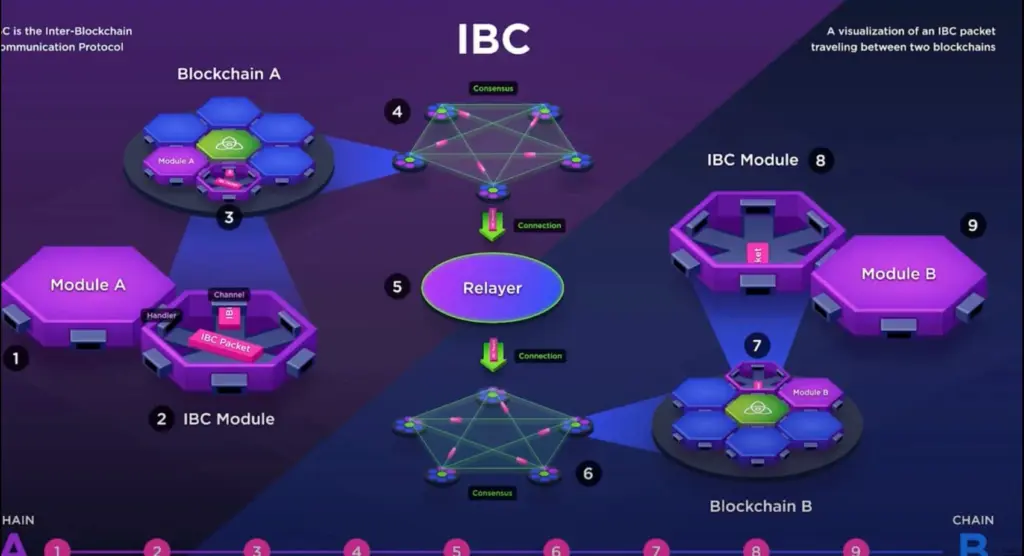
Cosmos was one of the first ecosystems designed specifically for blockchain interoperability in Web3. Its hub-and-zone architecture enables sovereign blockchains (zones) to communicate through a central Cosmos Hub using the IBC protocol.
- Strengths: Allows for native cross-chain asset transfers that do not require wrapped tokens or third-party relayers.
Use cases:
- Osmosis (cross-chain DEX),
- dYdX (migrated from Ethereum to Cosmos)
- Injective (a decentralized derivatives platform).
Cosmos has emerged as a foundational layer for interoperable DeFi and gaming apps in the Web3 space.
2. Polkadot and its Parachain Model
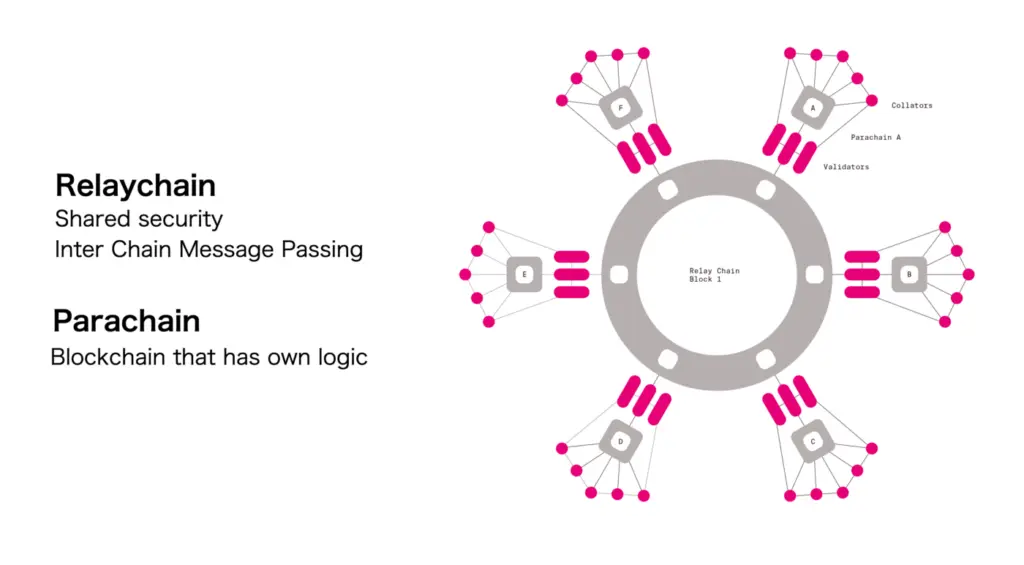
Polkadot proposes a unique model of shared security across heterogeneous chains. Each parachain can be tailored to specific use cases while leveraging from the main relay chain’s consensus.
Substrate Framework: Allows you to easily launch application-specific chains.
Use Cases:
- Moonbeam (Ethereum-compatible smart contracts)
- Acala (a DeFi and stablecoin hub)
- Astar (WebAssembly and EVM dApp platform).
Polkadot’s modular architecture provides scalable, cross-chain functionality backed by strong security.
3. Chainlink CCIP (Cross Chain Interoperability Protocol)
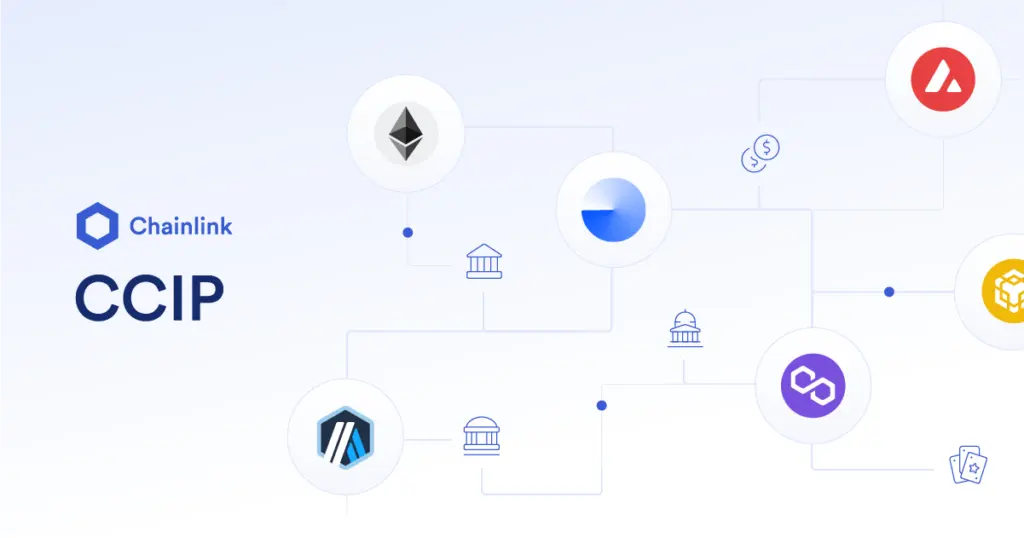
Chainlink’s CCIP facilitates secure cross-chain communication by leveraging its decentralized Oracle network. It enables token transfers and data messaging across blockchains.
- Enterprise Traction: Used in a pilot with SWIFT to facilitate global bank messaging across chains.
- Use Cases: Bridging tokenized assets to Ethereum, Avalanche, Polygon, and others.
CCIP positions Chainlink as a middleware layer capable of connecting both public and private blockchains, making it ideal for institutions.
4. Layer Zero
LayerZero is an omnichain messaging protocol that allows for seamless interaction across chains without relying on wrapped assets.
- Security Architecture: Uses Ultra-Light Nodes (ULNs) and independent verifiers to reduce trust assumptions.
Integrations:
- Stargate Finance (omnichain liquidity protocol)
- Radiant Capital (cross-chain money market built on Arbitrum).
LayerZero is quickly becoming a preferred solution for dApps seeking efficient and low-latency interoperability.
5. Axelar Network
Axelar provides a universal Web3 gateway that allows communication between EVM and non-EVM chains using generalized message passing.
Key Features:
- Secure bridging
- Gas abstraction (pay gas with a native token on the destination chain).
Partners:
- Polygon, Avalanche, Cosmos, and zkSync.
Axelar’s programmable interoperability has become popular among multichain developers and DeFi protocols.
6. Worm Hole
Wormhole, launched by Jump Crypto, is one of the first Web3 bridge solutions to support more than 20 blockchain networks, including Solana, Ethereum, BNB Chain, and Aptos.
- Specialties: NFT bridging, wrapped token issuance, and general message passing.
- Adoption: Deep integration within the Solana ecosystem, enabling cross-chain token bridges and asset migration.
Despite previous exploits, Wormhole remains a widely used and evolving interoperability layer.
7. Thor Chain
Thorchain is a decentralized liquidity protocol that allows native asset swaps across chains without wrapped tokens or custodians.
- Unique Value: Directly convert BTC to ETH without relying on synthetic assets.
- DEX Use Case: Ideal for cross-chain AMMs and real DeFi compatibility.
Thorchain prioritizes true decentralization and self-custody in its Web3 interoperability strategy.
Together, these leading interoperability protocols are laying the foundation for a more connected and scalable Web3.
Whether optimizing for institutional-grade infrastructure (Chainlink CCIP), developer flexibility (Axelar, LayerZero), or decentralized liquidity (Thorchain), each contributes an important piece to the unified crypto ecosystem puzzle.
Use Cases: Real-World Impact of Interoperability in Web3
Interoperability in Web3 is more than just a technical achievement; it is driving tangible utility in DeFi, NFTs, dApps, and digital identity. As users and developers demand seamless experiences, leading interoperability protocols are changing the way blockchain ecosystems connect and collaborate.
1. Cross-Chain DeFi: Capital Efficiency across Ecosystems
One of the most significant applications of interoperability in Web3 is in decentralized finance (DeFi). Cross-chain lending and borrowing protocols now enable users to deposit assets on one chain while borrowing from another, optimizing yield and capital efficiency.
- Example: A user can lend USDC on Ethereum using a LayerZero-integrated protocol and borrow ATOM on Cosmos without having to manually bridge.
- Platforms: Stargate, Squid Router, and Circle’s CCTP (Cross-Chain Transfer Protocol), allow for secure liquidity routing across chains.
Cross-chain DeFi eliminates silos, enabling more efficient and composable financial applications.
2. NFT Transfers: Bridging Digital Ownership
NFT interoperability is critical for creators and collectors seeking to transfer or showcase their assets across ecosystems.
- Example: Wormhole’s NFTBridge allows users to transfer NFTs from Solana to Ethereum preserving metadata and ownership history.
- Emerging Tools: LayerZero and Axelar are enabling omnichain NFTs, where a single NFT to be recognized and interacted with on multiple chains.
Seamless NFT transfers improve accessibility, cross-platform gaming, and market liquidity.
3. Multichain dApps: Deploy Once, Access Everywhere
With Web3 bridge solutions like LayerZero, Axelar, and Cosmos IBC, decentralized applications no longer need to remain locked to a single chain.
- Example: SushiSwap, which started on Ethereum, now operates on over 15 networks, including Arbitrum, Polygon, Fantom, and BNB Chain, thanks to interoperability protocols.
- Benefit: Users can interact with the same dApp across chains while enjoying lower fees, faster finality, and localized incentives.
Multichain dApps fuel user growth by providing flexible access while reducing reliance on a single ecosystem.
4. Cross-Chain Identity: Portable and Decentralized Credentials
Interoperability in Web3 is also expanding to identity layers, allowing users to carry verifiable credentials, social graphs, or on-chain reputations across blockchains.
- Example: Lit Protocol enables cross-chain decentralized identity, access control, token-gated content, and credential sharing across apps and networks.
- Other Solutions: Polygon ID, Ceramic, and Lens Protocol are developing identity systems that use interoperability to boost adoption and utility.
Cross-chain identity promotes a unified Web3 user experience while preserving privacy and sovereignty.
These real-world use cases demonstrate how interoperability in Web3 is not only improving connectivity but also enabling entirely new layers of functionality across the decentralized internet.
What’s Next: The Future of Interoperability in Web3
As blockchain ecosystems mature, the next wave of innovation will define how interoperability in Web3 progresses from fragmented bridges to secure, intelligent, and standardized communication layers. The following are key developments that shape the future of cross-chain integration.
1. Zero-Knowledge Bridges: Privacy-Preserving and Scalable
Emerging zero-knowledge (ZK) bridge solutions aim to improve the security, scalability, and privacy of cross-chain transactions.
- How It Works: Zero-knowledge proofs validate data or transactions between chains without revealing the underlying details, allowing for secure and verifiable communication.
- Example: zkRouter, an early-stage protocol, is working on ZK-based routing mechanisms for cross-chain swaps that require minimal trust assumptions.
- Advantage: Less reliance on centralized relayers and oracles, minimizing attack surfaces.
Zero-knowledge bridges have the potential to transform how interoperability in Web3 protocols balances privacy and integrity.
2. AI and Interoperability: Autonomous Agents across Chains
The convergence of AI and Web3 paves the way for cross-chain intelligent agents capable of autonomously interacting with multiple blockchains.
- Functionality: AI-powered bots could optimize DeFi strategies, route trades, and make governance decisions based on multichain data inputs.
- Example: Research into autonomous economic agents (AEAs) is being conducted using protocols such as Fetch.ai to explore AI systems that interact with cross-chain smart contracts in real time.
This shift has the potential to improve interoperability in Web3 by allowing for predictive services, automated arbitrage, and dynamic coordination across dapps.
3. Standardization Movements: Toward a Unified Framework
The lack of common protocols remains a significant challenge, but standardization efforts are gaining traction.
- Inspiration: Web3 stakeholders are using models from the World Wide Web Consortium (W3C) to propose unified messaging, metadata, and authentication formats for dApps.
- Current Efforts: Projects such as Hyperlane, Chainlink’s CCIP, and IBC are contributing frameworks that could become industry standards.
As interoperability protocols mature, open-source standards may become increasingly important for ensuring ecosystem compatibility.
4. Regulatory Influence: Compliance-Driven Cross-Chain Design
With global regulators increasing their scrutiny of crypto, interoperability protocols are starting to incorporate compliance requirements such as KYC, transaction traceability, and risk mitigation.
- Trend: Governments and institutions may prefer compliant bridges and messaging protocols that provide auditability and control while maintaining decentralization.
- Potential impact:
- Selective whitelisting of interoperable chains.
- Enforced standards for cross-chain asset movement and messaging.
- Example: Circle’s Cross-Chain Transfer Protocol (CCTP) enables compliance-first asset movement, potentially setting a precedent.
Regulation is likely to influence how cross-chain tools are built, favoring transparent and auditable Web3 bridge solutions.
The future of interoperability in Web3 will be shaped by the convergence of privacy technology, intelligent automation, unified standards, and real-world compliance, bringing us closer to a scalable, user-friendly, and globally integrated crypto ecosystem.
Conclusion
In a decentralized world built on several chains and use cases, interoperability in Web3 is no longer a luxury but a key component of a scalable, secure, and user-friendly crypto future.
Without the ability for blockchains to communicate and share data natively, users experience friction, developers face limitations, and ecosystems remain isolated.
Leading interoperability protocols such as Cosmos IBC, Polkadot, Chainlink CCIP, LayerZero, Axelar, and Wormhole are actively changing the way Web3 works.
These solutions enable cross-chain token transfers, composable dApps, decentralized identity frameworks, and interoperable NFT ecosystems, ushering in a more integrated, efficient, and inclusive environment.