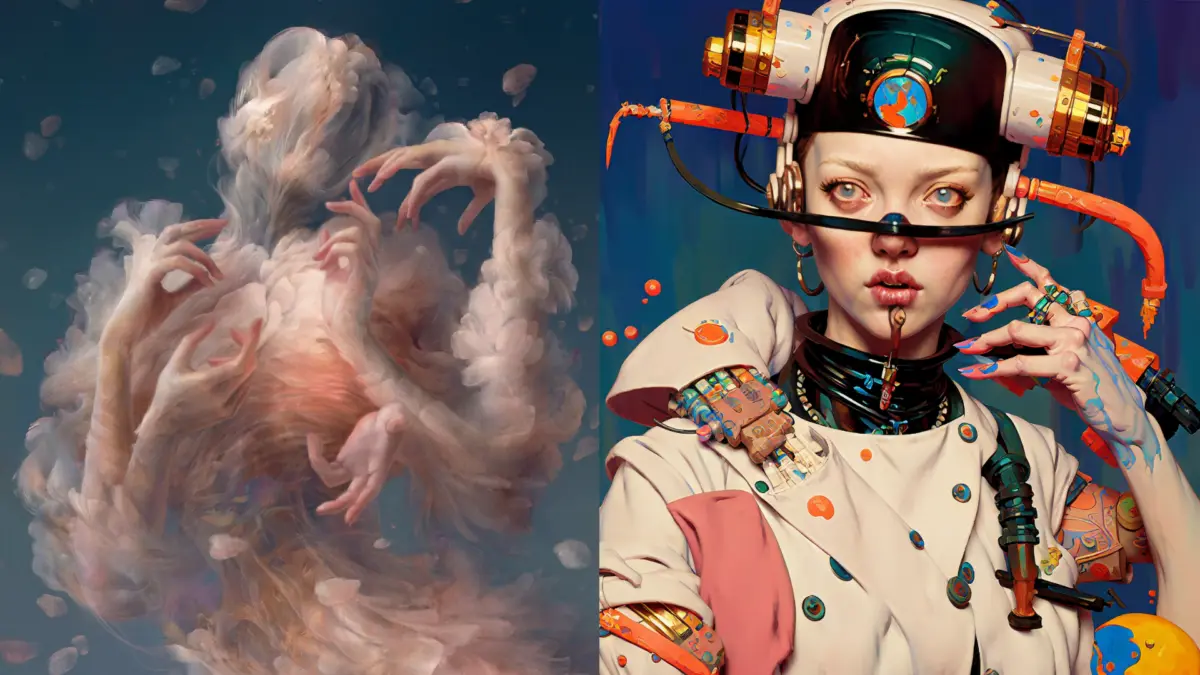
AI-generated NFT collections are changing digital art by making it possible to make art quickly, on a large scale, and for everyone to see. They do this by combining machine learning with human creativity.
As the worlds of digital art and bitcoin continue to change, a new player has arrived—and it’s not a person. The next big thing is AI-generated NFT collections, which are changing how we make, buy, and use digital assets. These collections change what investors and collectors thought they knew about the NFT space. They use cutting-edge machine learning techniques to make them possible.
Traditionally, NFT collections like Bored Ape Yacht Club or CryptoPunks were made by humans. However, AI can now make thousands of one-of-a-kind, visually stunning works of art in record time. These collections aren’t just for fun; they’re also running out quickly, sometimes just minutes after they come out. What’s making this demand grow so quickly?
This article talks about the rise of AI-generated NFT collections, why they’re becoming more popular, and what this trend means for the future of art, ownership, and digital identity. It covers topics like the novelty of machine-made creativity and the allure of rarity engineered by code.
- 1 Understanding NFT Collections: A Quick Recap
- 2 What Are AI-Generated NFT Collections?
- 3 Why AI-Generated NFT Collections Are Selling Fast
- 4 Risks and Criticisms of AI-Generated NFT Collections
- 5 How AI Is Democratizing NFT Art Creation
- 6 The Future of NFT Collections: AI + Human Collaboration
- 7 Conclusion
Understanding NFT Collections: A Quick Recap
Before you learn more about how AI is changing NFTs, you should know what NFT collections are and why they’re important in the digital market.
Non-Fungible Tokens (NFTs) are unique digital assets that are saved on a blockchain and prove ownership, authenticity, and scarcity. You can call these tokens an NFT collection when they are grouped together based on a theme, character base, or style of art.
Think about groups like Azuki, CryptoPunks, or Bored Ape Yacht Club. Each one is made up of thousands of randomly produced NFTs, each with its own hairstyles, accessories, or backgrounds. These NFTs work together to make a huge ecosystem of digital characters or works of art. It’s not just the art that makes them valuable; it’s also the code that controls how rare they are, how strong the group is, and the cultural story that grows around them.
A collector doesn’t just buy digital pictures; they invest in a sense of identity, belonging, and being one of a kind. Owning a rare item in a top-tier NFT collection can give access to private events, future drops, and even governance rights in community-driven projects.
As demand for NFT collections has risen, so has the need for faster, scalable, and more innovative creation methods. This is where AI comes in, giving us a new way to make large, trait-rich collections that are also artistically interesting and appeal to modern collectors.
What Are AI-Generated NFT Collections?
When you mix artificial intelligence with the blockchain-powered world of NFTs, you get AI-generated NFT sets. Advanced algorithms make thousands of unique pieces based on patterns, training data, and programmed aesthetics. This means that artists don’t have to create each character or piece of art by hand.
Generative Adversarial Networks (GANs) or text-to-image models like DALL·E, Midjourney, or Stable Diffusion are at the heart of most art made by AI. Creators can use these tools to give the AI a set of instructions or data, which it then uses to make new images, each one unique from the last.
A person who makes art could give the AI hundreds of portraits, fantasy elements, or abstract forms, for instance. The AI learns the styles and creates brand-new images by remixing and reinterpreting the patterns it has absorbed. These images can then be converted into NFTs, complete with metadata and rarity attributes, making a full NFT collection.
AI can make thousands of pieces in hours, while traditional NFT collections take weeks or months of hand-drawing and trait layering. Even more impressive is that it can do all of this without getting tired of art, providing a wide range of styles, textures, and surprising outcomes that often go beyond what people can imagine.
Examples of AI NFT Projects:
- Botto: A decentralized AI artist that creates artworks, which are then voted on by the community to decide what gets minted.
- Eponym by ART AI: Lets users generate NFTs using text prompts, turning ideas into collectible art instantly.
- AI Generated Nude Portraits: An early viral project that raised questions about ethics and authorship in AI art.
These projects highlight how AI isn’t just assisting in the creative process—it’s becoming the artist itself, disrupting norms in the NFT collections space and sparking both excitement and debate.
Why AI-Generated NFT Collections Are Selling Fast
AI-generated NFT collections aren’t just a tech novelty—they’re capturing the attention of digital art collectors, investors, and Web3 communities at lightning speed. But what is it that is really making this demand?
Let’s look at the main reasons for their quick rise:
Scalability and Speed of Creation
Time is one of the hardest things about building standard NFT collections. Designing 5,000–10,000 unique artworks with layered traits takes months of manual work. AI, on the other hand, can do it in hours.
With just a few style choices and prompts, tools like Stable Diffusion and RunwayML let artists make thousands of unique, high-quality works of art. It’s now possible to get products to market faster, so makers can cash in on trends and hype while they’re still hot.
Algorithmic Rarity = Collector Appeal
In NFT collecting, rarity is everything. AI algorithms can be programmed to make art with mathematically controlled rarity distributions—making some traits super rare and others common.
This adds a layer of gamification to the gathering process. Buyers aren’t just buying art—they’re hunting for rare, algorithmically generated gems that could be worth much more on secondary markets.
Novelty and Innovation Drive Curiosity
There’s something inherently exciting about a machine creating art. NFTs made by AI have styles, textures, and strange shapes that are often more creative than human beings can make. These pieces challenge what art is “supposed to look like,” attracting collectors who want to own a piece of this emerging artistic frontier.
The fusion of code and creativity brings a futuristic feel that resonates with tech-savvy, forward-looking NFT audiences.
Low Barrier to Entry for Creators
Thanks to user-friendly tools, creators don’t need to be master artists to launch NFT collections anymore. With AI, even someone with minimal design experience can produce beautiful, themed collections.
This makes it possible for more diverse creators, stories, and ideas to come into the NFT world, which encourages even more participation and new ideas.
Community-Driven and Interactive Projects
Some NFT projects made by AI include community input in the process of making them. In Botto, for example, the AI makes hundreds of pictures every week, and the community votes on which one gets made into an NFT.
This collaborative creation process builds hype, ownership, and emotional connection—key drivers of fast NFT sales.
Risks and Criticisms of AI-Generated NFT Collections
Even though AI-generated NFT collections are becoming more popular, they aren’t without problems. As with any new technology that changes things, makers and collectors must deal with questions and concerns, some of which are technical and others of which are moral.
Here are the key risks and criticisms regarding this fast-moving trend:
Questions Around Originality and Authenticity
AI doesn’t create in a vacuum. It learns from very large datasets that are often scraped from the internet. This brings up serious concerns about copyright violations and the originality of art.
If an AI model is trained on existing works of art without the right licenses, does the final product really belong to the original artist, or is it a copy? Critics argue that AI art can lack the intentionality and originality that define traditional art.
Oversaturation of the NFT Market
With AI tools making it easy to generate thousands of images at once, the NFT ecosystem faces the risk of oversupply. When everyone can mint a collection in hours, markets can quickly become flooded with similar-looking or low-effort projectsmaking it harder for high-quality collections to stand out.
This volume-driven rush can dilute the value of NFTs and frustrate collectors wanting uniqueness.
Ethical and Legal Ambiguities
Who owns an AI-generated artwork: the person who taught the model, the coder, or the person who typed the prompt?
The law hasn’t fully caught up with the technology. In many places, AI-generated art cannot be copyrighted, as there’s no human authorship involved. This legal gray area can affect intellectual property rights, resale value, and long-term trust in AI NFT projects.
Lack of Human Touch and Emotional Depth
While AI can create stunning visuals, some critics say it lacks soul, story, or intentional emotion.
Collectors often resonate with the journey, background, or personal motivation behind an artworksomething AI cannot truly replicate. This raises the debate: Can a machine truly create, or is it merely remixing?
The “Hype Over Substance” Concern
As with many trends in Web3, some AI-generated NFT projects are driven more by talk than substance. Low-quality projects rushed to market can harm investor confidence, especially if they don’t offer a long-term roadmap, community engagement, or creative innovation.
These quick cash grabs give the space a bad image, possibly undermining genuine creators leveraging AI meaningfully.
AI-generated NFT collections may be futuristic and fascinating, but they also bring a range of ethical, legal, and creative dilemmas. For this new wave of digital art to thrive sustainably, both innovation and responsibility must go hand in hand.
How AI Is Democratizing NFT Art Creation
One of the most important shifts AI brings to the world of NFT collections is accessibility. By lowering the barriers to entry, AI is enabling a new generation of creators—many of whom never considered themselves artists—to join in the digital art revolution.
AI is making the process of making NFTs fairer and open to everyone:
No Artistic Background? No Problem
Platforms like Midjourney, RunwayML, and Artbreeder make it easy for anyone, even those who have never designed anything before, to make beautiful, original art. All it takes is a simple prompt like “cyberpunk woman in futuristic Lagos” or “abstract surreal landscape,” and AI instantly generates a visual interpretation.
This means:
- Developers, writers, hobbyists, and even entrepreneurs can launch NFT collections.
- Creativity is no longer reserved for trained illustrators or digital designers.
Faster Time-to-Market for New Creators
Traditional art production takes time and resources. AI, on the other hand, lets one person go from idea to full NFT collection in days, not weeks or months.
This movement makes possible:
- Small creators to test ideas quickly.
- Artists in developing regions with limited tools to compete globally.
- Individuals to participate in NFT drops without needing large teams or expensive software.
Lower Cost of Production
It can cost hundreds or even thousands of dollars to hire artists, designers, and writers to make a hand-drawn NFT collection. AI tools cut this cost by a huge amount.
A lot of tools are either free or allow users to subscribe for low prices. This lets creators:
- Launch projects with minimal capital.
- Experiment without major financial risk.
- Retain more ownership of their art and revenue.
Inclusive Creativity Across Borders
AI art tools are on the internet and can be used anywhere in the world. This lets you:
- Young creators from Africa, Asia, or South America to mint NFTs without needing access to elite art schools or expensive hardware.
- Marginalized groups to express their stories in ways previously limited by traditional gatekeepers in the art and tech industries.
AI is leveling the playing field and creating room for diverse narratives and visual styles in the global NFT scene.
Rise of Prompt Artists and AI Curators
A new creative role is emerging: the prompt artist—someone who crafts detailed text inputs to shape the AI’s output. This process requires skill, vision, and iteration.
Similarly, AI curators select, refine, and structure outputs into cohesive, themed collections that tell a story.
This shows that while AI is doing the “drawing,” humans still play an important creative role—guiding the process, setting the tone, and defining the artistic intent.
AI is transforming NFT art from an exclusive, high-barrier space into a more open and dynamic creative playground. AI gives everyone the tools they need to join, contribute, and do well in the world of NFT collections, no matter how skilled they are (coder, author, or not at all).
The Future of NFT Collections: AI + Human Collaboration
As NFTs get better, the future won’t be a fight between people and machines, but a creative relationship. The most hopeful direction for NFT collections is where AI’s skills and people’s creativity work together.
This is how that future might look:
AI as a Creative Assistant, Not a Replacement
Rather than replacing artists, AI is becoming a co-creator. Artists can use AI to explore new ideas, generate rough drafts, or rapidly prototype multiple versions of a concept. They remain in control—curating, editing, and finalizing pieces that carry both machine precision and human expression.
This way of working together lets you:
- Faster experimentation with styles and color palettes.
- Enhanced storytelling by generating immersive backgrounds or side characters.
- Unique blends of abstract and narrative-driven art.
Hybrid NFT Collections Are Emerging
These days, some of the most interesting NFT projects are hybrid collections where people and AI both get credit. These collections have both hand-drawn and AI-generated parts, or they switch back and forth between the two.
As an example:
- Artists design base characters and use AI to generate variations.
- Writers create story prompts, and AI visualizes scenes for collectible storytelling NFTs.
- Coders fine-tune AI models for personalized or interactive NFT drops.
This mixed method keeps the human touch while letting AI’s skills shine.
Dynamic and Evolving NFT Experiences
Dynamic NFTs are also possible with AI. These are digital assets that change over time based on how users interact with them, market events, or data that is stored on the blockchain.
In the future:
- AI could allow NFTs to respond to current news, weather, or even the owner’s mood.
- Collectors could “train” their NFTs or generate custom variations on demand.
- Communities could co-create evolving storylines or visuals powered by collective input and AI generation.
This turns NFT collections from static assets into living digital organisms.
Empowered Communities and Open Collaboration
With AI tools becoming more available, NFT creation is no longer limited to elite teams or well-funded studios. Communities can co-create collectionsdeciding on styles, themes, and traits, and then using AI to bring their idea to life.
This will fuel the rise of:
- Decentralized art collectives
- Open-source NFT projects
- Crowd-curated generative collections
The line between creator and collector will blur, reshaping what it means to own or add to an NFT collection.
The future of NFT collections lies not in choosing between people and AI, but in embracing both. With artists leading the vision and AI expanding the possibilities, we’re entering a golden age of collaborative digital creation—one where imagination, code, and community meet to redefine what art can be.
Conclusion
The rise of AI-generated NFT collections marks a big turning point in the digital art and Web3 landscape. What began as a niche experiment has now evolved into a full-blown movement—reshaping how we make, collect, and connect through art.
From the speed and size of creation to the unprecedented accessibility it offers, AI is transforming the NFT space into a more inclusive and dynamic environment. But it’s not without its difficulties. Questions of originality, legal ownership, and artistic depth still loom big, reminding us that innovation must be balanced with ethics and purpose.
What the fast growth of AI-powered NFTs does show us, though, is that creation is changing. And in this new age, NFT collections aren’t just made by people; they’re also being made by minds and machines working together, as well as communities and algorithms.
Whether you’re a maker, collector, or curious observer, now is the time to pay attention. The next iconic NFT collection might not come from a studio—but from a prompt, a model, and an idea shaped by both AI and you.