
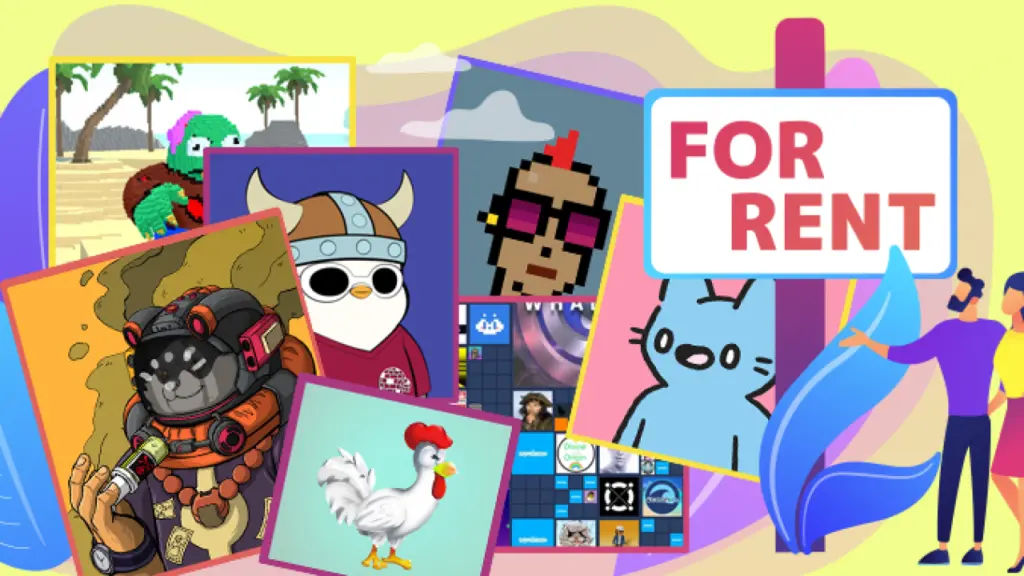
NFT Renting lets you earn passive income by leasing digital assets without selling them – learn how it works, top platforms, and monetization tips
Introduction
From idle JPGs to recurring revenue: NFT Renting is changing the game. Idle digital assets—be they art, avatars, or metaverse land—no longer sit static; they’re now sources of passive income as owners lease them out for short-term use.
NFT Renting lets you lease someone else’s NFT for a defined period—perfect for collectors seeking yield, gamers craving access to rare items, or brands offering experiential access—without transferring full ownership. It’s a smart, flexible model that benefits both sides.
In this piece, you’ll get an insider’s look at how NFT Renting works—from smart-contract mechanics and emerging platforms to technical standards, legal nuances, and a monetisation playbook to help you launch or scale a renting model.
What is NFT Renting? The concept, mechanics and roles
NFT Renting is the process of leasing a non-fungible token to another party for a set period, granting temporary usage rights without transferring full ownership.
This model revolves around two primary roles: the owner, who retains ultimate control of the asset, and the user, who gains time-limited access—whether to display digital art, equip an in-game item, or host an exclusive experience.
The arrangement is enforced by smart contracts, which automatically grant and revoke access based on the rental term. When the period expires, the contract ensures the NFT reverts entirely to the owner’s wallet, eliminating disputes.
NFT Renting differs from loans, which involve borrowing against NFT value; from resale, which permanently transfers ownership; and from licensing, which grants broader, often undefined rights. Rentals are strictly temporary, clearly defined, and blockchain-verified.
Two common rental flows dominate the space:
- Collateralized rentals, where the renter deposits an asset or funds to secure the arrangement—protecting the owner from loss.
- Collateral-free rentals, which rely on access-control tokens or protocol safeguards, removing the need for upfront guarantees and making rentals more accessible.
By combining trustless execution with flexible terms, NFT Renting opens up new monetisation and participation models for collectors, gamers, and brands alike.
The Tech That Made Renting Possible — Standards & Primitives
NFT Renting gained real traction thanks to ERC-4907, an EIP-721 extension that introduces a dual-role system—owner and user—and an expires timestamp to define rental duration.
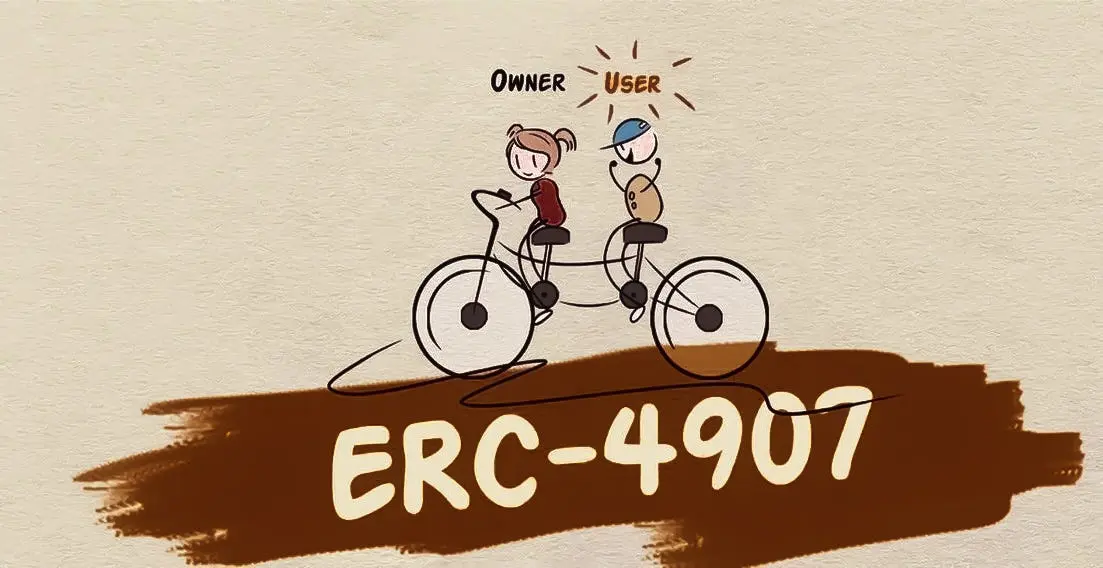
The standard’s setUser(tokenId, user, expires) function assigns temporary usage rights, while userOf and userExpires let systems check the current user and their access expiry. This ensures rentals are self-revoking and trustless
Platforms like thirdweb offer seamless implementation: with just a few clicks, developers can deploy ERC-4907-based rentable NFTs using their dashboard—simplifying everything from permissions to expiration logic
On alternative chains, Sui leverages Kiosk, a native commerce primitive that allows assets to be listed and managed in shared containers. Developers can adapt Sui Kiosks to mirror ERC-4907–style rental flows—setting usage rights for a period and enforcing returns on expiry
Although Oodles Blockchain doesn’t appear to offer a stand-alone renting standard, they’ve published tutorials on creating rentable NFT systems via smart contract logic, hinting at their capacity to build rental frameworks tailored to business needs
Beneath these constructs, the tech primitives that power NFT Renting include:
- Time-locks & expiration fields, which automatically revoke user access.
- Escrow or collateral mechanisms to secure owner assets or ensure commitment.
- On-chain enforcement via smart contracts, which govern permissions, track rental status, and handle seamless expiration—all without manual intervention.
Where it’s happening now — platforms and real examples
reNFT

reNFT is a multi-chain NFT rental protocol that enables developers and projects to integrate collateral-free rentals, reward-share scholarship models, and white-label rental marketplaces
- Collateral-Free Rentals: Owners escrow their NFT in a smart contract; renters gain temporary utility without needing to post collateral. Rental terms—like daily price and duration—are set by the owner, and access is revoked automatically at expiry
- Reward-Share (Scholarship Model): Particularly powerful in play-to-earn ecosystems, this feature automates profit sharing between NFT owners (e.g., guilds) and players. Earnings split (e.g., 50/50) is enforced on-chain—ideal for gaming scholarships
Use Cases: reNFT is already powering rentals for game items, virtual land (e.g., metaverse events), NFT-based event tickets, digital fashion, and scholarship automation
Double Protocol

Double Protocol, the architect behind ERC-4907, operates a decentralized marketplace for renting NFTs implementing the rentable standard
- ERC-4907 Standard: Officially ratified as Ethereum’s 30th ERC standard in June 2022, it introduces dual roles (owner vs. user) and an expiry mechanism that automatically revokes usage rights
- Platform Flow: NFT owners list assets with rental terms; renters pay per-day fees, set rental duration, and gain temporary usage while ownership remains intact
Live Examples: The protocol supports real implementations like virtual land rentals in Decentraland and in-game asset rentals in Warena; at least a dozen projects have adopted ERC-4907
Use Cases Across Platforms
Game Items & PFP Scholarships: Both reNFT’s reward-share model and Double Protocol’s standard support play-to-earn scholarship setups—making high-value game assets accessible to gamers who can’t afford to buy them outright.
- Virtual Land & Metaverse Events: Double Protocol powers rentals in Decentraland; reNFT likewise supports virtual land leasing, enabling users to host metaverse events without full ownership
- Pop-Up Brand Activations & Digital Fashion: reNFT facilitates temporary access to digital fashion items and event spaces—perfect for ephemeral brand activations in virtual environments
Both reNFT and Double Protocol are pushing NFT Renting into practical use—whether by reducing entry barriers for gamers, unlocking virtual real estate, or powering digital marketing experiences. Let me know if you’d like breakdowns of fees, integration steps, or user flow comparisons!
Market Signals & Numbers — Is It Big (and Growing)?
While comprehensive industry-wide figures for NFT Renting specifically remain scarce, broader data on NFT lending and DeFi borrowing offer valuable insights into the health of credit and rental markets.
- Lending volumes: NFT lending has plunged dramatically—from a peak of roughly $1 billion per month in early 2024 to just about $50 million in May 2025—a stunning 97% collapse. Active borrowers and lenders have similarly fallen by 90% and 78%, respectively.
- Loan sizes: Reflecting growing risk aversion, the average loan size has dropped from around $22,000 in 2022 to about $4,000 as of mid-2025.
- Broader crypto lending context: The overall crypto lending market remains down—about 43% from its 2021 high, landing around $36.5 billion by end of Q4 2024. However, DeFi borrowing has bounced back dramatically, surging ~959% from the bottom.
These trends spotlight both challenges and opportunity: as NFT lending cools and loan sizes shrink, NFT Renting sits in a strategic middle ground—offering utility, liquidity, and lower-risk access compared to outright loans.
Monetisation Playbook — How Owners Actually Make Money
NFT Renting opens multiple income streams for digital asset owners, from straightforward fees to performance-based earnings. The right model depends on the asset type, demand patterns, and audience.
Pricing Models
- Fixed-Time Fee — Owners set a daily, weekly, or monthly rate. Example: renting a metaverse gallery space for $150 per week.
- Revenue-Share — For assets like virtual event venues or streaming avatars, owners take a percentage of ticket or ad revenue generated during the rental.
- Subscription / Rent-to-Own — Renters pay recurring fees that can later be applied toward purchasing the NFT, providing a predictable income stream.
- Dynamic Pricing — Short-term spikes in demand (e.g., concerts in the metaverse) can be captured via timed auctions, letting the market decide rates.
Yield Strategies
- Seasonal or Event Rentals: Renting virtual venues for major in-game or metaverse festivals can command premiums during peak times.
- Scholarship / Autopilot for P2E: Owners lease in-game assets to players in exchange for a share of earnings, often automated via smart contracts.
- Bundling Access: Combine an NFT rental (e.g., a 3D artwork) with exclusive gated content like behind-the-scenes videos or VIP event invites.
With NFT Renting, owners can diversify income—capturing fixed income during slow periods, maximizing demand spikes with auctions, and building passive revenue streams through revenue-share or subscriptions.
The flexibility and automation offered by smart contracts make it easy to experiment with models, track returns, and scale the most profitable approaches.
Risks, Legal Signals & IP
IP Clarity
Owning an NFT rarely transfers underlying copyright. In most cases, NFT ownership only conveys the token itself—not the rights to reproduce or commercialize the associated work
As one Redditor put it:
“A smart contract is not a legal contract… NFTs don’t transfer any ownership of rights unless you want to specify that they do.”
To manage this, rental agreements should explicitly clarify the permissible uses—such as whether renters can display, stream, or create derivatives—and demand caution from creators and owners to clearly define licensing boundaries.
Regulatory Flags
When NFTs resemble investment contracts or offer revenue-sharing structures, they risk being categorized under securities law (e.g., as per the Howey Test). The SEC has recently taken enforcement actions against NFT projects deemed to meet this threshold, including “Founder’s Keys” and “Stoner Cats” offerings
Given these ambiguities, creators and platforms should seek legal counsel before launching rental models that might unintentionally fall under “securities” definitions.
Operational Risks
Smart-contract vulnerabilities can lead to rug/rent exploits via embedded backdoors or flawed code. A static analysis across nearly 50,000 NFT contracts uncovered numerous hidden vulnerabilities tied to rug pulls
Other risks include front-running (where a malicious actor intercepts and steals rentals before confirmation) and incorrect expiry logic that fails to revoke access. Platform or counterparty risk also matters—if the rental protocol fails or acts dishonestly, renters and owners could be left exposed.
Mitigation Techniques
- Conduct thorough smart contract audits and risk-scoring for backdoors.
- Implement transparent expiry mechanisms and edge-case test cases.
- Use escrow or collateral models to protect both parties.
- Clarify licensing and use rights in off-chain agreements or terms, and consult legal counsel to ensure the rental model remains compliant and well-defined.
Future Outlook & Opportunities
NFT Renting is poised to become a cornerstone of digital asset utility—unlocking fractional, on-demand access that lets users pay only for the time or event they need.
In the metaverse, this means pop-up commerce, limited-time venue rentals, and temporary access to premium avatars or digital wearables without the upfront ownership cost.
For creators, rentals introduce new recurring revenue models, allowing them to monetise assets multiple times without selling them outright.
Key signals to watch include the adoption of ERC-4907 across multiple chains, which could make rentable NFTs interoperable across ecosystems, and major gaming or brand integrations, where in-game items, virtual land, or branded experiences are offered as short-term rentals.
Regulatory and IP clarity will also play a critical role—clearer guidance on permissible uses and licensing could open the door for rentals in sectors like film, sports, and luxury goods.
As infrastructure matures, NFT Renting could shift from niche to mainstream—powering a rental economy for digital assets much like Airbnb did for physical space.
Conclusion
NFT Renting is emerging as a practical, flexible revenue layer for owners who want to monetise without losing control of their assets. While still nascent, the technology—led by standards like ERC-4907—is already proving its value across gaming, metaverse events, digital fashion, and brand activations.
The smartest approach is to start small: run short-term, measurable pilots on reputable platforms, track occupancy rates and net yield, and refine pricing or collateral policies based on data. Use established standards where possible to ensure interoperability and easier integration across ecosystems.
Stay alert to shifts in IP guidance, regulatory rulings, and major platform adoptions—they’ll shape both opportunity and compliance requirements. By combining careful experimentation with the right technical and legal foundations, you can position yourself early in the growing digital rental economy.
FAQ
What is NFT Renting and how is it different from lending?
NFT Renting lets you lease usage rights to an NFT for a set period, enforced by smart contracts. Lending, by contrast, uses NFTs as collateral for a loan and returns them when the loan is repaid.
Can I rent my NFT without losing ownership?
Yes. Standards like ERC-4907 allow you to grant temporary user rights while you remain the on-chain owner.
How are disputes handled during a rental?
Most rentals are enforced entirely on-chain, so expiry and access revocation are automated. Off-chain disputes over use or payment terms are handled per the platform’s policies or via arbitration.
Will renting my NFT affect royalties or provenance?
No. The NFT’s ownership history remains intact, and creator royalties are generally unaffected, though they may apply to rental payments on some platforms.
Is NFT Renting taxable?
In many jurisdictions, rental income is taxable as ordinary income. Rules vary, so it’s best to consult a tax professional.
Can renters resell or copy the NFT?
No. Renting grants usage rights only. The renter cannot transfer, resell, or create derivative works unless explicitly licensed.
Are rentals supported on all blockchains?
Not yet. Ethereum (via ERC-4907) and some Layer 2s support rentals, while other chains use custom primitives like Sui’s Kiosk.