
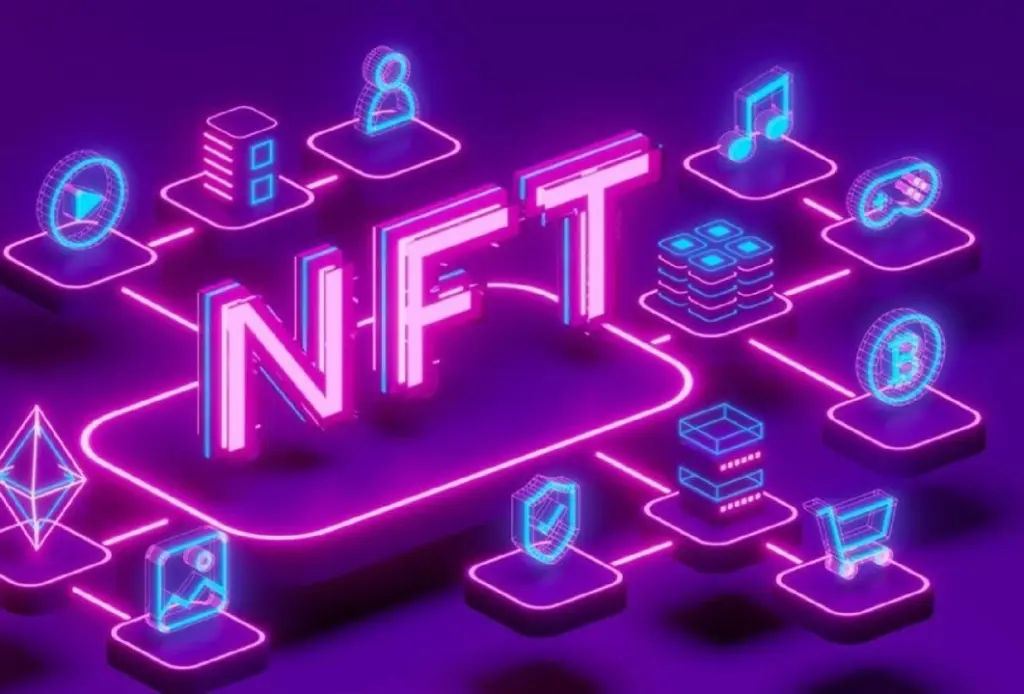
NFTs beyond art: NFTs are transforming gaming, music, and virtual real estate in 2025, unlocking new opportunities for ownership and monetization.
Let’s explore the evolution of NFTs beyond art.
The Evolution of NFTs Beyond Art: From Digital Art to Utility
NFTs (Non-Fungible Tokens) have progressed significantly beyond digital collectibles and artwork. While their initial popularity was fueled by high-profile NFT sales in the art world, their functionality has since expanded to include gaming, music, real estate, and more.
Early Use Cases: NFTs as Digital Collectibles
NFTs first became widely recognized as a medium for digital art and collectibles. Platforms such as CryptoPunks and Bored Ape Yacht Club (BAYC) paved the way for NFTs to be status symbols and investment assets.
These unique tokens, minted on blockchain networks such as Ethereum, served as proof of ownership and scarcity, revolutionizing digital asset ownership.
Expanding Functionality of NFTs Beyond Art: From Ownership to Real-World Applications
NFTs beyond art are no longer limited to art; they are now used as digital proof of ownership in various industries. Notable advancements include:
- Ownership Verification: NFTs are used in real estate, gaming, and intellectual property to certify ownership of both digital and physical assets.
- Smart Contracts: Blockchain-powered NFTs automate royalty payments to creators, ensuring equitable compensation in secondary sales.
- Tokenized Assets: From event tickets to identity verification, NFTs now offer a safe and transparent way to manage digital rights.
Market Growth: The Expanding NFT Ecosystem
The NFT market has grown exponentially, with transaction volumes reaching reach $24.7 billion in 2022 (DappRadar). This expansion is driven by increasing adoption across industries, including:
- Gaming: Play-to-earn models and in-game NFT assets are transforming the gaming industry.
- Music: Musicians use NFTs to sell directly to fans and offer exclusive experiences.
- Virtual Real Estate: NFT-powered metaverse platforms such as Decentraland and The Sandbox are driving digital land sales.
As NFT technology matures, its impact on decentralized economies will grow, moving NFTs beyond art to practical, high-utility applications.
NFTs in Gaming: Transforming Virtual Economies
NFTs beyond art are transforming the gaming industry by allowing players to own in-game assets, promoting decentralized economies, and introducing new revenue models for developers.
With blockchain integration, games now include play-to-earn (P2E) mechanics, interoperable assets, and NFT-powered marketplaces, making virtual economies more dynamic than ever.
Play-to-Earn (P2E) and Ownership: Empowering Gamers
Traditional gaming economies are closed ecosystems in which players spend money on in-game items but hold no real ownership. NFTs alter this by facilitating true asset ownership, enabling players to:
- Buy, sell, and trade in-game NFTs such as weapons, skins, and characters on Decentralized marketplaces.
- Earn crypto rewards using play-to-earn models, which convert gaming efforts into real money.
- Maintain the value of their digital assets beyond the duration of a single game.
Popular P2E games such as Axie Infinity and Gods Unchained have shown how NFTs open up new economic opportunities, attracting millions of users to blockchain gaming.
Interoperability and Cross-Game Assets: A Unified Gaming Environment
Interoperability, which allows players to use the same assets across multiple games, represents a significant advancement in NFT gaming. This means:
- A sword obtained in one game could be used in another NFT-compatible game.
- Characters and avatars can transition seamlessly between metaverse platforms.
- NFT assets can maintain scarcity and uniqueness while increasing utility across ecosystems.
Enjin and Gala Games are pioneering cross-game NFT integration, making players’ gaming experiences more interconnected and valuable.
Major Game Projects Driving NFT Innovation in 2025
Several blockchain games are at the forefront of NFT-powered gaming, and 2025 is expected to bring even greater advancements:
Axie Infinity

Illuvium

Star Atlas

Big Time

- Axie Infinity: Axie Infinity was one of the first major P2E games, and it continues to evolve with land NFTs and staking mechanics.
- Illuvium: A high-quality, open-world RPG that uses NFTs for characters and in-game assets.
- Star Atlas: A futuristic space exploration game in which players own starships, planets, and resources using NFTs.
- Big Time: A multiplayer action RPG that features NFT-based cosmetics and in-game economies.
With blockchain gaming gaining popularity, NFTs beyond art are poised to transform virtual economies by making them more decentralized, player-driven, and financially rewarding.
NFTs in Music: Empowering Artists and Fans
NFTs beyond art are transforming the music industry by allowing for direct artist-to-fan interactions, transparent royalty distribution, and exclusive digital experiences.
Using blockchain technology, artists can eliminate intermediaries, ensuring fair compensation and increasing fan engagement through unique NFT offerings.
Royalties and Smart Contracts: Fair Compensation for Artists
Traditional music royalties frequently involve complicated contracts and late payments, with record labels, streaming platforms, and distributors taking significant cuts. NFTs use smart contracts, which:
- Automate instant royalty payments to artists and contributors.
- Ensure that songwriters, producers, and performers share revenues in a transparent manner.
- Reduce reliance on major record labels, allowing artists to keep ownership of their work.
Platforms such as Royal, Audius, and Catalog are driving the change by allowing artists to create music NFTs that generate recurring revenue when resold.
Exclusive Access and Fan Engagement: Strengthening Artist-Fan Relationships
NFTs are transforming fan engagement by providing exclusive benefits such as:
- Limited-edition digital collectibles, such as album artwork and unreleased tracks.
- VIP concert tickets and backstage access are available via NFT-based ticketing systems.
- Personalized experiences include virtual meet-and-greets and private listening sessions.
Artists such as Snoop Dogg, Kings of Leon, and The Weeknd have successfully released NFT albums and exclusive fan experiences, demonstrating the potential of blockchain in music.
Industry Disruption: How NFTs Will Reshape the Music Business in 2025
As the adoption of NFTs grows, major labels and independent artists are increasingly embracing blockchain technology. Major developments in 2025 include:
- Record labels are launching NFT-backed music catalogs, which allow for fractional ownership of songs.
- Streaming platforms are integrating NFT-based royalties to ensure fair compensation for plays.
- Artists are bypassing traditional distribution channels by selling music directly to fans as digital collectibles.
With the rise of Web3 music platforms, the music industry is shifting to a more artist-centric model, giving creators more control over their content and revenue streams.
NFTs in Virtual Real Estate: The Future of Digital Ownership
As the metaverse grows, virtual real estate is emerging as a valuable digital asset powered by NFT technology. In 2025, NFTs beyond art will reshape digital ownership by enabling individuals and businesses to purchase, sell, and monetize virtual land across blockchain-based worlds.
Metaverse and Digital Land Ownership: The Emergence of Virtual Properties
NFTs serve as decentralized proof of ownership for virtual land in metaverse platforms such as:
- Decentraland: Users buy, build, and trade digital land parcels with MANA tokens.
- The Sandbox: Brands and creators create immersive experiences using LAND NFTs.
- Otherside (by Yuga Labs): A metaverse incorporating NFT-powered real estate with gaming.
These digital spaces facilitate social interaction, entertainment, and commerce, making them valuable assets to both individuals and businesses.
Monetization Opportunities: Turning Virtual Real Estate into Profit
NFT-powered virtual real estate generates multiple revenue streams, including:
- Leasing and Rentals: Companies and creators can rent digital spaces for virtual stores, events, and exhibitions.
- Virtual Events & Advertising: Brands hold concerts, conferences, and immersive ad campaigns in metaverse spaces.
- Asset Appreciation: As demand for digital land rises, early investors can resell their holdings to make a profit.
Major brands such as Gucci, Adidas, and Sotheby’s have already established a virtual presence, demonstrating the commercial viability of NFT real estate.
Major Developments: The Future of NFT-Powered Virtual Cities
In 2025, the virtual real estate market is changing with new trends such as:
- NFT real estate marketplaces simplify the purchase and sale of digital land.
- AI-powered metaverse development enables personalized and interactive virtual environments.
- Cross-chain metaverse integration enables the seamless movement of assets between virtual worlds.
As blockchain technology advances, NFT-based virtual properties will become an essential component of the digital economy, bridging the gap between real-world and virtual investments.
Challenges and Risks of NFTs Beyond Art
While NFTs beyond art create new opportunities in gaming, music, and virtual real estate, there are still challenges. Scalability, regulation, and security risks must be addressed to ensure long-term growth in 2025.
Scalability and Environmental Concerns
NFTs are primarily based on blockchain networks like Ethereum, which face:
- High Transaction Fees (Gas Fees): Network congestion causes expensive transactions, limiting accessibility.
- Energy Consumption: Some proof-of-work (PoW) chains require significant computational power, which raises environmental concerns.
- Scalability Issues: Popular NFT platforms struggle to process large volumes of transactions efficiently.
- Solution: Layer 2 scaling solutions (e.g., Polygon, Immutable X) and energy-efficient blockchains (Ethereum 2.0, Solana) are lowering costs and increasing transaction speeds.
Regulatory and Legal Uncertainty of NFTs Beyond Art
The evolution of NFTs beyond art or collectibles to finance, real estate, and intellectual property presents regulatory concerns:
- Intellectual Property Rights: It is still difficult to determine true ownership and enforce copyright in NFTs.
- Securities Classification: Certain NFTs with financial rewards may be classified as securities, subject to severe financial regulations.
- Taxation and Compliance: Many governments are still determining how NFT transactions should be taxed and reported.
Global Regulation Watch
- The United States Securities and Exchange Commission is examining whether certain NFT projects violate securities laws.
- The EU’s MiCA (Markets in Crypto-Assets) regulation aims to establish clearer NFT guidelines.
- China and India have taken a cautious approach, placing restrictions on NFT trading.
Security and Market Volatility of NFTs Beyond Art
Despite their decentralized nature, NFTs are still vulnerable to:
- Scams and Fraud: The number of fake NFT marketplaces, rug pulls, and copyright infringement cases is growing.
- Hacking and Exploits: Smart contract vulnerabilities can result in the theft of assets or the loss of funds.
- Market Fluctuations: NFT prices are highly volatile, often driven up by speculative demand before major crashes.
Mitigation Strategies:
- To reduce the risk of scams, use verified platforms (such as OpenSea, Rarible, or Magic Eden).
- Use multi-signature wallets and cold storage to strengthen NFT security.
- Diversify your investments to protect against market downturns.
Scalability, regulatory clarity, and security enhancements are crucial for the success of NFTs beyond art.
To realize the full potential of NFTs beyond art in gaming, music, and virtual real estate, developers, investors, and businesses must remain vigilant and proactive in addressing these challenges.
The Future of NFTs Beyond Art: What to Expect in 2025
The movement of NFTs beyond art is expected to transform gaming, music, and virtual real estate in 2025.
Emerging technologies such as AI, Web3, and blockchain scalability solutions will propel NFTs into mass adoption, opening up new opportunities for digital ownership, commerce, and content monetization.
Mainstream Adoption: NFTs as Industry Standards
NFTs beyond art are expected to become a core component of industries such as gaming, music, and virtual real estate by offering:
- Seamless In-Game Economies: Major gaming studios are using NFTs to implement play-to-earn mechanics, digital asset ownership, and cross-game interoperability.
- Music Industry Transformation: NFTs will replace traditional royalty systems, giving artists greater control over distribution and monetization.
- Metaverse Expansion: Virtual land ownership via NFTs will allow businesses, brands, and creators to host events, build digital stores, and create monetizable experiences.
Projected Growth:
- In 2025, the NFT gaming market is expected to reach $15 billion or more as blockchain games gain popularity.
- The music NFT sector has the potential to change the way artists release albums, sell tickets, and engage with their fans.
- Corporate and institutional adoption are expected to drive the value of virtual real estate in the metaverse to more than $10 billion.
Integration of AI and Web3: The Next Evolution of NFTs
The convergence of AI, Web3, and decentralized platforms will improve NFT applications:
- AI-Generated NFTs: AI-powered art, music, and virtual assets will allow for unique, dynamic NFTs that evolve over time.
- Smart NFTs: Self-executing NFTs with in-built AI can provide real-time interactivity, personalized content, and adaptive gameplay mechanics.
- Decentralized Ownership with Web3: NFTs will power decentralized identity, data ownership, and digital passports, giving users greater control over their online presence.
Innovations to Watch:
- AI-generated avatars and virtual influencers will transform into NFT-based identities in the metaverse.
- Web3-powered marketplaces will remove intermediaries, enabling direct creator-to-fan transactions.
- Cross-chain NFT interoperability will allow users to transfer assets seamlessly between multiple blockchains.
Long-Term Impact: Reshaping Digital Ownership and Commerce
NFTs will redefine digital property rights, enabling them to:
- Own and trade virtual assets safely across industries.
- Earn passive income by staking NFTs, collecting royalties, and monetizing the metaverse.
- Create decentralized content economies to reduce reliance on centralized platforms such as Spotify, YouTube, and game publishers.
The Future Vision of NFTs Beyond Art:
In 2025 and beyond, NFTs could function as digital passports, real estate deeds, and identity verifications, bridging the physical and digital worlds.
As regulations and scalability improve, NFTs will become completely integrated into global commerce, entertainment, and social interactions.
The future of NFTs beyond art is broad, innovative, and disruptive future. Whether in gaming, music, or virtual real estate, NFTs are reshaping digital economies by enabling true ownership, monetization, and decentralization.
Businesses, developers, and creators must adapt to the evolving market to stay competitive.
Conclusion
The evolution of NFTs beyond art has led to a driving force in gaming, music, and virtual real estate, reshaping digital ownership and monetization.
As blockchain technology advances, NFTs enable new economic models, fostering greater creativity, accessibility, and user empowerment across a variety of industries.
Now is the time to explore the limitless possibilities of NFTs! Whether you’re a gamer, investor, creator, or entrepreneur, staying informed on NFT trends will help you navigate and capitalize on the next wave of digital transformation.