
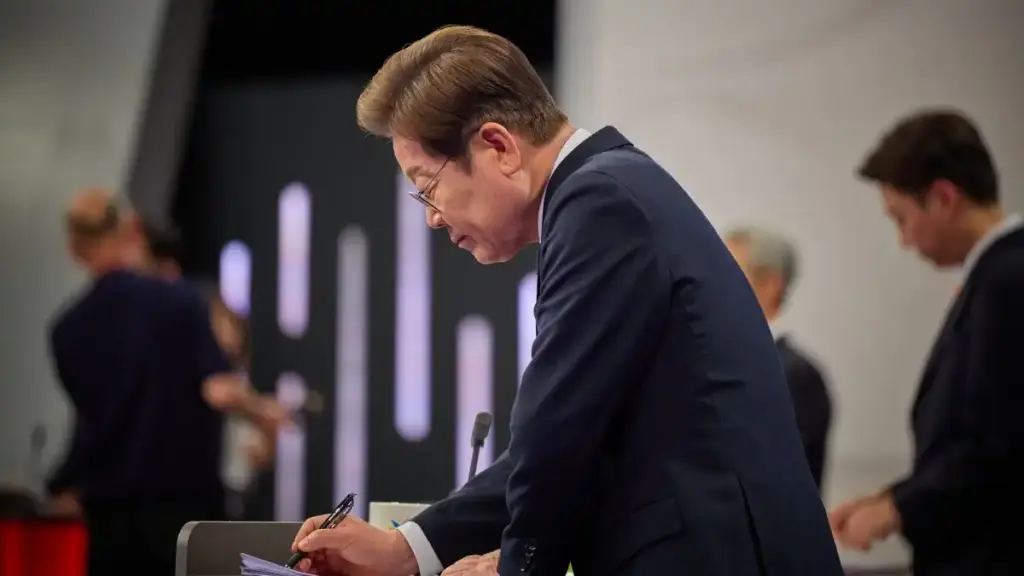
Lee Jae-Myung intends to approve Bitcoin ETFs, let the state pension fund invest in cryptocurrency, and introduce a stablecoin backed by Korean won.
Following a resounding victory in a snap election, opposition leader Lee Jae-myung of South Korea was sworn in as president after campaigning on a platform of pro-crypto policies.
Six months after Yoon Suk-yeol, the former leader of Korea, imposed martial law and plunged the country into political turmoil, Lee declared victory in the June 3 election.
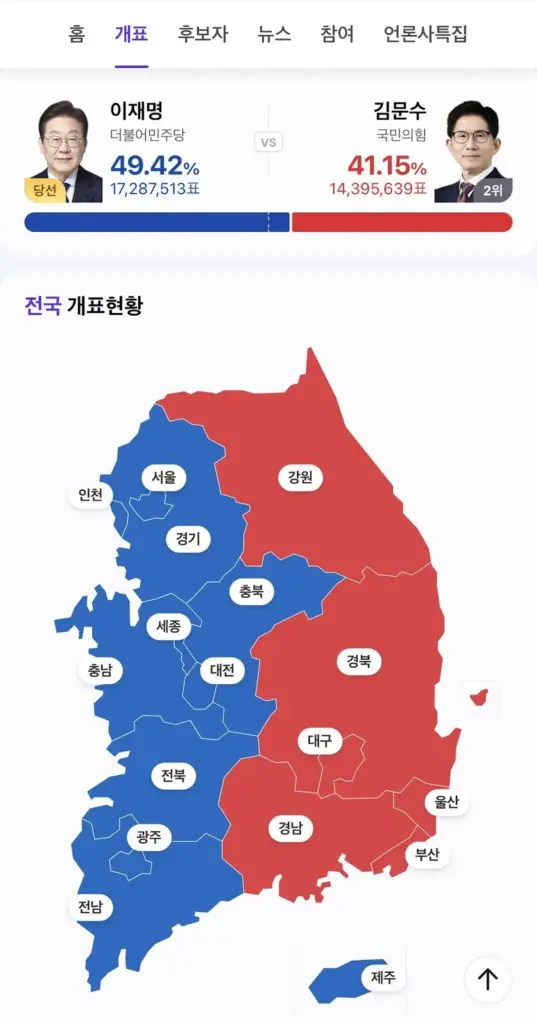
According to figures from the National Election Commission, Lee, a center-left candidate for the Democratic Party, received almost 49% of the vote as of June 4, compared to Kim Moon-soo, a conservative candidate for the People Power Party, who received 41%.
According to Reuters, about 80% of the 44.4 million eligible voters in South Korea cast their votes, marking the largest turnout for a presidential election since 1997.
Dennis Porter, the founder of the Satoshi Action Fund, who was in South Korea on election day, described the turnout as “wild.” Porter also mentioned that Lee has promised to launch Bitcoin exchange-traded funds (ETFs) and permit South Korea’s $884 billion national pension fund to invest in Bitcoin (BTC, $105,457) and cryptocurrency.
Lee also hopes to modernize the nation’s financial system and stop capital outflows by introducing a stablecoin backed by the Korean Won.
During a May policy meeting, he stated, “We need to establish a won-backed stablecoin market to prevent national wealth from leaking overseas.”
Kim also promised to loosen laws and increase the uptake of cryptocurrencies during a campaign that backed the introduction of spot crypto ETFs.
On the nation’s biggest exchanges, Bithumb and Upbit, bitcoin prices surged to 149,000 won ($108,480). The so-called kimchi premium caused the currency to trade over 2% higher than on international platforms, where it peaked at roughly $106,600 before slightly declining.
Lee Jae-Myung will also address several policy choices.
As Lee Jae-Myung assumes office, South Korea is confronted with several complex issues, such as ongoing trade negotiations with the United States, growing living expenses, and regional geopolitical concerns.
Although it’s unclear how high he would rank his crypto-related pledges, Lee committed to “work to restore the economy” right away and ensure military takeovers are a thing of the past while speaking to throngs of supporters in Seoul, the nation’s capital.
Lee Jae-Myung has pledged to depoliticize the justice system, implement social reforms, including a four-and-a-half-day workweek, and concentrate on economic recovery through greater investment in military and artificial intelligence.