
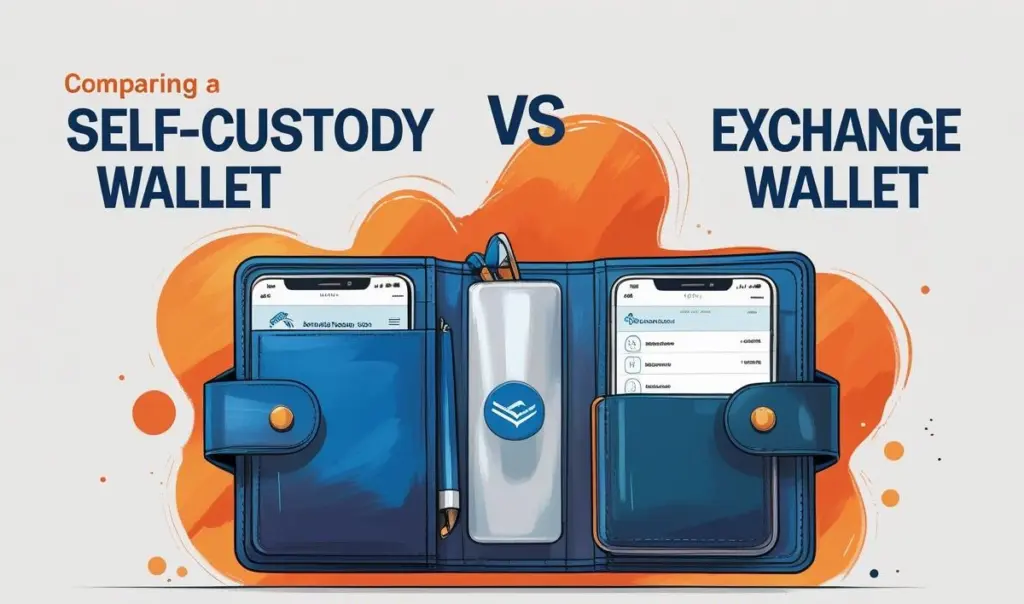
As crypto adoption accelerates globally in 2025, users are increasingly forced to make a fundamental choice between self-custody vs exchange wallets.
What is Self-Custody?
In crypto, self-custody refers to the practice of directly controlling your private keys to hold and manage your own digital assets, rather than relying on centralized exchanges or custodial services.
With a self-custody wallet, you are responsible for storing, securing, and accessing your crypto.
Unlike custodial wallets, which have a third party hold your keys and can freeze or restrict access, a self-custody wallet gives you complete control over your funds.
These wallets can be hardware-based (offline), software-based (mobile or desktop apps), or physical (for example, paper wallets).
Leading Self-Custodial Wallet Solutions in 2025
Ledger Stax
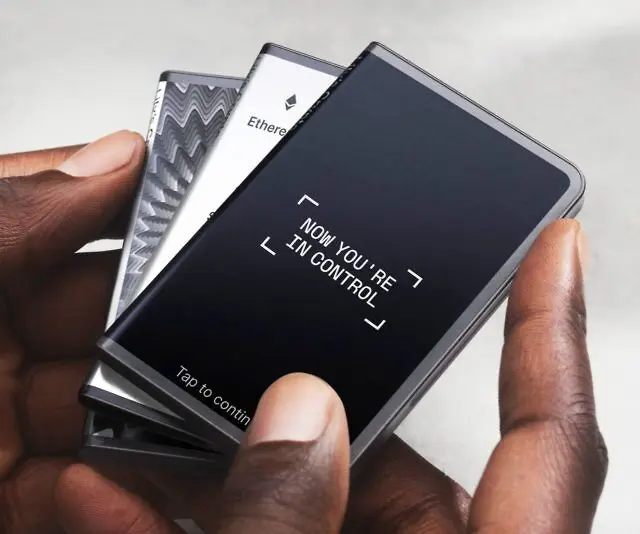
Ledger Stax: A sleek, touchscreen hardware wallet with Bluetooth support.
Trezor Safe 3
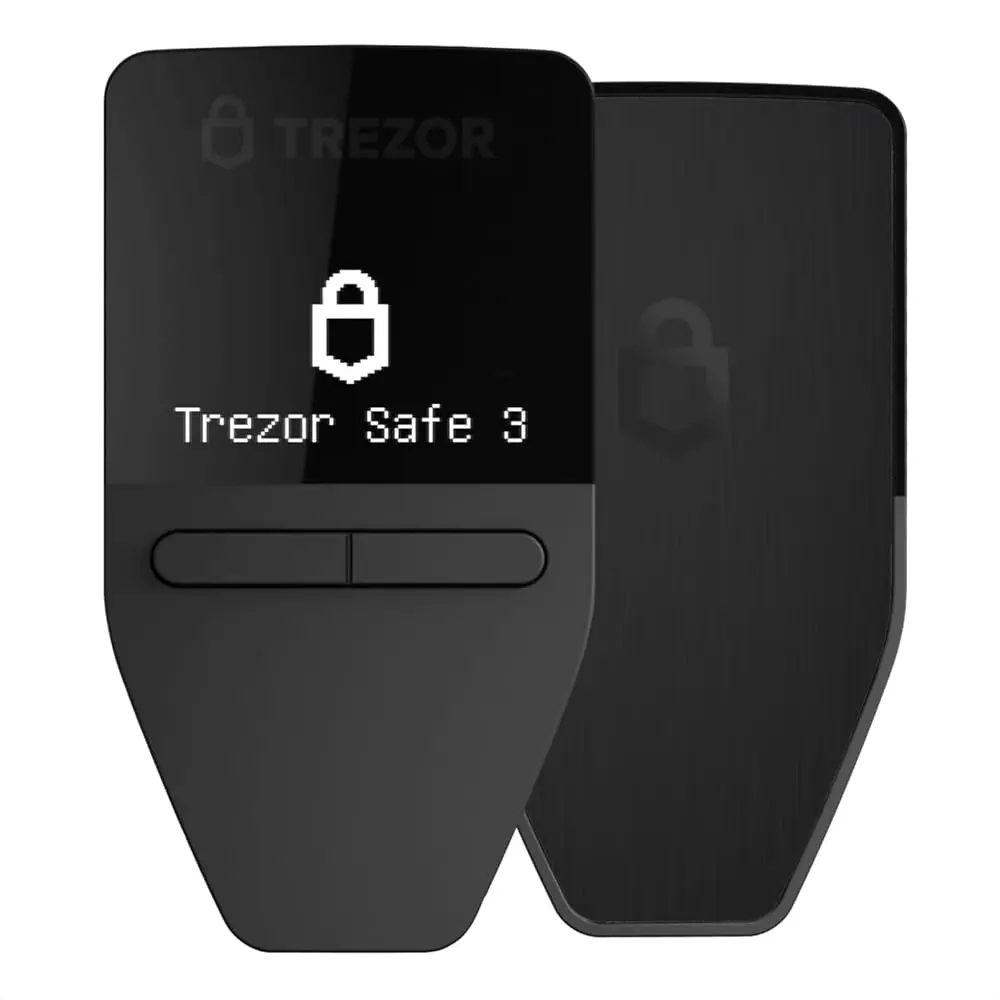
Trezor Safe 3: Known for its open-source firmware and PIN protection.
MetaMask
MetaMask: A popular browser extension and mobile wallet for Web3 access.
Rabby Wallet: A security-oriented MetaMask alternative with chain-specific prompts.
The guiding ethos of self-custody is straightforward but effective: “Not your keys, not your coins.” This means that if you don’t have the private keys, you don’t actually own your assets.
Non-custodial wallets provide unparalleled control to users seeking privacy, freedom from censorship, and direct access to decentralized finance (DeFi).
What are exchange wallets?
Exchange wallets are digital wallets offered by centralized crypto exchanges (CEXs) like Binance, Coinbase, and Bitget. These wallets are custodial, which means the exchange stores and manages your private keys on your behalf.
When you deposit crypto into an exchange wallet, you trust the platform to protect your funds, process transactions, and prevent unauthorized access. This custodianship model is similar to the way traditional banks handle customer funds.
Many users prefer Exchange Wallets for their ease of use, particularly in 2025’s fast-paced crypto landscape. These wallets provide seamless fiat on/off ramps, instant trading, staking rewards, and access to spot, futures, and DeFi markets, all from a single app or interface.
Trending Features in Exchange Wallets in 2025
In 2025, trending features in exchange wallets include:
- Multi-Party Computation (MPC) security eliminates single points of key failure.
- Biometric login systems (such as facial and fingerprint recognition) for frictionless access.
- Account balances are insured against specific types of hacks or custodial failures (available on certain platforms such as Coinbase and Bitget).
Despite their convenience, exchange wallets are not self-custodial, you must rely on the platform’s infrastructure and policies, which can introduce risks such as hacking, regulatory action, or insolvency.
Security Comparison: Self-Custody vs Exchange Wallets
In 2025, the security of your crypto assets comes down to one critical question: Should you trust yourself or a third-party custodian? The self-custody vs exchange wallet debate is based on trade-offs between control and convenience, resilience and risk.
Self-Custody: Maximum Control and Responsibility
A self-custody wallet gives you complete control over your crypto because it allows you to store your own private keys. Ledger Stax, Trezor Safe 3, and MetaMask allow you to store assets offline and interact with decentralized applications without exposing them to third-party risk.
Pros:
- Total Ownership: You are the only one who can access or move your funds.
- Offline security: Cold wallets are less vulnerable to online hacks and malware.
- Censorship Resistance: No central authority can freeze or seize your funds.
Cons:
- User Error Risk: Misplacing a seed phrase or falling victim to phishing attacks can result in permanent data loss.
- No Backup: Unlike a bank or exchange, there is no “forgot password” button.
- High Learning Curve: Some wallets still require technical knowledge and manual backups.
Exchange Wallets: Convenience with Hidden Costs
Exchange wallets provided by platforms such as Binance, Coinbase, and Bitget are custodial, which means the platform controls your private keys. While these wallets make trading, staking, and fiat conversions easier, they have unique security concerns.
Pros:
- User-Friendly: There’s no need to manage keys; simply log in and go.
- Integrated Security: 2FA, biometric logins, and device whitelisting are examples of integrated security features that protect accounts.
- Insurance and Support: Some CEXs offer partial insurance against specific hacks as well as 24/7 customer service.
Cons:
- Custodial Risk: Your crypto is only as secure as the exchange’s internal policies and systems.
- Target for hackers: Exchanges remain popular targets for cybercriminals. The 2024 MEXC breach caused over $25 million in losses.
- Regulatory Exposure: Governments have the authority to freeze, seize, or demand access to custodial wallets during investigations or policy changes.
Which is Safer in 2025?
While exchanges have improved their security with multi-party computation (MPC), cold storage segmentation, and institutional firewalls, they remain centralized points of failure.
In contrast, self-custody places the entire security burden on the user, making education, backups, and secure hardware critical.
Data Insight: Chainalysis (Jan 2025) reports over $1.8 billion in exchange wallet losses between 2021 and 2024, highlighting why many experienced users prefer non-custodial wallets for long-term storage.
Self-custody is safer when done correctly, but riskier if mishandled. While Exchange Wallets are convenient, they are inherently less sovereign.
In 2025, a hybrid approach storing long-term assets in self-custody and keeping trading balances on trusted exchanges is emerging as the new best practice.
Regulation and Custody in 2025
As the crypto ecosystem matures, regulatory frameworks in 2025 are strengthening their grip on custodial practices, particularly for centralized exchanges (CEXs).
The self-custody vs exchange wallets debate has evolved into a legal one, influenced by jurisdictional compliance and cross-border enforcement.
CEXs and Global Compliance:
Centralized platforms must comply with enhanced KYC and AML protocols, particularly under the FATF’s Travel Rule.
This global mandate requires CEXs to share user-identifying information for crypto transfers above certain thresholds, making anonymous exchanges nearly impossible in compliant countries.
Custodial Frameworks: MiCA, SEC, and MAS
- MiCA (Markets in Cryptoassets Regulation): MiCA, which went into effect in the EU in late 2024, imposes strict operational and reserve requirements on custodial service providers, such as wallet segregation and incident disclosures.
- SEC (U.S. Securities and Exchange Commission): Continues to scrutinize exchanges that provide custodial services with new licensing pathways and audit requirements under the 2025 Custodial Clarity Act.
- MAS (Monetary Authority of Singapore): Demands detailed custody disclosures, cold storage thresholds, and independent third-party assessments of wallet infrastructure.
Self-Custody: Protected in Some, Banned in Others
The legality of self-custody wallets varies globally:
- Protected: In Switzerland, Germany, and a few states in the United States, self-custody is considered a privacy right, with no reporting requirements if used solely for personal purposes.
- Restricted or Monitored: While holding crypto in non-custodial wallets is not strictly prohibited in countries such as China, India, and Nigeria, large self-custody transactions are flagged or discouraged.
- Emerging Clarity: Latin American countries such as Brazil and Argentina are developing frameworks to protect non-custodial usage while regulating custody as a financial service.
In 2025, the choice between self-custody and an exchange wallet may be influenced not only by personal preference but also by where you live and how your jurisdiction classifies crypto assets. Legal clarity is improving, but so is enforcement.
Ease of Use and User Experience
When comparing self-custody and exchange wallets in 2025, one of the most noticeable differences will be user experience (UX) and how far each solution has evolved to meet user expectations.
Exchange Wallets (CEXs): Frictionless but Abstracted
Centralized exchange wallets are built for ease of use, particularly for newcomers. Platforms such as Coinbase, Binance, and Bybit provide:
- Intuitive interfaces allow instant trading, staking, and asset swaps.
- Mobile-first designs with embedded fiat gateways.
- Easy account recovery via email or phone authentication.
However, while CEX wallets are user-friendly, they abstract away private key control, which means that users do not actually own their crypto in a real sense; ownership is custodial.
Self-Custody Wallets: Improving but Still Technical
Self-custody wallets, on the other hand, have traditionally been more difficult to use. Managing seed phrases and blockchain-specific configurations scared off non-technical users.
But in 2025, this is rapidly changing:
- Smart contract wallets (such as Safe, formerly Gnosis Safe) support programmable permissions and social recovery.
- Seedless recovery options using encrypted cloud backups or trusted devices (e.g., Ledger Recover).
- Multi-chain auto-routing (found in wallets like Rabby) eliminates manual network switching.
Despite improvements, some self-custody tools remain intimidating to users who are unfamiliar with blockchain terminology, gas fees, or private key management.
Emerging Trend: Smarter and Simpler Self-Custody
Account abstraction, an Ethereum feature that allows wallets to behave more like smart accounts with flexible authentication and programmable logic, is a major trend in 2025.
Furthermore, AI-powered wallet assistants (e.g., MetaMask Snaps, Zerion AI) facilitate onboarding by:
- Explaining transaction details in plain English.
- Helping with network selection and gas optimization.
- Recommending security actions in real-time.
These advancements are reducing the usability gap and making non-custodial wallets more accessible while maintaining control.
CEX wallets win in terms of simplicity, while self-custody tools are rapidly catching up, thanks to innovations in wallet user experience, smart contracts, and artificial intelligence.
Real-World Case Studies: Lessons from 2024
To understand the practical implications of self-custody vs exchange wallets, consider real-world incidents from 2024 that highlight the benefits and risks of each storage method.
These case studies demonstrate how wallet custody decisions have a direct impact on user security and financial outcomes.
Self-Custody Win: DeFi User Avoids Major Exploit Losses
In mid-2024, during a wave of DeFi protocol exploits, including the Prisma Finance and Hundred Finance attacks, a seasoned Aave user reportedly secured a seven-figure portfolio in cold storage just days before the attacks began.
The user used a Ledger Nano X with multi-wallet segmentation to minimize exposure to active protocols while keeping funds offline.
- Insight: This example indicates how non-custodial wallets and offline storage can shield high-value portfolios from protocol-level crises and network vulnerabilities.
Exchange Loss: Bitrue Breach Exposes Custodial Weakness
In April 2024, Bitrue, a Singapore-based exchange, suffered a major security breach where more than $23 million in digital assets were stolen. The exploit was reportedly linked to leaked API keys, which allowed for unauthorized asset withdrawals from multiple wallets.
Bitrue temporarily suspended withdrawals, conducted internal investigations, and promised partial user compensation. However, some funds remain unrecovered, and users have experienced access delays and partial losses.
- Lesson: This incident shows the risk of custodial wallets, as users may rely on a platform’s internal controls, infrastructure, and post-breach transparency.
Hybrid Model: Institutional-Grade Compromise
In 2025, many crypto institutions will use a hybrid custody model with multi-sig MPC (multi-party computation) vaults from providers such as Fireblocks, Copper, and Qredo. These solutions allow:
- Distributed Key Control
- Role-based access
- Real-time transaction policies and alerts.
This architecture combines self-custody principles with enterprise-grade security, including redundancy, auditability, and smart contract integration.
- Takeaway: MPC wallets are quickly becoming the standard for secure, scalable crypto custody among organizations and high-net-worth individuals alike.
These real-world examples highlight the evolving reality: self-custody rewards diligence, exchange wallets require trust, and hybrid custody provide a new middle ground, particularly in a post-exploit environment like 2025.
The Hybrid Future: Custody Is Not Binary Anymore
As the crypt industry matures in 2025, the once-polarizing debate between self-custody and exchange wallets becomes deeper. Custody is no longer a binary choice, thanks to technological advancements.
Users now have access to hybrid wallet models that combine self-ownership, improved usability, and institutional-grade security.
Smart Wallets: Self-Custody with Built-In Recovery
Smart wallets, which are powered by Ethereum’s account abstraction, are changing how users approach self-custody. These wallets enable the following:
- Social recovery mechanisms allow trusted parties to help restore access if a key is lost.
- Multi-factor authentication (MFA) with biometrics or device confirmations.
- Custom transaction rules, such as time delays and daily spending limits.
Examples include Safe (formerly Gnosis Safe) and Soul Wallet, both of which allow for flexible user-defined permissions while maintaining private key ownership.
For users searching for “best smart wallet 2025” or “seedless crypto wallet,” smart wallets provide a modern solution to traditional custody challenges.
Custodial DeFi Wallets: The Best of Both Worlds
OKX Web3 Wallet
OKX Web3 Wallet and SafePal X1 are examples of hybrid custodial DeFi wallets that provide users with app-based self-custody and optional centralized services:
- Cross-chain asset management.
- Integrated DeFi dapps.
- Optional cloud backup with biometric or PIN recovery.
These platforms blur the line between complete decentralization and user-friendly convenience, making them ideal for DeFi enthusiasts who want simplicity without giving up complete control.
MPC and Threshold Wallets: Reinventing Private Key Security
MPC (Multi-Party Computation) and threshold signature schemes are gaining popularity with institutions and advanced users. These wallets eliminate the traditional “single key = single point of failure” issue by:
- Splitting key generation and signing across multiple devices or parties.
- Supporting collaborative signing policies (e.g., 2-of-3 approvals)
- Reducing vulnerability to phishing, SIM swaps, and key theft
Solutions such as Fireblocks, ZenGo, and Qredo provide non-custodial MPC wallets with enterprise-grade security, allowing users to maintain control while mitigating risk.
The future of wallet security in 2025 will be hybrid. With smart wallets, DeFi-focused custodial tools, and MPC technologies, users no longer have to choose between complete control and peace of mind.
Custody is evolving into something more modular, programmable, and user-centric, which is critical for Web3 adoption.
Conclusion
When deciding between self-custody and exchange wallets, there is no universal answer, only what best suits your risk tolerance, technical ability, and asset profile.
If you value true ownership, privacy, and control, a self-custody wallet in 2025 provides unparalleled autonomy. However, with that freedom comes the responsibility to protect private keys, avoid phishing attempts, and manage backups.
If you prioritize convenience, accessibility, and integrated trading, custodial exchange wallets provide streamlined access, albeit with a greater reliance on third-party security and regulatory exposure.
Many users believe that a hybrid approach, with cold storage for long-term holdings, exchange wallets for active trading, and smart or MPC wallets for daily use, is the most balanced strategy.
Frequently Asked Questions (FAQs)
- What is the best cold storage wallet 2025?
Cold storage wallets such as Ledger and Trezor remain the top choices.
- Are wallets safer than exchanges?
In general yes, non-custodial wallets are safer than exchanges, but it depends on how and who uses them.
- Are custodial wallets safe?
Custodial wallets can be safe, but they come with significant drawbacks.