

SSV Network unveils plans for a new framework, allowing ‘based’ apps to connect directly to Ethereum’s validator network through its restaking infrastructure.
The update allows programs known as “based apps,” or “apps,” to connect directly to Ethereum’s layer-1 chain.
SSV Network, a provider of Ethereum restaking infrastructure, has revealed plans to develop a new framework that will enable “based” apps to connect straight to Ethereum’s validator network.
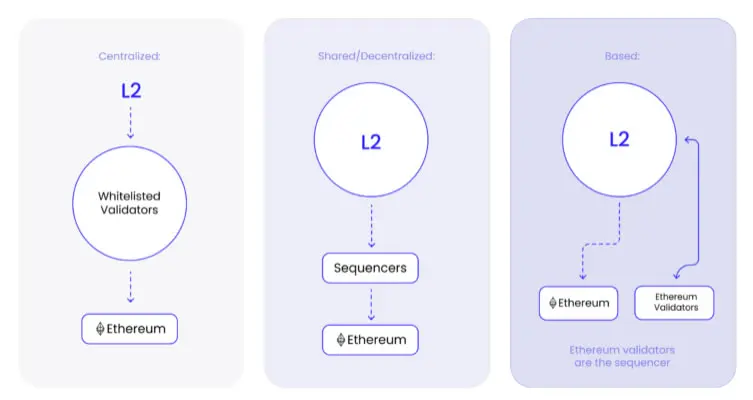
Applications known as “based apps,” or “apps,” can now connect directly to Ethereum’s layer-1 chain thanks to the SSV 2.0 update. In a press release provided to Cointelegraph, SSV Network stated that it supports several use cases, such as layer-2 networks, data oracles, and fraud-proofs, and that it is based on Ether ETH$3,185 validators.
A “transformative leap for bootstrapping Ethereum security, addressing the growing demand for L1-anchored interoperable solutions,” according to the project.
Alon Muroch, the founder and CEO of SSV Labs, described the project as his “biggest, most ambitious project” and predicted that it “will profoundly change the restaking market” if implemented by the network’s decentralized autonomous organization (DAO).
Direct L1 security without the need for extra tokens, an “infinite-sum” security model where more participation fortifies the network, and the avoidance of cascading risks associated with some current restaking models are some advantages of the based infrastructure model, which is based on Distributed Validator Technology (DVT).
To facilitate cross-chain compatibility with other proof-of-stake blockchains such as Solana, Avalanche, and Cosmos, the infrastructure also incorporates a new coordination layer known as SSV Chain.
New staking rewards, burning mechanisms, and increased validator earning potential through bApp security and service provision are all part of the updated tokenomics model.
According to a blog post published on January 24, the “based” movement signifies a substantial change in Ethereum’s ecosystem, tackling critical issues with scalability and fragmentation.
Ethereum’s layer-2 solutions have addressed scalability but have also led to fragmentation, with various rollups having distinct development environments, liquidity pools, and ecosystems.
Jesse Pollak, Coinbase’s L2 network Base’s leader, concurs that Ethereum should have more base-layer connectivity. He stated on January 25 that based rollups are “a versatile and potent tool that we’re going to be able to use for Base to increase the security guarantees that it provides and make it more connected to Ethereum.”
With pre-confirmations enabling validators to incorporate transactions with low latency, “based rollups” employ Ethereum’s validator set to sequence or arrange transactions in the proper order.
The SSV Network currently has 1,250 operators and has secured over $6.5 billion in total value locked with over 2 million ETH restaked.