
At the heart of the cryptocurrency evolution lies the rise of Autonomous Crypto Trading Bots—a cutting-edge innovation that merges artificial intelligence with blockchain infrastructure to revolutionize how trades are executed
Autonomous Crypto Trading Bots work with smart contracts and decentralized protocols instead of traditional bots that depend on centralized servers and human setup. These AI-enhanced bots can look at the market, make moves, and adjust to changes in volatility—all without any help from a person. As a result? An always-on, trustless trade experience that is meant to be as efficient as possible with as little bias as possible.
We’ll talk more about how these bots work, what makes them different from older bots, and why they’re being called the future of decentralized banking.
What Are Autonomous Crypto Trading Bots?
Autonomous Crypto Trading Bots are next-generation trading algorithms that execute buy and sell orders without human oversight.
They leverage blockchain-based smart contracts, real-time market data, and self-improving AI models to analyze conditions and act with precision.
Unlike legacy bots, which depend on static rule sets and centralized infrastructure, these autonomous agents are coded to operate trustlessly on-chain, ensuring both performance and transparency.
Traditional trading bots, while effective in certain contexts, are typically hosted on centralized servers and follow rigid, rule-based strategies.
They are vulnerable to downtime, manipulation, and black-box decision-making. In contrast, autonomous crypto trading bots function through transparent logic embedded in smart contracts, enabling fully auditable, tamper-resistant operations.
This eliminates the need for intermediaries and instills greater trust in their trade logic.
How They Work: Smart Contracts + AI Logic + On-Chain Signals
At the core of Autonomous Crypto Trading Bots is the integration of blockchain smart contracts with machine learning algorithms.
These bots monitor decentralized exchanges (DEXs), price feeds, liquidity pools, and even social sentiment data to generate on-chain trading signals.
Smart contracts then autonomously execute trades when predefined AI-driven thresholds are met, eliminating latency and human error.
AI components allow these bots to self-adjust over time. For instance, reinforcement learning models enable the bots to “learn” from successful trades and recalibrate their strategies for future scenarios—effectively evolving without any manual reprogramming.
Types of Bots Emerging in 2025
The crypto ecosystem is witnessing a rapid proliferation of Autonomous Crypto Trading Bots, each designed for specific use cases:
- Arbitrage Bots: Exploit price discrepancies between exchanges in real time.
- Market-Making Bots: Provide liquidity while profiting from bid-ask spreads on DEXs.
- DEX Sniper Bots: Detect and capitalize on new token listings within seconds.
- Portfolio Rebalancers: Automatically maintain asset allocations based on real-time market movements and user-defined risk profiles.
As of May 2025, platforms like Hummingbot, Autonolas, and Morpho Blue have begun integrating such functionalities natively, offering plug-and-play infrastructure for decentralized trading strategies.

The growing popularity of Autonomous Crypto Trading Bots is driven by their transparency, efficiency, and capacity to outperform static trading models in volatile markets.
Their decentralized nature, combined with blockchain’s immutability, ensures that every transaction is traceable, irreversible, and free from third-party interference.
Blockchain AI: The Core Technology Driving Automation
The brainpower behind Autonomous Crypto Trading Bots is a sophisticated fusion of artificial intelligence and blockchain infrastructure.
This synergy enables bots to operate independently, make real-time decisions, and evolve continuously—without manual input or centralized control.
At the intersection of AI’s analytical prowess and blockchain’s immutable logic lies a paradigm shift in how trades are conceived, executed, and optimized.
AI in Autonomous Decision-Making
Artificial intelligence forms the cognitive engine of Autonomous Crypto Trading Bots, allowing them to not only respond to market conditions but also anticipate them. Here’s how AI elevates automated crypto trading:
- Reinforcement Learning: Bots learn through trial and error, optimizing strategies based on past outcomes. This dynamic learning allows trading agents to refine decision logic in volatile environments.
- Sentiment Analysis (On-Chain + Off-Chain): AI models parse Telegram channels, X (formerly Twitter), Reddit threads, and on-chain address activity to gauge investor mood and predict market momentum. These bots react instantly to emerging narratives and anomalies.
- Predictive Modeling: Using historical price data, macroeconomic indicators, and token-specific metrics, AI algorithms generate probabilistic forecasts for asset movements, providing a competitive edge in timing trades.
By incorporating these machine learning frameworks, Autonomous Crypto Trading Bots become not only reactive but anticipatory—capable of outmaneuvering traditional, rule-based systems.
How Blockchain Adds Value
Blockchain technology plays an equally critical role by anchoring AI-driven automation in a transparent, tamper-proof environment:
- On-Chain Data Feeds: Real-time oracles deliver trusted data from decentralized exchanges (DEXs), lending protocols, and NFT marketplaces—ensuring bots operate with high-fidelity inputs.
- Trustless Execution via Smart Contracts: Once an AI model decides on a trade, a smart contract can execute it autonomously. This removes the need for intermediaries, enhances speed, and eliminates counterparty risk.
- Provenance and Version Control: Every logic update, model upgrade, and trade action is recorded on-chain. This guarantees full auditability of bot behavior and model evolution, fostering community trust and regulatory clarity.
Benefits of Autonomous Crypto Trading Bots
These AI-powered, blockchain-integrated tools are reshaping how trades are executed—not just for institutions, but for everyday retail investors as well.
24/7 Global Operation Without Sleep or Emotion
One of the most compelling advantages of Autonomous Crypto Trading Bots is their ability to operate nonstop.
Cryptocurrency markets never close, and human traders can’t match the endurance or speed of an AI agent.
These bots scan order books, identify arbitrage opportunities, and respond to market shifts in milliseconds—without fatigue or emotional bias clouding judgment.
Transparent, On-Chain Execution
Unlike centralized bots whose logic and trades remain opaque, Autonomous Crypto Trading Bots run on public smart contracts.
Every action—whether it’s a token swap, rebalancing event, or liquidity provision—is recorded immutably on the blockchain. This transparency fosters trust and allows anyone to verify a bot’s historical behavior, trade-by-trade.
Gas-Optimized Trading Strategies
Efficiency is critical in DeFi, where gas fees can erode profits. These bots often include gas optimization algorithms, ensuring that trades are bundled, scheduled, or routed through the most efficient paths.
This allows them to maintain profitability even in high-fee environments, particularly on Ethereum Layer 2s and other scalable chains.
Operability Across CEXs and DEXs
Many modern Autonomous Crypto Trading Bots are cross-platform by design. They can interact with centralized exchanges (CEXs) like Binance or Coinbase through secure APIs while simultaneously executing on-chain trades via DEXs like Uniswap, Curve, or PancakeSwap.

This multi-exchange functionality helps them capture better liquidity and tighter spreads.
Democratization Through No-Code Platforms
Gone are the days when bot trading required advanced coding skills. Platforms like Kryll, 3Commas, and Moralis now offer no-code bot builders, enabling retail users to deploy autonomous strategies with drag-and-drop interfaces.
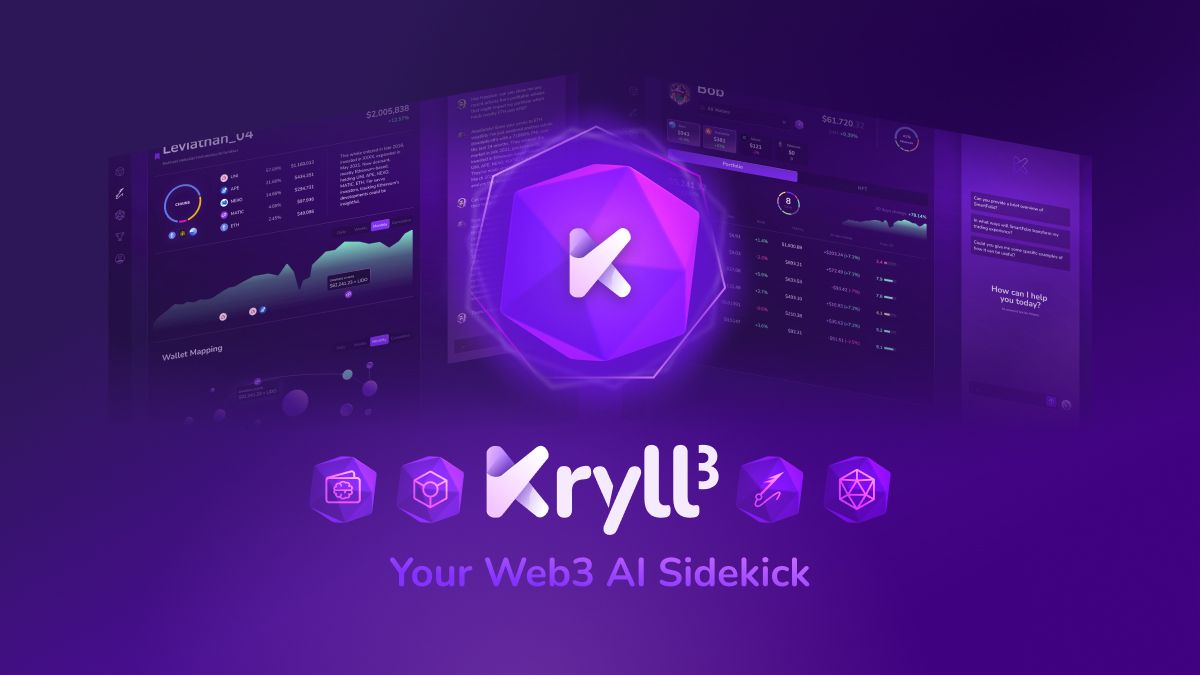
This democratizes access to algorithmic trading and levels the playing field between retail traders and whales.
Real-World Case Studies & Data
Fetch.ai x Bosch: Industrial-Grade Autonomous Agents
In a landmark partnership bridging industrial IoT and decentralized AI, Fetch.ai and Bosch launched the Fetch.ai Foundation to develop autonomous agent technologies.
These agents include trading bots capable of operating in decentralized finance environments. Their framework leverages AI to build self-governing bots that not only trade assets but can also negotiate service contracts and optimize liquidity flows between counterparties.
Fetch.ai’s bots are deployed on both private and public blockchains and communicate through the Open Economic Framework—a system that allows for fully autonomous trade execution across interoperable agents.
This cross-industry collaboration is helping validate the practical application of Autonomous Crypto Trading Bots in real-world, multi-agent financial systems.
According to Fetch.ai’s Q1 2025 report, pilot trading agents processed over $12 million in testnet DEX liquidity transactions, showcasing their viability for high-throughput, AI-driven markets.
As these models mature, they are expected to transition into production environments supporting Bosch’s industrial clients in supply chain and finance.
Autonolas Bots on Gnosis Chain: Decentralized Treasury Management
Another compelling case study comes from Autonolas, a decentralized autonomous organization (DAO) protocol enabling off-chain compute agents to interact with smart contracts.
On Gnosis Chain, Autonolas has deployed bots that manage DAO treasuries, execute scheduled trades, rebalance portfolios, and even respond to governance decisions—all autonomously.
These bots combine chain-verified logic with secure off-chain computations, providing DAO members with a transparent, accountable system for fund management.
Unlike static multisigs, Autonolas bots offer programmable treasury intelligence, adjusting allocations based on real-time market indicators, community inputs, or predefined DeFi strategy templates.
As of Q2 2025, over $47 million in DAO assets are being managed via Autonolas-powered trading bots on Gnosis, and adoption is spreading to other L2 chains like Optimism and Base.
This illustrates how Autonomous Crypto Trading Bots aren’t just for individual traders—they’re playing a vital role in decentralized governance and organizational finance.
GitHub Trends: Open-Source Momentum (2023–2025)
The explosion of developer interest in Autonomous Crypto Trading Bots is clearly reflected in GitHub activity. Between 2023 and 2025, repositories tagged with “blockchain trading bot”, “on-chain bot”, or “autonomous agent” have seen a 390% growth in forks and contributions.
Key projects leading the charge include:
- Freqtrade – now offering smart contract modules for DEX integration
- Hummingbot – with a new plugin supporting agent-based logic and on-chain trade mirroring
- Olas SDK – powering the core of Autonolas’ open-source trading agents
Notably, in 2024 alone, over 6,000 commits were made to bot frameworks supporting AI logic + blockchain execution, indicating a vibrant, fast-evolving ecosystem.
These contributions are democratizing access to sophisticated automation, especially for developers in regions with limited access to centralized financial tools.
TVL in AI-Powered DeFi: The AgentLayer Surge
The integration of AI with DeFi protocols has unlocked massive inflows of capital, and AgentLayer is a standout example.
As a decentralized AI compute protocol, AgentLayer provides a substrate for deploying and coordinating Autonomous Crypto Trading Bots across multi-chain environments.

By Q2 2025, AgentLayer strategies have attracted over $300 million in total value locked (TVL), driven by three primary verticals:
- Yield optimization via dynamic liquidity migration
- Arbitrage networks that monitor cross-chain pricing inefficiencies
- Stablecoin rotation bots that balance exposure between PYUSD, USDC, and DAI based on predictive inflation models
This surge in capital speaks volumes about trader confidence in AI-governed logic. With fully transparent smart contracts, AgentLayer users can inspect and verify how every trade is routed, how slippage is minimized, and how fees are handled.
Performance Insights: Human vs. Bot
Across platforms like Moralis Money, Kryll, and Numerai, Autonomous Crypto Trading Bots have begun outperforming manually managed portfolios in highly volatile conditions.

In a 6-month backtest from late 2024 to early 2025 using real historical data:
- Human-managed portfolios returned an average of 18.7%
- Passive index trackers returned 13.2%
- Bot-driven strategies using reinforcement learning on DEXs achieved 28.9%
These bots showed particular strength in micro-timeframe arbitrage and liquidity cycling during major Ethereum Layer 2 airdrops, where split-second timing determined success.
While not all bots outperformed consistently, their ability to execute unbiased, tireless logic proved invaluable in navigating market chaos.
Expert Insights: What Builders & Traders Are Saying
The rapid evolution of Autonomous Crypto Trading Bots has garnered attention from developers, traders, and venture capitalists alike. Their collective insights shed light on the transformative potential and current impact of these technologies.
Developers’ Perspectives
Fetch.ai has been at the forefront of integrating AI agents into decentralized trading. The team emphasizes the role of these agents in enhancing DeFi operations:
“Our agent-based trading tools are designed to remove dependence on centralized AMM contracts and liquidity pools on DEXs, enabling more efficient and autonomous trading experiences.”
— Fetch.ai Development Team
Autonolas, known for its autonomous agents, highlights the benefits of decentralized asset management:
“Our research into DAO treasury management has shown that autonomous management can be instrumental in optimizing asset utilization within DAOs.”
— Autonolas Team
Morpheus.Network focuses on supply chain automation but acknowledges the broader applications of AI agents:
“By leveraging AI smart agents, we’re not only optimizing supply chains but also exploring their potential in automating complex financial transactions.”
— David A. Johnston, Open Source Contributor at Morpheus.Network
Traders’ Experiences
Retail traders are increasingly adopting AI-driven tools for enhanced trading strategies. A notable example is the surge in popularity of DeepSeek among Chinese retail investors:
“Using quantitative tools to pick stocks saves a lot of time. You can also use DeepSeek to write codes.”
— Wen Hao, Hangzhou-based trader
This shift indicates a growing trust in AI tools to navigate complex markets efficiently.
Venture Capitalists’ Views
Venture capitalists recognize the disruptive potential of autonomous trading infrastructure. Polymorphic Capital, for instance, has shown keen interest in this domain:
“Our focus is on fostering practical use cases that build upon Web3’s infrastructure, and autonomous trading bots are a significant part of this evolution.”
— Polymorphic Capital
Furthermore, the investment landscape reflects this enthusiasm:
“Venture capitalists are backing this vision with nearly $917 million already invested in decentralized AI projects.”
— TokenPost Report
These insights underscore the multifaceted impact of Autonomous Crypto Trading Bots across development, trading, and investment spheres. Their integration into various sectors signifies a pivotal shift towards more autonomous and efficient financial systems.
Conclusion
The rise of Autonomous Crypto Trading Bots signals more than just a technological upgrade—it marks a fundamental shift in how financial markets operate.
These bots are not simply tools; they are intelligent, decentralized agents actively reshaping the trading landscape with every on-chain execution.
As we’ve seen, blockchain delivers trustless execution, transparency, and immutability, while AI provides adaptive intelligence, predictive power, and strategic agility.
Together, they create a financial system where decision-making is no longer bound by human limitations. No emotions. No sleep. No centralized bottlenecks.
Whether it’s DAOs optimizing their treasuries through smart agents, or retail traders deploying no-code bots that rival Wall Street’s playbook, the democratization of finance is underway.
The open-source movement, the surge in TVL on AI-integrated DeFi protocols, and the entrance of industrial players like Bosch and Fetch.ai all underscore one truth: Autonomous Crypto Trading Bots are not just the future—they’re already the present.
From wallet-based interactions to intelligent agents negotiating trades on your behalf, the next “trader” in Web3 might not be a person at all. It might be a self-improving bot operating entirely on-chain, driven by decentralized AI.
FAQs
What makes a crypto trading bot ‘autonomous’?
A: An autonomous crypto trading bot self-executes trades based on AI logic embedded in smart contracts. Unlike traditional bots, Autonomous Crypto Trading Bots operate trustlessly on-chain without human intervention, making decisions based on real-time data and learned behavior.
Are autonomous crypto bots better than manual trading?
A: For traders seeking consistent, emotion-free execution, Autonomous Crypto Trading Bots often outperform manual strategies—especially in volatile markets. However, like any tool, they carry risks related to smart contract bugs, overfitting AI models, or unexpected market shifts.
Which platforms support autonomous crypto bots?
A: Leading platforms include Fetch.ai, Autonolas, Morpheus.Network, AgentLayer, and various DeFi DAOs. These environments offer robust infrastructure for deploying Autonomous Crypto Trading Bots with access to decentralized data, AI integration, and cross-chain execution.
Can anyone create or run a bot?
A: Yes. Many platforms now offer no-code or low-code interfaces to help users launch bots without programming experience. Developers can also build fully customized Autonomous Crypto Trading Bots using Solidity, Rust, or AI-agent frameworks integrated with smart contracts.