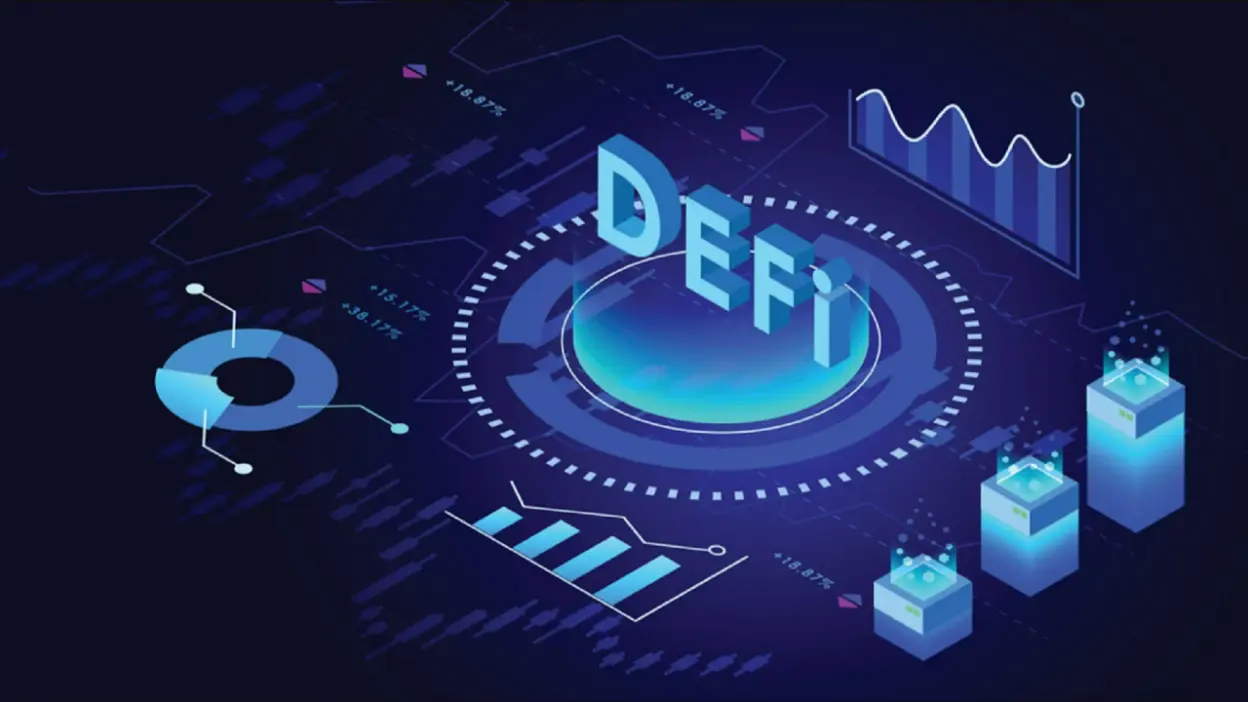
From modular chains to AI-driven automation, the rise of DeFi 3.0 signals a smarter, faster, and more connected future for decentralized finance
Introduction
Decentralized finance has made significant progress, transitioning from the wild yield farming frenzy of 2020 to the more structured liquidity incentives of DeFi 2.0.
DeFi 3.0 tackles the core problems that plagued its predecessors: scalability bottlenecks, fragmented ecosystems, and lack of seamless user experience.
This evolution introduces composability across chains, interoperability between ecosystems, and blazing-fast execution through advanced Layer 2s, appchains, and zero-knowledge proofs.
What makes The Rise of DeFi 3.0 truly transformative is its laser focus on infrastructure that doesn’t just scale—it communicates. Imagine a world where a lending protocol on Ethereum can trustlessly borrow liquidity from a Solana-based DEX in seconds.
Or where yield strategies span five blockchains without users ever needing to bridge manually. That future isn’t five years away—it’s happening now.
In this article, we’ll unpack how interoperability, composability, and hyper-efficiency are the architectural pillars defining the rise of DeFi 3.0.
From DeFi 1.0 to 3.0: Understanding the Evolution
To understand The Rise of DeFi 3.0, it’s essential to trace the evolution of decentralized finance from its earliest days to its current state. Each generation of DeFi built on the lessons—and shortcomings—of the last, culminating in a new wave of innovation that is faster, smarter, and far more integrated.
DeFi 1.0 (2020–2021): The Experimental Gold Rush
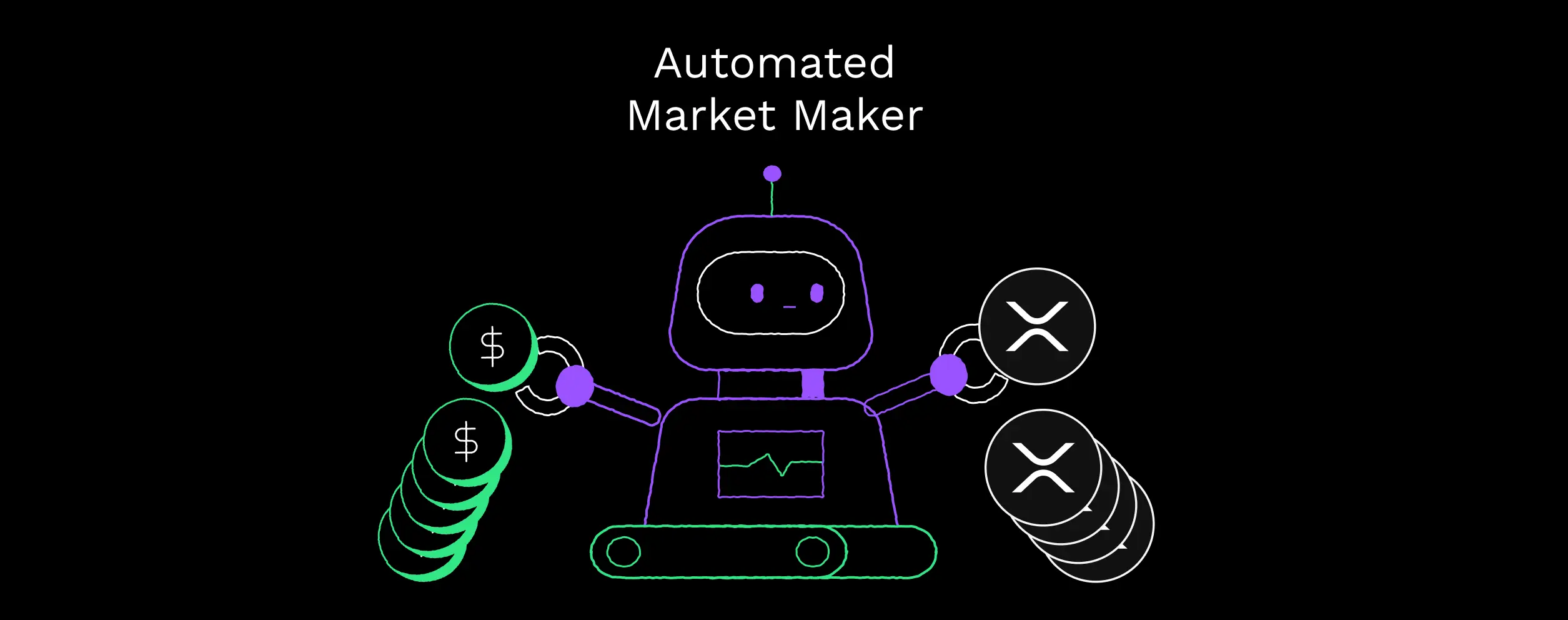
The first iteration of DeFi was marked by explosive growth, creative chaos, and sky-high yields. Built primarily on Ethereum, DeFi 1.0 gave birth to now-ubiquitous concepts like yield farming, automated market makers (AMMs), and governance tokens. Platforms like Uniswap, Compound, and Aave dominated the scene.
But with innovation came bottlenecks. Ethereum’s limited throughput led to exorbitant gas fees, and siloed applications made it hard for protocols to interact. Users were forced to jump through hoops—bridging assets, navigating different wallets, and paying premium fees for every interaction.
Despite these frictions, Total Value Locked (TVL) in DeFi surged, peaking at an all-time high of $250 billion in November 2021, according to DeFiLlama. The hype was real, but the foundation was shaky.
DeFi 2.0 (2022–2023): Sustainability Over Hype
Realizing that yield alone wasn’t sustainable, DeFi 2.0 introduced mechanisms to reinforce long-term protocol health. Innovations like protocol-owned liquidity (popularized by OlympusDAO) and bonding models allowed protocols to become self-sufficient, owning their liquidity rather than renting it from mercenary yield farmers.
DAOs became more structured, with treasury management and bonding curves taking center stage. Projects like Tokemak and Alchemix pushed the envelope with experimental liquidity coordination.
Yet, the ecosystem remained largely chain-specific. True composability across blockchains was limited. Bridging remained a security risk. In short, the DeFi stack got smarter—but not necessarily more connected or efficient.
DeFi 3.0 (2024–2025): Interconnected, Modular, and Lightning Fast
Enter The Rise of DeFi 3.0—an era defined by interoperability, modular design, and speed. Today’s DeFi protocols aren’t locked into a single blockchain. They’re cross-chain native, designed to operate seamlessly across Ethereum, Solana, Avalanche, and beyond.
Many of them are built on high-performance Layer 2 solutions (like Arbitrum, zkSync, and Base), or app-specific chains using the Cosmos SDK or Avalanche Subnets. These platforms allow for near-instant transactions, drastically reduced fees, and seamless user flows.
More importantly, liquidity is becoming abstracted. Projects like THORChain, LayerZero, and Wormhole enable asset transfers and composable functions across chains, while account abstraction and intent-based transactions improve UX for everyday users.
As of mid-2025, the DeFi market is resurging. After a long bear cycle, TVL is climbing back, approaching $120 billion and showing signs of sustainable growth—not just speculative froth.
The Rise of DeFi 3.0 isn’t just about better tools—it’s about turning DeFi into real financial infrastructure that can rival its TradFi counterparts in performance, usability, and global access.
What Makes DeFi 3.0 Different? Core Features Explained
The Rise of DeFi 3.0 is powered by networks that are not only interoperable but also composable and insanely fast. These aren’t surface-level improvements—they’re foundational changes that redefine how decentralized finance operates, scales, and serves users across ecosystems.
Let’s break down the three core features fueling this next wave of DeFi evolution.
Interoperability Without Bridges
In DeFi 1.0 and 2.0, moving assets or data between chains was clunky, slow, and risky—often reliant on wrapped tokens or brittle bridges.
DeFi 3.0 shatters that barrier by using advanced cross-chain messaging protocols like LayerZero, Axelar, and Wormhole. These systems enable smart contracts to communicate natively across blockchains without depending on risky custodial intermediaries.
The Cosmos Inter-Blockchain Communication (IBC) and Polkadot’s Cross-Consensus Messaging (XCM) are further pioneering unified liquidity networks where value can move trustlessly between sovereign chains.
Add to that gas abstraction, where users don’t even need to hold a native token to pay for transaction fees—suddenly, cross-chain DeFi feels as seamless as Web2 apps. This is a huge leap forward in UX and user adoption.
Composable Smart Contracts at Scale
DeFi 3.0 introduces true modular finance: composable building blocks that protocols can plug together like financial Lego.
Developers can now mix and match primitives—like lending vaults, yield aggregators, decentralized identity layers, and payment rails—without rebuilding everything from scratch.
SDK-driven ecosystems like dYdX v4 and zkSync’s Hyperchains enable this at scale, giving rise to ecosystems of apps that share logic, liquidity, and governance.
Even more revolutionary, AI agents are starting to play a role—automating strategy execution across protocols. These on-chain bots can monitor liquidity, assess yield, and rebalance positions in real time across multiple DeFi apps. It’s not just composability—it’s coordinated automation.
Insane Speeds and Low Fees
One of the most noticeable upgrades in The Rise of DeFi 3.0 is raw performance. With Ethereum’s Layer 2 scaling via zkEVMs like Polygon zkEVM, Linea, and Scroll, DeFi transactions have gone from sluggish to sub-second.
Emerging L1s like Sei, Monad, and Solana are pushing performance boundaries further, achieving sub-second finality and enabling high-frequency trading, real-time data feeds, and instant settlements—all with negligible fees.
Meanwhile, intent-based architectures (such as Anoma and Essential) reimagine how transactions are constructed. Instead of users sending fixed transactions, they express “intents”—and the network finds the most optimal execution path. This drastically reduces latency, prevents MEV attacks, and improves capital efficiency.
Together, these improvements make The Rise of DeFi 3.0 not only faster and cheaper—but smarter and more equitable for users across the board.
Infrastructure Powering DeFi 3.0
Underneath the polished interfaces and seamless user experience of modern DeFi lies a sophisticated and decentralized tech stack that makes it all possible.
The Rise of DeFi 3.0 is not just about protocols—it’s about infrastructure: the composable, modular, and intelligent foundation that supports a new generation of decentralized finance.
Modular Blockchains: The End of Monoliths
In DeFi 1.0 and 2.0, most protocols were built on monolithic blockchains—where consensus, execution, and data availability all occurred on a single layer.
This architecture limited scalability and flexibility. The Rise of DeFi 3.0 embraces a modular approach, where chains specialize and delegate specific tasks to optimized layers.
Projects like Celestia are leading the charge by offering data availability layers, allowing blockchains to offload data responsibilities without compromising security. EigenLayer, through re-staking, enables shared security across chains by letting Ethereum stakers secure additional middleware or services.
Meanwhile, Rollkit provides a rollup SDK that empowers developers to launch sovereign rollups on top of modular DA layers—essentially spinning up custom execution environments tailored to specific use cases.
This modular stack improves scalability, lowers costs, and allows for protocol-level experimentation without risking the base chain’s stability.
Decentralized Middleware: The Invisible Glue
Middleware has evolved from simple bridges into critical coordination layers that make DeFi 3.0 feel like a unified ecosystem.
Cross-chain routers such as Socket and LI.FI enable fluid asset transfers across dozens of chains, often abstracting away the underlying complexity for both users and developers. These protocols allow for one-click transactions that span multiple ecosystems—no bridges, no headaches.
On-chain identity and reputation systems like Gitcoin Passport and Verax introduce decentralized identity (DID) into DeFi. This means users can build persistent on-chain reputations, unlocking more personalized credit, governance, and access without sacrificing privacy.
Together, these tools form the middleware layer—the nervous system of DeFi 3.0—connecting applications, users, and assets across the chainverse.
AI and On-Chain Automation: Smart Protocols Get Smarter
AI is actively shaping the rise of DeFi 3.0. On-chain automation and intelligent agents are emerging as core components of the ecosystem.
Autonomous agents, such as those powered by Fetch.ai and integrated with Bittensor, allow for predictive market-making, liquidity management, and DAO coordination—all executed without human intervention. These agents can adapt to market volatility in real time and react across chains.
Risk modeling and portfolio optimization are also being supercharged by AI. Gauntlet offers risk parameters based on simulations for lending protocols, and Morpho Blue uses flexible vaults and AI to adjust risk management on the go.
This layer of machine intelligence brings DeFi closer to institutional standards of risk and performance management—without centralization.
Notable Projects Driving the DeFi 3.0 Wave
Below are five standout projects that are actively shaping the architecture and use cases of this new DeFi era.
Sei Network — High-Speed Layer 1 for DeFi

Sei Network is a purpose-built Layer 1 blockchain optimized for DeFi and trading applications. It offers sub-second finality, parallelized transaction execution, and minimal latency—making it ideal for high-frequency trading protocols. In The Rise of DeFi 3.0, Sei exemplifies the importance of infrastructure built specifically for speed and scalability, not just general-purpose computation.
dYdX v4 — Modular Derivatives on a Cosmos Appchain
With dYdX v4, the premier perpetuals trading platform has moved to its own Cosmos-based appchain. This transition gives it full control over execution and governance, aligning with DeFi 3.0’s modular ethos. By decoupling from Ethereum and building a custom, sovereign chain, dYdX showcases the benefits of ecosystem-specific optimization and full-stack flexibility.
Osmosis — The Hub of Interchain Liquidity

Osmosis is a decentralized exchange (DEX) at the heart of the Cosmos ecosystem. Its native support for IBC (Inter-Blockchain Communication) allows tokens to move seamlessly between different Cosmos zones, creating a unified liquidity network.
As The Rise of DeFi 3.0 prioritizes cross-chain coordination, Osmosis is a working proof of what true interoperability looks like in production.
Uniswap X — Cross-Chain Intents and Auction-Based Swaps
Uniswap X represents a major leap from traditional AMMs by introducing intent-based architecture. Rather than submitting direct swap transactions, users express intents (e.g., “swap this token for that one”), and the system finds the most efficient path to fulfill it.
Powered by decentralized auction mechanisms and off-chain execution, Uniswap X redefines how swaps can occur across chains—faster, cheaper, and more intelligently.
Pendle Finance — Programmable Yield Through Tokenization
Pendle Finance pioneers yield tokenization, allowing users to split yield-bearing assets into two separate components: the principal and the future yield.
This opens the door for fixed-income strategies, secondary markets for future yield, and structured DeFi products. It’s a perfect illustration of DeFi 3.0 composability, where yield itself becomes a liquid, tradable asset.
Real-World Use Cases Emerging in 2025
One of the clearest signs that The Rise of DeFi 3.0 is maturing is the emergence of real-world applications that go far beyond speculation.
From institutional adoption to global remittances and tokenized physical infrastructure, DeFi is evolving into a foundational layer for global finance.
DeFi as Institutional Infrastructure
Institutions are no longer cautiously observing from the sidelines—they’re deploying capital and infrastructure directly into DeFi-native environments.
In 2025, BlackRock began testing tokenized funds on an Avalanche subnet, leveraging the flexibility and performance of app-specific chains to manage fund issuance and redemption more efficiently.

Meanwhile, Circle’s USDC continues to expand across ecosystems—operating natively on Ethereum, Solana, Base, and newer networks like Sei.
This wide availability makes USDC the de facto stablecoin for institutional DeFi activity, enabling seamless capital flow across permissioned and permissionless platforms.
The movement of traditional finance into decentralized systems signals that The Rise of DeFi 3.0 is no longer an experiment—it’s an infrastructure layer being used by the biggest players in finance.
Global FX and Remittances
Cross-border payments and currency swaps are finally getting the DeFi treatment. Projects like THORChain allow native asset swaps across major crypto networks (BTC, ETH, AVAX, etc.) without wrapped tokens or centralized custodians. This functionality is unlocking decentralized foreign exchange (FX) on-chain.
Meanwhile, protocols like Kujira and Kima Network are bridging TradFi and DeFi in emerging markets. Kima focuses on compliance-friendly remittance rails, while Kujira enables low-cost decentralized finance products accessible to underserved users in Latin America and Africa.
In a world of fragmented payment systems and high remittance fees, The Rise of DeFi 3.0 offers a seamless, borderless alternative—no bank required.
DePIN x DeFi: Tokenizing Real-World Infrastructure
The convergence of DePIN (Decentralized Physical Infrastructure Networks) and DeFi is giving rise to new types of yield strategies powered by real-world activity.
Protocols like Filecoin, Hivemapper, and IoTeX represent physical networks—storage, mapping, and IoT respectively—that generate token-based rewards for participation. In 2025, these tokens are increasingly being integrated into DeFi vaults, lending markets, and structured products.
Imagine staking IoTeX tokens in a liquidity vault that dynamically reallocates based on network traffic, or bundling Hivemapper rewards into a synthetic DeFi index—this is no longer speculative fiction.
By blending real-world infrastructure with decentralized finance, The Rise of DeFi 3.0 is transforming utility tokens into capital assets with measurable on-chain value.
Conclusion
The Rise of DeFi 3.0 marks a profound turning point in the evolution of decentralized finance. Where DeFi 1.0 was experimental and fragmented, and DeFi 2.0 introduced economic sustainability, this third wave brings it all together—speed, interoperability, and composability at a level that’s both usable and scalable.
From modular blockchains and cross-chain messaging to AI-powered automation and institutional-grade adoption, the building blocks of finance are now machine-readable and universally accessible.
Entire financial ecosystems are now able to coordinate across multiple blockchains, multiple users, and multiple intents, all in real time.
The Rise of DeFi 3.0 represents the dawn of programmable finance that’s finally usable at scale—interoperable, composable, and insanely fast.
It’s not just a tech upgrade; it’s a shift in financial logic, where human-designed markets can be optimized, automated, and executed by intelligent agents with zero borders or middlemen.
As traditional finance gradually adopts decentralization and crypto-native projects attain production-level maturity, the distinction between on-chain and off-chain finance is starting to become increasingly hazy. DeFi 3.0 is about financial coordination at machine speed—trustless, borderless, and built to last.
FAQ
What is DeFi 3.0?
DeFi 3.0 is the next evolution of decentralized finance focused on interoperability, composability, and lightning-fast transactions.
How does DeFi 3.0 differ from earlier versions?
A: It introduces modular chains, AI integration, and cross-chain liquidity, solving DeFi 1.0/2.0 pain points like slowness and fragmentation.
Which projects are leading DeFi 3.0?
A: Projects like dYdX v4, Osmosis, Sei, and Uniswap X are pioneering DeFi 3.0 with cutting-edge infrastructure.