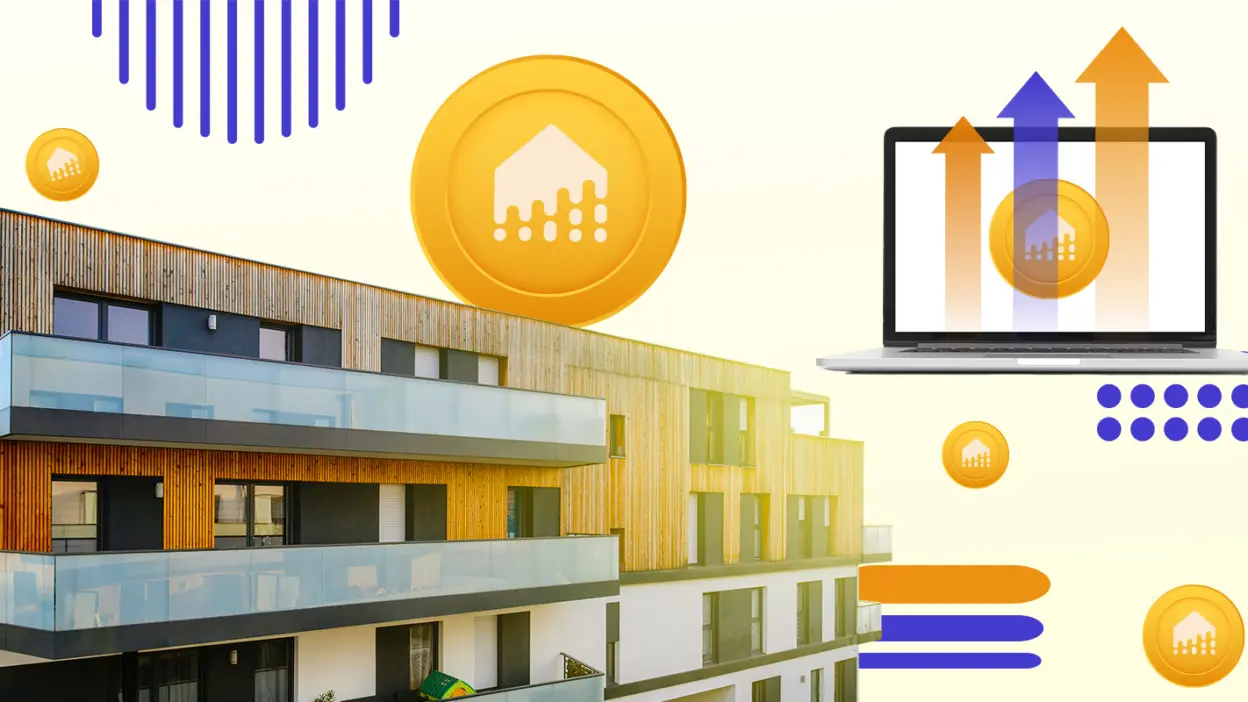
Tokenized real estate is revolutionizing how we buy, sell, and invest in property in 2025
At its core, tokenized real estate refers to the process of converting physical property ownership into digital tokens on a blockchain—making it possible for investors to purchase fractional shares of real-world properties as easily as trading stocks or crypto assets. Platforms like RealT, Lofty, and Brickken are leading this shift, enabling everyday investors to gain exposure to rental income and property appreciation for as little as $50. In 2024 alone, the global market for tokenized assets surpassed $5 billion, with tokenized real estate accounting for a significant portion of that momentum.
As blockchain adoption deepens across industries, tokenized real estate is increasingly seen not just as a niche experiment but as a viable, scalable solution to democratize property ownership. With regulatory clarity improving in markets like the U.S., UAE, and Singapore, the future of real estate investing has never looked more open or more digital.
- 1 What Is Tokenized Real Estate?
- 2 How Tokenized Real Estate Works
- 3 Key Benefits for Investors
-
4
Platforms Leading the Charge in Tokenized Real Estate (2025)
- 4.1 RealT: U.S.-Based Rental Income Made Simple
- 4.2 Lofty AI: Daily Liquidity, Instant Income, and On-Chain Governance
- 4.3 Smartlands: Europe’s Gateway to Digital Property Ownership
- 4.4 RedSwan CRE: Institutional-Grade Commercial Real Estate
- 4.5 Why Platform Differentiation Matters in Tokenized Real Estate
- 5 Who’s Investing and Why It Matters
- 6 Conclusion
What Is Tokenized Real Estate?
Tokenized real estate is the process of transforming ownership rights to physical properties into digital tokens recorded on a blockchain.
These tokens represent a specific share of the asset—allowing investors to purchase, sell, or trade fractions of a property without traditional intermediaries like brokers or banks.
In technical terms, this process involves creating security tokens, which are digital representations of ownership that comply with financial regulations, and utility tokens, which provide access to certain services or benefits within a real estate platform.
The backbone of tokenized real estate lies in smart contracts—self-executing agreements coded directly onto a digital ledger (blockchain)—ensuring transparent, automatic, and trustless transactions between parties.
And here’s where it gets interesting: Why own one whole building when you can own 0.0004 of a penthouse in Manhattan? That’s the promise of tokenized real estate—fractional ownership with global access, all powered by blockchain.
Leading platforms such as RealT, Lofty AI, Brickblock, and SolidBlock offer real-world applications of this concept.
For example, Lofty AI allows investors to earn rental income daily from tokenized properties in the U.S., with entry points as low as $50.
Meanwhile, RealT provides access to tokenized properties in Detroit and Chicago, offering instant liquidity via secondary markets.
One notable case study is the Aspen Digital Token—a luxury resort in Colorado that raised millions through tokenized shares on the tZERO platform.

Similarly, SolidBlock famously helped tokenize the St. Regis Aspen Resort, allowing accredited investors to participate in real estate ownership without traditional real estate hurdles.
As blockchain integration deepens in real estate, tokenized real estate is emerging as a cornerstone of a more inclusive, liquid, and tech-savvy property market—redefining what it means to own real estate in the digital era.
How Tokenized Real Estate Works
Here’s a step-by-step breakdown of how the tokenized real estate model works in 2025:
Property Acquisition
The process begins with a property owner or real estate firm acquiring a physical asset, such as a residential unit, commercial space, or mixed-use building.
This property becomes the underlying asset for digital tokenization.
Legal Structuring and Token Creation
Before anything is tokenized, legal compliance is essential. This step ensures that the token qualifies as a security token and abides by relevant financial regulations (e.g., SEC in the U.S. or MiCA in the EU).
Once approved, a smart contract is created to govern the token’s terms—like dividend rights, ownership rules, and transferability—on a blockchain network.
Fractionalization
The smart contract divides the property into thousands of digital tokens, each representing a fractional ownership stake.
For example, a $1 million property may be split into 100,000 tokens at $10 each—opening the door to fractional property ownership for everyday investors.
Listing on a Marketplace
After fractionalization, tokens are listed on a compliant marketplace like Lofty AI, RealT, or tZERO, where users can buy, sell, or trade them just like cryptocurrencies or stocks.
Investors often receive rental income or a share of appreciation based on the number of tokens they hold.
Trading and Management
Once live, the tokens can be traded peer-to-peer or on secondary markets, with all transactions recorded on a digital ledger.
This immutable system eliminates fraud and reduces the need for paperwork and intermediaries, significantly improving operational efficiency.
The Role of Blockchain
Blockchain is the core technology behind tokenized real estate, ensuring every transaction is:
- Transparent: All ownership changes and income distributions are traceable.
- Immutable: Once recorded, data cannot be altered—boosting investor trust.
- Efficient: No middlemen, no delays—smart contracts automate everything from payouts to ownership transfers.
Key Benefits for Investors
Tokenized real estate offers a radically more accessible, efficient, and globally inclusive investment landscape compared to traditional property investing.
As of mid-2025, over $7 billion in property assets have been tokenized across platforms like RealT, Brickblock, and SolidBlock, according to data compiled from Deloitte and MSCI.
This growth is being driven by a new class of investors seeking to break into real estate without legacy barriers.
Fractional Ownership: Lower the Barrier to Entry
Perhaps the most transformative aspect of tokenized real estate is the ability to invest in property with minimal capital.
With fractional ownership, investors can participate in real estate markets for as little as $50 to $500, depending on the platform.
This drastically lowers the entry threshold, enabling broader participation from millennials, Gen Z investors, and those in emerging markets.
By splitting property ownership into thousands of blockchain tokens, tokenized platforms democratize access to what was once the domain of wealthy individuals and institutions.
For example, Lofty AI allows users to purchase a fraction of a U.S. rental property and start earning rental income the very next day—no credit checks, no mortgage.
Liquidity: Trade Real Estate Like Stocks or Crypto
Unlike traditional real estate—which is notorious for its illiquidity and long transaction cycles—tokenized real estate introduces near-instant liquidity via secondary markets.
Investors can buy or sell tokens 24/7 through platforms that support compliant peer-to-peer transactions.
This shift is game-changing. Real estate has historically been a long-term, tied-up asset. But now, with tokenized real estate, an investor can exit a position in minutes rather than months.
Marketplaces like tZERO and RealT offer trading interfaces akin to crypto exchanges, providing real-time price discovery and order matching—features completely absent in legacy real estate.
Global Access: Borderless Property Investment
Tokenized real estate opens the doors to global property markets without the need for intermediaries, travel, or complex legal arrangements.
An investor in Nigeria can easily buy tokens representing a rental duplex in Chicago or a co-living space in Berlin—all through a mobile device and a crypto wallet.
This kind of borderless investing removes the traditional friction of currency conversion, banking limitations, and jurisdictional red tape.
Smart contracts ensure compliance is coded into the transaction, eliminating the need for cross-border paperwork and significantly lowering transaction fees.
In an increasingly globalized investment ecosystem, tokenized real estate gives everyday investors access to markets previously out of reach, expanding their portfolio beyond local opportunities.
Passive Income: Earn Without the Landlord Headache
Tokenized real estate isn’t just about capital appreciation—it also offers steady passive income. Investors earn rental yields proportionate to the number of tokens they hold, and payments are often made in stablecoins like USDC or platform-native tokens.
These rental distributions are managed automatically by smart contracts, which execute payouts on a daily, weekly, or monthly basis, depending on the project.
This means no tenant management, no property maintenance, and no late-night repair calls—just automated, predictable income.
Platforms like RealT distribute rental income daily, allowing investors to benefit from real estate cash flows without the operational stress of being a landlord. It’s real estate investing reimagined for the digital age.
Smart Contract Automation: Streamlining Everything
Underpinning the entire tokenized real estate model is blockchain’s most powerful feature: smart contracts.
These are programmable agreements that automatically execute transactions and enforce compliance, removing the need for lawyers, agents, and escrow services.
Smart contracts handle everything from ownership transfers and income distribution to tax reporting and governance.
For example, when a property pays out rental income, the smart contract calculates the amount due to each token holder and initiates an automatic payout—no manual action required.
This level of automation drastically reduces friction, human error, and transaction costs. It also ensures transparency and auditability, as every action is recorded on the blockchain’s immutable ledger.
Platforms Leading the Charge in Tokenized Real Estate (2025)
Tokenized real estate has rapidly evolved from a speculative concept into a robust sector supported by legally compliant, blockchain-native platforms.
In 2025, several key players are leading the charge, each offering unique models for fractional property ownership, digital governance, and real-world asset exposure.
These platforms aren’t just digitizing property—they’re reshaping the global real estate investment landscape by removing entry barriers, enhancing liquidity, and automating trust through smart contracts.
Let’s explore the standout platforms driving tokenized real estate forward, and what differentiates them in this fast-growing sector.
RealT: U.S.-Based Rental Income Made Simple
Founded in the United States, RealT is one of the earliest pioneers in tokenized real estate, specializing in fractional ownership of residential rental properties across major U.S. cities like Detroit, Cleveland, and Chicago.
What sets RealT apart is its focus on cash-flowing assets—each token represents a share in a property that generates daily rental income.
Tokens are issued as Regulation D securities, meaning they are legally compliant with U.S. investment laws.
RealT’s model includes stablecoin payouts (USDC or DAI) sent directly to investors’ wallets, often on a daily basis.
RealT also integrates with Ethereum and Gnosis Chain, making it accessible to the broader DeFi ecosystem.
For investors seeking stable, income-generating U.S. real estate with automated, smart contract-managed distributions, RealT remains a benchmark in the tokenized real estate space.
Lofty AI: Daily Liquidity, Instant Income, and On-Chain Governance
:max_bytes(150000):strip_icc()/INV-Review-Logo-Template-Reviews-Lofty-76fd690e59b0467c8dc6d53f1b84fa63.jpg "Tokenized Real Estate: Investing in Property Through Blockchain - Protechbro: Top Stories on Bitcoin, Ethereum, Web3, & Blockchain")
Lofty AI has emerged as one of the most dynamic tokenized real estate platforms in 2025. Its standout feature? Daily liquidity.
Investors can buy and sell tokens instantly through Lofty’s secondary market, with no lock-in periods. Unlike traditional REITs or even other tokenized platforms, Lofty allows full exit flexibility at any time—24/7.
Each property on Lofty is structured as an LLC, and investors receive a proportional interest by owning tokens linked to that entity. Properties generate daily rental income, paid out to investors in USD or stablecoins.
But what truly differentiates Lofty is its governance model. Token holders can vote on key property decisions—from selecting contractors to determining whether to sell or renovate.
This introduces a layer of on-chain democracy rarely seen in traditional real estate structures.
Lofty also uses AI-powered analytics to evaluate properties before onboarding them to the platform, helping mitigate risk and prioritize high-yield assets.
In 2025, Lofty has expanded globally, with assets now available in markets outside the U.S., including parts of Latin America.
Smartlands: Europe’s Gateway to Digital Property Ownership

While many platforms focus on U.S.-based real estate, Smartlands is pioneering tokenized real estate across Europe and the UK.
Built on the Stellar blockchain, Smartlands differentiates itself through a regulated structure and partnerships with licensed custodians and asset managers.
Smartlands has focused heavily on compliance-first models, offering tokenized securities that adhere to EU financial laws like MiFID II and the upcoming Markets in Crypto-Assets (MiCA) regulation.
This regulatory commitment has made it a preferred option for institutional and accredited investors seeking exposure to UK and European real estate.
Smartlands supports a wide range of property types—from commercial offices in London to agricultural assets in Eastern Europe—making it one of the most diversified platforms geographically and structurally.
Its native SLT token is used for governance and staking, and the platform recently launched a digital ID verification system to streamline compliance across jurisdictions.
In the context of tokenized real estate, Smartlands is helping create a blueprint for secure, pan-European real estate investing on the blockchain.
RedSwan CRE: Institutional-Grade Commercial Real Estate
RedSwan CRE focuses on a niche that other platforms only touch lightly: commercial real estate (CRE).
Targeting high-net-worth individuals and institutional investors, RedSwan tokenizes office buildings, retail spaces, and mixed-use developments, primarily in the United States but increasingly expanding into Asia and the Middle East.
Each asset is structured as a real estate-backed digital security, and tokens are offered under Regulation S and Regulation D exemptions, allowing both U.S. and offshore participation.
In 2025, RedSwan is one of the few platforms enabling multi-million-dollar projects to be split into fractional shares, allowing investors to diversify their portfolio across prime CRE markets.
A major innovation on the RedSwan platform is its staking model. Investors can stake their property tokens to earn platform-native RSWN tokens or qualify for priority access to new offerings.
The platform also provides detailed analytics dashboards, offering insights on occupancy rates, cash flow projections, and lease terms.
For those interested in high-yield, institutional-quality assets within the tokenized real estate space, RedSwan CRE offers a premium, data-driven experience.
Why Platform Differentiation Matters in Tokenized Real Estate
Each of these platforms offers its own distinct value proposition:
- RealT excels at stable, income-generating U.S. rental properties with ultra-low entry points.
- Lofty AI introduces liquidity and governance, offering flexibility and democratic participation.
- Smartlands brings legal robustness and cross-border access to regulated European markets.
- RedSwan CRE targets the institutional end, unlocking tokenized exposure to high-value commercial developments.
Understanding these differences is crucial for investors navigating the tokenized real estate market in 2025. Depending on your risk tolerance, geographic focus, or income goals, one platform may offer a more suitable model than another.
Who’s Investing and Why It Matters
Understanding who’s investing in tokenized real estate—and why—is key to grasping its long-term potential and relevance in global capital markets.
Retail Investors: Gaining Access to Gated Wealth
Historically, real estate has been an elite investment class—reserved for individuals with access to large capital, credit, and legal infrastructure.
But with tokenized real estate, that model is collapsing. Retail investors are now entering markets once closed off to them, purchasing fractions of residential or commercial property with as little as $50 to $500.
Platforms like Lofty AI and RealT have seen user growth surge in 2024 and 2025, with the majority of users classified as retail investors.
This trend is supported by the frictionless, mobile-first nature of the platforms. With just a crypto wallet and internet access, an investor from Nairobi, São Paulo, or Jakarta can access U.S. or European real estate markets directly—without a bank or broker.
This democratization is more than symbolic. According to a 2025 MSCI study, retail ownership of tokenized real estate assets grew by over 240% year-over-year, now accounting for nearly $1.8 billion of the estimated $7 billion tokenized real estate market.
That seismic shift reflects growing trust in blockchain-backed property investment—and a hunger for accessible wealth-building tools.
Millennials and Gen Z: Digital-First and Diversified
Millennials and Gen Z are the primary drivers of the digital asset revolution, and they’re bringing that same mindset to property markets.
These generations are deeply skeptical of traditional finance, often distrustful of legacy institutions, and gravitate toward platforms that offer transparency, self-custody, and real-time access.
Tokenized real estate fits perfectly into that worldview. Unlike REITs, which feel corporate and opaque, tokenized assets offer direct fractional ownership, on-chain governance, and DeFi integrations.
Gen Z investors are especially drawn to the ability to receive passive income in stablecoins, participate in DAO-style voting, and monitor portfolio performance from their phones.
Recent surveys by Bitwise and Coinbase show that over 62% of crypto-native investors aged 18–35 expressed interest in digital real estate if it included low minimums, rental income, and global diversification.
These investors are not buying a house to live in—they’re buying 0.0004 of a Miami duplex to earn yield and gain equity.
As millennials age into their peak investment years and Gen Z becomes increasingly influential, tokenized real estate offers the kind of asset class they’re eager to embrace: accessible, digital, and built on blockchain.
Institutional Investors: Entering the Digital Arena
While retail adoption has surged, 2025 marks a tipping point for institutional investment in tokenized real estate.
Major asset managers like BlackRock, KKR, and Brookfield are actively exploring tokenization as a means to unlock liquidity and broaden investor participation in traditionally illiquid private markets.
BlackRock CEO Larry Fink has publicly stated that “tokenization of financial assets will be the next generation for markets,” and in Q1 2025, the firm launched a pilot tokenized real estate fund on Ethereum, backed by commercial real estate in Singapore.

Likewise, KKR recently began trialing the fractional sale of real estate debt instruments using security tokens—a move that could reshape how CRE deals are syndicated.
Institutional appetite is growing for several reasons:
- Liquidity creation in illiquid asset classes
- Cost reduction through automation and smart contracts
- Expanded investor base through fractionalization
- Regulatory readiness, particularly as markets like the UAE and Singapore establish clear frameworks for tokenized assets
In 2025, more than $2.5 billion of institutional-grade property has been tokenized under Reg D and Reg S structures.
As tokenized vehicles mature, institutional trust is accelerating adoption, infrastructure development, and legitimacy.
ESG and Impact Investing: A New Use Case for Tokenized Housing
Beyond profit, tokenized real estate is also being embraced as a vehicle for ESG-aligned investing.
In a time of worsening housing crises and climate concerns, tokenization provides a transparent and accountable way to fund socially responsible projects.
Developers are using blockchain to fund affordable housing, green buildings, and climate-resilient infrastructure—backed by tokens that embed impact metrics directly into smart contracts.
For instance, some platforms now issue tokens that tie yield performance to energy efficiency ratings or sustainable materials use, aligning investor incentives with environmental outcomes.
Tokenized housing cooperatives are emerging as well, where local communities can co-own buildings through fractional shares—offering a powerful blend of financial inclusion and community governance.
This shift reflects broader trends: ESG tokenized assets grew 190% in 2024, according to data from the Global Impact Blockchain Index. By 2026, they’re projected to represent 15% of all tokenized real estate offerings.
From low-carbon construction to social housing DAO initiatives, tokenized real estate is becoming a natural fit for the next generation of impact-conscious capital.
Conclusion
Tokenized real estate is revolutionizing property investment by making it more democratic, transparent, and liquid.
Through fractional ownership, investors can buy into real-world assets with as little as $50, gaining access to income-generating properties once limited to the wealthy.
Blockchain technology ensures transparent ownership, automated income payouts, and around-the-clock liquidity via secondary markets—all managed through secure, self-executing smart contracts.
This digital-first approach is attracting a diverse mix of retail, institutional, and impact-focused investors, redefining the dynamics of global real estate.
However, while the opportunities are vast, so are the responsibilities. Investors must conduct thorough research, assess platform credibility, and understand their risk tolerance before diving in.
Tokenized real estate is not just a passing trend—it’s a foundational shift in how property is bought, sold, and owned in the digital age.
As this ecosystem matures, it’s positioning itself as a core pillar of next-generation investing for anyone ready to embrace real estate’s digital renaissance.