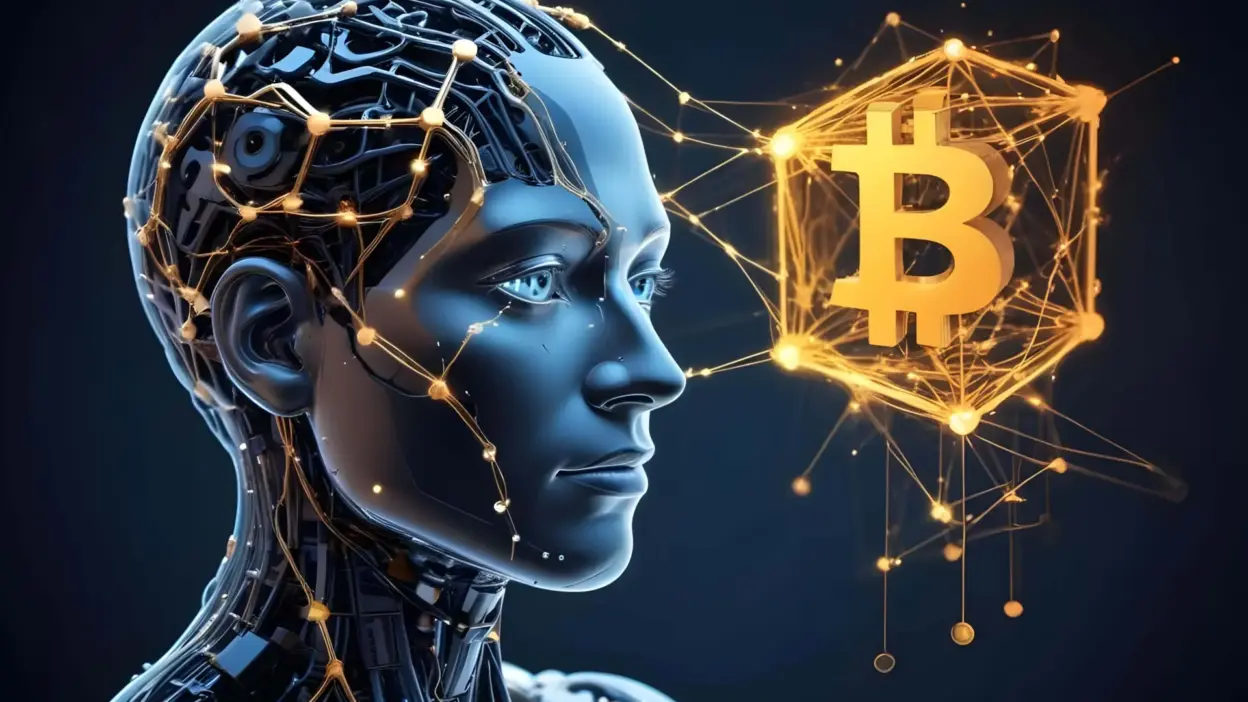
AI is changing KYC and compliance in crypto exchanges by making onboarding faster, detecting fraud in real time, and adapting to new rules around the world more easily
When it comes to Bitcoin, trust and safety are very important. Crypto sites used to be little shops where people could buy and sell things. These markets are now worldwide, and every day, billions of dollars change hands.
As the business grows, politicians, governments, and users are putting more pressure on it to stop fraud, money laundering, and other financial crimes. Know Your Customer (KYC) rules help with this.
There has always been a lot of paperwork, and the KYC process has been slow. This makes users angry and puts a lot of stress on platforms. When compliance is seen as a pain rather than a safety measure, people often think so.
This is because so many checks have to be done by hand, hiring takes a long time, and mistakes happen. Things are different now. As AI becomes more famous, it changes how cryptocurrency exchanges verify users’ identities, hunt for fraud, and make sure they follow the laws made by lawmakers.
Right now, exchanges depend on new technologies that help things run more easily and keep users safe. Real-time fingerprint scans and AI-driven transaction tracking are two examples of these technologies. This means that AI is not only making people more compliant, but it is also changing how people trust each other in a digital world.
- 1 Understanding KYC and Compliance in Crypto Exchanges
- 2 The Role of AI in KYC & Compliance
- 3 Benefits of AI-Powered KYC for Crypto Exchanges
- 4 Use Cases of AI in KYC & Compliance in Crypto Exchanges
- 5 Challenges and Concerns of Using AI in KYC & Compliance
- 6 The Future of AI in Crypto Compliance
- 7 Conclusion
Understanding KYC and Compliance in Crypto Exchanges
In the crypto business, Know Your Customer (KYC) and following the rules are very important. Keep reading to learn why. AI is making regulations more interesting.
Know Your Customer (KYC) checks users to make sure they are who they say they are and aren’t doing anything illegal, like laundering money, fraud, or sending money to terrorists. Some of the things that are needed are IDs from the government, proof of address, and sometimes biometric data. This check not only helps the government trust the site, but it also protects real users from fake ones.
Following the rules isn’t just a way to show who you are. These rules are for cryptocurrency platforms and are known as AML (Anti-Money Laundering) and CTF (Counter-Terrorism Financing). If they see any deals that don’t seem right, they should tell the government about them. If you don’t follow the rules, you could get fined, banned, or even shut down. This has happened to a number of well-known swaps in the past.
But it has always cost a lot of time and money to make sure people follow the rules the old way. Users can get upset by having to wait a long time for verification or having to check papers by hand. This might make them not want to sign up or even lose business for swaps.
All over the world, crypto rules are getting tighter. This means that companies need to quickly find options that are faster, more reliable, and scalable.
The Role of AI in KYC & Compliance
Crypto companies use AI to change how they handle Know Your Customer (KYC) and compliance. AI is automating tasks that people used to do that took a lot of time, cost a lot of money, and were prone to mistakes. Systems with AI can check names, documents, and signs of strange behavior in real time, so they don’t have to be read by hand.
AI can quickly handle a lot of user info, which is one of its best features. Machine learning systems can quickly compare an ID, passport, or driver’s license to records from all over the world to make sure it is real. Also, this speeds up the process and makes it more accurate than human proofreading. It also takes less time to train new users.
The use of AI to spot scams and keep risk in check is also very important. PCs can now find odd trends in transactions, like big moves that happen out of the blue, small deals that are meant to be hidden over and over, or activity coming from dangerous places. People don’t learn and change all the time, but AI programs do. They do it for longer as they get better at noticing strange behavior.
Besides that, it works really well for recognizing faces. AI lets us do things like match sounds, find faces, and tell if someone is still alive. It will be harder for thieves to use fake or stolen names. This, along with the fact that anyone can use blockchain, makes it almost impossible to steal.
AI saves time for compliance teams and helps them get more done in less time. These tools can send warnings right away, help move cases with a lot of risk to the top of the list, and make sure that all legal records are correct. Firms save money this way, and compliance officers can focus on cases that are tougher and need their skills and knowledge.
KYC and compliance used to have to be done by hand and after the fact. AI turns them into a system that does it all by itself and can grow with the crypto industry.
Benefits of AI-Powered KYC for Crypto Exchanges
For crypto companies, adding Know Your Customer (KYC) tools that are run by AI is very helpful. Compliance goes from being a legal pain to an advantage in the market. One of the best things about it is the following:
Faster User Onboarding
Regular KYC checks can take hours or even days because people mess up and have to read each paper by hand. AI makes it easy to check IDs, biometrics, and world records to make sure someone is who they say they are. This makes regulations work better and gives users a better experience. That makes it easy for new customers to sign up and makes them more interested in the process.
Improved Accuracy and Fraud Detection
The AI and bots are much better than people at finding deepfakes, fakes, and pictures that have been changed. The models that use machine learning get better over time. They can now handle different kinds of scams better and get rid of more fake threats. This keeps the safety of sites high and makes it less likely that bad people will join.
Cost Savings for Exchanges
It costs more to do business because KYC and compliance tasks need a lot of people to do them. As AI checks more things on its own, it saves money on wages while still making sure that strict rules are maintained. Saved cash can be used for new ideas, safety, and good customer service.
Real-Time Monitoring and Compliance
Not only does AI help with hiring, but it also keeps an eye on deals that are going on right now. Algorithms can quickly spot anything that doesn’t seem right. They can also keep an eye on odd trade trends and look for signs of money laundering. These and CFT (Counter Financing of Terrorism) rules make sure that sites are always up to date.
Enhanced Global Compliance
Know Your Customer (KYC) rules are different in each country. AI systems can learn how to work with different types of law from different places. This means that trade can grow around the world without breaking the law.
Better Customer Trust and Security
Name verification is faster, more reliable, and safer for crypto sites and their users when it takes place with AI powering KYC. In turn, this helps everyone trust each other more. For an area with a bad reputation for safety risks and not having enough police, this is very important.
People will trust crypto companies more if they follow the rules. It goes faster, costs less, and is safer. Now that AI is around, compliance can really help with growth and safety. This is because AI is quick, accurate, and can work with people from everywhere.
Use Cases of AI in KYC & Compliance in Crypto Exchanges
AI is not just a cool word in crypto compliance; it is changing how markets follow the rules while keeping speed and security high. AI is used in a number of important ways in KYC and compliance, such as these:
Biometric Verification
It is very easy to tell who someone is when AI is used to power face and fingerprint scans. Swaps don’t have to only use government IDs to make sure the person in front of the screen is the same person on the IDs. They can also check fingerprints. ID theft and deepfake scams are less likely to happen now.
Document Authentication
Bills, IDs, and driver’s licenses can all be quickly checked by AI to see if they are fake, have been messed with, or are out of date. When people work together, Optical Character Recognition (OCR) and machine learning can find mistakes that people might miss. This makes sure that only real people are added.
AML Transaction Monitoring
Every payment should be tracked by exchanges so that people don’t hide money and give it to attackers. Trading is always being watched by AI systems, which note any odd trends, like a lot of small trades, quick withdrawals, or transfers between countries that don’t make sense. Being proactive in this way makes AML compliance better.
Risk Scoring and Customer Profiling
People have risk numbers that are based on where they live, what deals they’ve made in the past, and how they act. When you mark an account as a big risk, you can look at it more closely. You can make better use of your safety staff this way.
Sanctions and PEP Screening
AI is always searching for Politically Exposed Persons (PEPs), sanctions lists, and watchlists in global systems. Exchanges can’t do business with some people or groups because of rules around the world. This stops them from doing that.
With AI, fingerprint checks and real-time AML tracking are getting faster, smarter, and safer for KYC and compliance. This way, exchanges can stay out of scams, follow the rules, and earn users’ trust.
Challenges and Concerns of Using AI in KYC & Compliance
Know Your Customer (KYC) and following the rules might change because of AI, but it’s not quite there yet. Markets can be made more dangerous when AI is used too much. These new risks need to be carefully managed. These things should be on your mind:
Bias in AI Algorithms
AI is most useful when it can learn from what you show it. If the training data isn’t fair, like if it doesn’t show the same mix of groups, the AI might fail to recognize or ignore real users for no reason. There’s a chance that this will lead to wrong conclusions or an unfair welcome.
Data Privacy Concerns
For Know Your Customer (KYC), private data about people is taken, such as fingerprint data. Hackers might try to get to these records if they are not kept safe. There should be no data breaches if AI-driven compliance can be quick and keep data safe at the same time.
Regulatory Uncertainty
Officials all over the world are still getting used to tools that use AI to hold people accountable. A proof method based on AI might not always work, which could leave legal holes for exchanges that do business all over the world.
False Positives and Negatives
The AI isn’t very good. Compliance teams have to do more work when safe trades are marked as worrisome. This is called a false positive. Sometimes, really bad behavior is missed, which can lead to false negatives. This means that exchanges could be fined by officials.
High Implementation Costs
It costs a lot of money to buy tools, hire people, and train them in order to make and keep AI compliance systems that work well. For smaller coin exchanges, these fees might be too high compared to other, more common ways to do things.
These things can change with AI, but there are also some risks. Markets need to be careful when they use AI because of bias, privacy problems, unclear rules, and high costs. Auto-review and review by a person work best to build trust and long-term obedience.
The Future of AI in Crypto Compliance
For Know Your Customer (KYC) and following the rules, AI will become more important as the Bitcoin market grows. More attention is being paid to markets by lawmakers around the world. To stay competitive and follow the rules, they need to use better tools that can adapt to their needs. The next set of regulatory tools will be shaped by AI in a big way.
Integration with Decentralized Identity (DID) Systems
To give users more control over their personal data, AI and autonomous identity solutions will work together more and more. At the same time, real-time market checks will make sure they are following the rules. Without trust, proof gets better in this way, and the privacy risk goes down.
Real-Time, Proactive Compliance
If AI runs systems, they will be able to keep an eye on things all the time, not just after the fact. They will notice odd behavior, actions that make sense with wallets, and a possible scam before it happens. This makes it easier and better to follow the rules.
Smarter Global Regulatory Adaptation
A lot of places have different rules, and as AI grows, it will help companies change their rules-following processes right away. Businesses all over the world might be able to save money and time by being able to adapt quickly.
Enhanced Fraud Detection with Predictive Analytics
From now on, AI tools will be able to do more than just look for trends. Also, they’ll be able to tell ahead of time which people or wallets are going to do something bad. To stop people from moving money, this will make AML even stronger.
AI-Human Hybrid Models
AI will not be a safety cop, but a good co-pilot. From now on, there will be mixed models where AI looks at a lot of data, and people work on cases that are harder and need more judgment and background knowledge.
We need to make systems that are proactive, protect privacy, and can change to fit different places around the world for AI to really help with crypto compliance. Know Your Customer (KYC) will be easy with these tools, and platforms will stay ahead of what officials need.
Conclusion
As AI gets better, it quickly changes how crypto platforms handle standards and Know Your Customer (KYC). Now, smart tools that can grow with you do the checks. People used to do them by hand, which took a long time. With AI, they can hire people faster, spot scams in real time, and quickly adjust to new roles. This also makes things better for the customer.
But there are still problems, like computer bias, relying too much on technology, and worries about data privacy. This is the best way for exchanges to use AI: they need to use both powerful AI solutions and strict controls and human oversight.
There will be more rules about it, and the crypto business will grow all over the world. Not only will AI help markets follow the rules, but it will also give them an edge in the long run if they put safety, trust, and openness first.