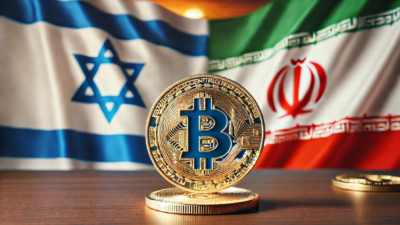

Bitcoin has changed from a speculative asset to a key geopolitical hedge around the world. It protects people from inflation, sanctions, and financial inflation in a decentralized way.
People used to think of Bitcoin as a risky investment or “internet money,” but by 2025, it will be a big part of the world’s money system. Traditional financial systems are under a lot of stress because of economic uncertainty, geopolitical conflicts, and falling currencies. Bitcoin is seen as more than just a way to keep value. People also see it as a way to keep themselves safe from global risks.
Blockchain technology is now being used by governments, businesses, and large investors to spread out their holdings, protect themselves from inflation, and stay financially independent in a world that is changing quickly. This change shows how Bitcoin has grown from a new testing technology to a tool for geopolitical strategy.
- 1 Geopolitical Uncertainty and the Search for Safe Havens
- 2 Why Bitcoin Is Becoming a Geopolitical Hedge in 2025
- 3 How Central Banks Are Responding to Bitcoin’s Rise
- 4 The Role of Institutional Investors and Corporations
- 5 Bitcoin vs. Gold: The Digital Safe Haven Debate
- 6 Potential Risks and Challenges in Bitcoin’s Role as a Geopolitical Hedge
- 7 Conclusion
Geopolitical Uncertainty and the Search for Safe Havens
People who have money have always looked for safe places to put it when the world’s politics are a mess. Gold, the U.S. dollar, and U.S. Treasury bills have all done that job in the past.
However, rising conflicts in Eastern Europe, the Middle East, and some parts of Asia have shown that investments that used to be safe aren’t as safe as they used to be. It is clear that governments can limit or control centralized assets because of issues like inflation, bans, and having too much debt.
Bitcoin, on the other hand, is not controlled by any one country or bank. As an alternative, it’s a good choice since it doesn’t have any limits and has a decentralized network. If you want to protect yourself from more than just inflation, you can use Bitcoin. You can also use it to protect yourself from unstable national economies, strict capital controls, and the possibility of having your assets taken away in 2025.
Countries whose money is losing value, like those in Argentina and Nigeria, are turning to Bitcoin more and more to keep their money safe. For the same reason, Bitcoin has given people and governments a way to keep value that isn’t possible with regular banks during times of high geopolitical tension.
Why Bitcoin Is Becoming a Geopolitical Hedge in 2025
One of the most obvious signs that Bitcoin is becoming a global hedge is the rise in the amount of Bitcoin held by governments. El Salvador was one of the first countries to add Bitcoin to their reserves. The number of countries adding Bitcoin to their gold and foreign currency reserves has been growing since 2025. Most of these countries are in developing markets.
With Bitcoin, countries that don’t have a lot of money or resources can become more powerful in the world’s money game. It protects wealth and lets people grow without interference from other people. Here are reasons why Bitcoin is becoming a geopolitical hedge in 2025:
Currency Diversification
When inflation is high or the dollar falls in value, it is safer to keep Bitcoin along with standard fiat reserves rather than just U.S. dollars or euros.
Bypassing Sanctions
Some countries are looking into Bitcoin reserves as a way to trade with other countries without having to use normal financial networks like SWIFT. This is done to get around international sanctions.
Monetary Sovereignty
Bitcoin gives countries more control over their funds, so they don’t have to worry about how enemies in other countries might affect them.
Any time a government makes Bitcoin a real currency, investors all over the world know that Bitcoin is growing and becoming a stable part of global finance.
How Central Banks Are Responding to Bitcoin’s Rise
The rise of Bitcoin as a global hedge has caught the attention of central banks. Regulators and institutions in charge of money are carefully planning how to react as more countries adopt Bitcoin or think about keeping it in their reserves.
Development of Central Bank Digital Currencies (CBDCs)
A lot of states are speeding up their CBDC projects so they can keep control of their money systems. With CBDCs, financial systems are being brought up to date while also giving people an alternative to Bitcoin.
Regulatory Frameworks
Finally, it’s easier to see what the Bitcoin rules will be in 2025, especially in the US and the EU. These rules are meant to stop financial crimes and money laundering, and also make sure that big investors know what the law says.
Taxation and Reporting
Central banks and financial authorities are working together to make sure that people who own Bitcoin correctly report their holdings for tax reasons. Because of this, Bitcoin is less likely to be used improperly and more likely to be used in portfolios.
Strategic Accumulation
Some central banks, mostly in developing countries, have started buying Bitcoin behind closed doors as a way to spread out their holdings and balance the possible upside of a decentralized currency.
In general, banks know they can’t ignore Bitcoin any longer. People all over the world are now talking about Bitcoin, whether they want to fight against it or use it in their own economies.
The Role of Institutional Investors and Corporations
Businesses and institutional investors have added to the global safety of Bitcoin, making it even more valuable. In 2025, companies like MicroStrategy, Tesla, and newer multinationals kept adding Bitcoin to their books. Why? Because Bitcoin is being seen as a way to protect businesses that do business around the world from currency drops more and more.
Also, big groups of buyers like hedge funds, pension funds, and family offices have begun to put more money into Bitcoin. As a way to diversify and lower portfolio risk, Bitcoin is now part of well-known financial theories like the Modern Portfolio Theory (MPT).
This wave of acceptance has kept Bitcoin’s price stable and also helps it play its role as a global financial hedge. It also makes infrastructure better, with financial platforms giving big players more advanced ways to store Bitcoin, trade derivatives, and get insurance.
Bitcoin vs. Gold: The Digital Safe Haven Debate
In the past few hundred years, gold has been the safest investment. But Bitcoin is slowly taking over that title. People all over the world still take gold, but Bitcoin has some unique benefits that make it appealing to a world economy that is quickly changing and connected digitally.
Portability
Even though gold is valuable, it is hard to move and store. It is expensive, risky, and subject to government oversight to move big amounts of goods across borders. Bitcoin, on the other hand, can be sent quickly and cheaply across borders.
Scarcity Transparency
Even though gold is hard to come by, its exact supply is still unknown because reserves haven’t been found yet, and mine companies report inconsistently. But Bitcoin is controlled by a clear, unchangeable code, and there can only be 21 million coins in circulation at a time.
Programmability
Bitcoin can be programmed, but gold can’t. In other words, it works with smart contracts, decentralized finance (DeFi) apps, and new financial technologies.
Performance
In terms of profits, Bitcoin has often done better than gold over the past ten years. Younger people who grew up with computers and the internet will be more interested in it because of this.
Some buyers still like gold, but Bitcoin is quickly becoming the safest investment for people who care about privacy, openness, and new technology.
Potential Risks and Challenges in Bitcoin’s Role as a Geopolitical Hedge
Bitcoin is becoming more well-known, but it also has some risks. As it tries to expand its role in world finance, it has to deal with a number of issues:
Regulatory Risks
Any sudden changes in government rules, especially in big economies, could make Bitcoin markets less stable or even impossible to get into.
Technological Vulnerabilities
So far, Bitcoin’s blockchain has been very strong. However, if quantum computing or cyber threats get better in the future, it could become weak.
Environmental Concerns
There is still disagreement about how much energy Bitcoin mining uses. Green mining has made Bitcoin less harmful to the earth, but there are still people who don’t like it.
Market Volatility
Bitcoin is not as stable as gold or government money, but it is getting more secure over time. If a country or investor doesn’t like taking risks, this could turn them off.
Competition from CBDCs and Stablecoins
There will be competition from stablecoins and CBDCs. As private companies and central banks release stablecoins and digital currencies, Bitcoin may have to deal with new threats from digital assets that are backed or managed more by the government.
Bitcoin has been very secure over the last ten years, even with these risks. This means that it will likely continue to change, especially as new technologies and rules come out.
Conclusion
It’s amazing how Bitcoin went from being a minor digital project to a safety net for the whole world. In 2025, it’s not just an extra asset; it’s a key part of the world’s money plan. Bitcoin is getting more and more popular with businesses, governments, and other groups. It gives us a way to deal with the unknowns of a world that is splitting up into more and more groups.
People around the world will likely continue to like Bitcoin as a decentralized, censorship-proof, and easy-to-get asset as political conflicts heat up and financial systems change. Bitcoin’s growth as a geopolitical hedge shows how much value, authority, and safety are changing in the 21st century, even though there are still issues.
Bitcoin has grown even more important in the world’s financial system for countries that want to be free, investors who want to know they can trust their money, and companies that want to be safe from the unknown.